- Products
- Air Compressors & Air Tools
- Climate Control
- Compaction Equipment
- Concrete Cutting Tools & Equipment
- Concrete and Masonry
- Demolition & Excavation
- Electrical & Mechanical
- Fasteners and Anchoring Adhesives
- Floor Protection
- Generators and Welders
- Hand Tools
- Heaters
- Janitorial and Office Supplies
- Jobsite Protection
- Ladders & Storage
- Lighting & Lighting Accessories
- Man Lifts
- Material Handling Equipment
- Power Tools
- Pressure Washers & Pumps
- Safety Gear
- Safety Products
- Saws
- Surface Preparation
- SEASONAL PRODUCTS
- Rentals
- Air Compressor and Air Tool Rentals
- Climate Control Rental
- Compaction Rentals
- Concrete Equipment Rentals
- Demolition & Excavation Equipment Rentals
- Concrete Floor Grinder Rentals
- General Construction Equipment Rentals
- Generator Rentals and Welder Rentals
- Heater Rentals
- Light Tower Rentals
- Man Lift Rentals in Massachusetts and Rhode Island
- Material Handling Equipment Rentals
- Pressure Washer & Pump Rentals
- Saw Rentals in New England
- SEASONAL PRODUCTS
- Products
- Air Compressors & Air Tools
- Climate Control
- Compaction Equipment
- Concrete Cutting Tools & Equipment
- Demolition & Excavation
- Electrical & Mechanical
- Floor Protection
- Generators and Welders
- Construction Heaters
- Construction Ladders, Staging, & Storage
- Construction Lighting
- Man Lifts
- Material Handling Equipment
- Industrial Janitorial and Office Supplies
- Pressure Washers & Pumps
- Construction Safety Products
- Construction Safety Gear
- Surface Preparation
- Building Protection
- Diesel Accessories
- Zero Emissions
- Rentals
- Air Compressor and Air Tool Rentals
- Climate Control Rental
- Compaction Rentals
- Concrete Equipment Rental
- Demolition & Excavation Equipment Rental
- General Construction Equipment Rental
- Generator Rentals and Welder Rentals
- Construction Heaters Rental
- Light Tower Rentals
- Man Lift Rentals
- Material Handling Equipment Rental
- Pressure Washer & Pump Rentals
- Saw Rentals in New England
- Concrete Floor Grinder Rentals
- Zero Emissions Rentals
- Repairs & Used
- Parts
- Blog
- Services
- Resources
- About Us
- Contact Us
Sales & Rental of Construction | Industrial Equipment & Supplies


2026 Best Light Beam Lamps for Global Buyers?
Choosing the 2026 Best Light Beam Lamps for Global Buyers requires more than comparing brightness and price. Buyers must examine beam angle, color temperature, power efficiency, housing materials, and long-term reliability. A lamp that looks powerful in a product photo may create harsh shadows in a warehouse or uneven lighting across a retail display.
This guide evaluates Light Beam Lamps through practical purchasing experience and measurable specifications. It considers beam distance, lumen consistency, heat management, mounting flexibility, and control options. Models with adjustable optics can support galleries, hospitality spaces, workshops, and commercial interiors. Outdoor buyers should also check ingress protection ratings, operating temperatures, cable quality, and replacement-part availability.
Small details matter. A loose bracket can change the beam by several degrees. Excess heat may shorten driver life. Packaging quality also affects international delivery. Buyers should request test reports, warranty terms, installation instructions, and samples before placing large orders. Regional voltage compatibility and recognized safety certifications deserve careful verification, since requirements vary between markets.
Not every “high-lumen” claim is equally useful. Some manufacturers measure peak output under ideal conditions. Real performance may decline after extended operation. This guide will question those gaps instead of repeating marketing language. Still, testing conditions are not always identical, and some comparisons remain imperfect. That limitation should be visible. Reliable decisions come from matching the lamp to its actual environment, budget, maintenance plan, and local compliance needs.
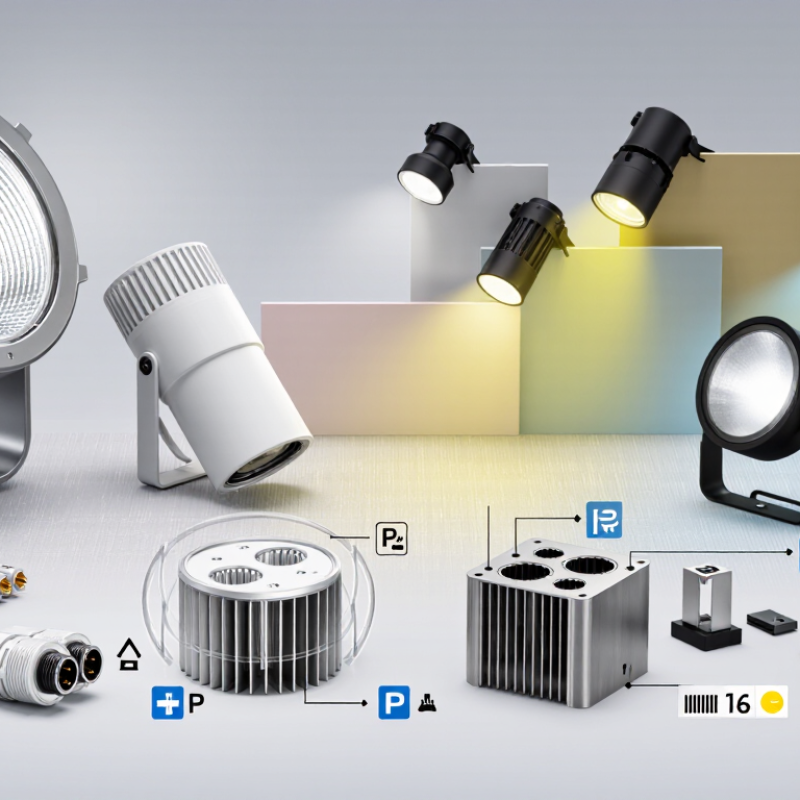
Table of Contents [Hide]
What Are Light Beam Lamps and How Do They Work?
2026 Best Light Beam Lamps for Global Buyers?
What Are Light Beam Lamps and How Do They Work?
Light beam lamps are directional fixtures that concentrate light through a reflector, lens, or both. Unlike wide ceiling lights, they create a controlled beam for displays, pathways, workshops, and outdoor areas. A narrow beam highlights one object, while a wider beam spreads light across a room.
Most modern models use LED chips. Electricity excites semiconductor materials, producing light with limited heat compared with older filament lamps. The optic then shapes that light. Beam angle matters greatly: 15 degrees can create a sharp accent, while 60 degrees gives softer coverage. Color temperature also changes perception. Warm white feels comfortable, while cool white reveals surface details more clearly.
The U.S. Department of Energy reports that LED lighting can use up to 75% less energy and last up to 25 times longer than incandescent lighting. The International Energy Agency’s Energy Efficiency 2024 report also identifies efficient lighting as a practical route for reducing electricity demand. These figures are useful, but real performance depends on drivers, ventilation, voltage, and installation quality.
Check lumens, beam angle, color rendering, ingress protection, and local voltage before purchasing. A bright lamp can still feel weak when its beam is poorly aimed. That part is often overlooked. My practical concern is simple: laboratory efficiency does not guarantee comfortable light in a dusty warehouse or humid coastal site. Test the beam at the actual mounting height.
2026 Best Light Beam Lamps for Global Buyers? - What Are Light Beam Lamps and How Do They Work?
| Light Beam Lamp Type | How It Works | Typical Power | Typical Beam Angle | Typical Luminous Output | Typical CCT | Typical CRI | Typical Service Life | Common Protection Rating | Best-Fit Applications | Main Buying Considerations |
|---|---|---|---|---|---|---|---|---|---|---|
| Narrow-Beam LED Spotlight | An LED converts electrical energy into light. A reflector and lens concentrate the light into a controlled beam. | 5–30 W | 8°–24° | 400–3,000 lm | 2,700–6,500 K | 80–95 | 25,000–50,000 hours | IP20–IP65 | Accent lighting, artwork, retail displays, museums, hospitality interiors | Beam precision, glare control, color consistency, dimming compatibility |
| COB LED Beam Spotlight | A chip-on-board LED array produces a dense light source, while the optical system shapes the output into a bright beam. | 10–50 W | 15°–40° | 800–5,000 lm | 2,700–6,500 K | 80–97 | 30,000–50,000 hours | IP20–IP65 | Commercial interiors, galleries, restaurants, showrooms, decorative lighting | Heat dissipation, color rendering, hotspot appearance, driver quality |
| LED PAR Beam Lamp | An LED module is combined with a PAR-style housing and reflector to create a directional beam for general or event lighting. | 12–200 W | 15°–60° | 1,000–20,000 lm | 2,700–6,500 K or RGB/RGBW | 70–95 | 30,000–50,000 hours | IP20–IP67 | Stage lighting, architectural wash, exhibitions, outdoor events | Beam uniformity, color mixing, control protocol, outdoor sealing |
| LED Profile or Ellipsoidal Spotlight | A high-output LED engine passes through lenses and shutters, allowing the beam shape and projection area to be controlled accurately. | 100–400 W | 5°–50° zoom range | 8,000–40,000 lm | 2,700–6,500 K | 80–98 | 30,000–60,000 hours | IP20–IP65 | Theaters, museums, broadcast studios, architectural projection | Lens quality, shutter accuracy, noise level, gobo and accessory availability |
| Moving-Head Beam Fixture | A motorized head moves the optical system horizontally and vertically to project a narrow, dynamic beam. | 100–470 W | 2°–10° | 5,000–25,000 lm | Approximately 6,000–8,000 K | 70–85 | 20,000–50,000 hours | IP20–IP65 | Concerts, clubs, festivals, touring productions, large events | Pan/tilt speed, beam intensity, cooling noise, DMX or Art-Net control |
| Architectural LED Projector | A high-power LED source uses a reflector or optical lens to project a defined beam over façades, landscapes, or public spaces. | 30–500 W | 3°–40° | 3,000–50,000 lm | 2,200–6,500 K or RGBW | 70–95 | 50,000–100,000 hours | IP65–IP68 | Building façades, bridges, monuments, landscapes, public areas | Ingress protection, corrosion resistance, thermal management, photometric files |
| High-Bay LED Beam Light | A powerful LED array and reflector direct light downward from high mounting positions to illuminate large indoor areas. | 100–300 W | 30°–120° | 15,000–45,000 lm | 4,000–6,500 K | 70–90 | 50,000–100,000 hours | IP54–IP65 | Warehouses, factories, sports halls, logistics centers | Mounting height, glare rating, lumen maintenance, sensor and dimming options |
| Solar LED Beam Light | A photovoltaic panel charges a battery during daylight; the stored energy powers LEDs at night through a controller. | 10–100 W LED equivalent | 15°–120° | 800–12,000 lm | 3,000–6,500 K | 70–90 | LED: 30,000–50,000 hours; battery: commonly 3–8 years | IP65–IP66 | Roads, gardens, remote areas, security lighting, off-grid projects | Battery capacity, autonomy days, solar-panel size, winter performance, local climate |
| Laser-Source Beam Fixture | A laser or laser-phosphor source creates a highly concentrated beam that is shaped by optical lenses and scanning or focusing systems. | 100–500 W system input | Less than 1°–10° | Varies by optical design; often specified by center-beam intensity | Typically 5,500–7,000 K | Usually lower than high-CRI architectural LEDs | 20,000–30,000 hours for many systems | IP20–IP65 | Large-scale entertainment, long-throw projection, specialized installations | Photobiological safety, laser classification, cooling, service regulations, operator training |
| Key selection rule Choose beam angle and mounting distance together: a narrow beam produces higher center illuminance over a smaller area, while a wide beam covers more area with lower intensity. For international purchasing, also confirm input voltage and frequency, regional safety certification, photometric files, warranty terms, replacement-driver availability, and the stated IP rating under the applicable test standard. | ||||||||||

© Copyright - Pro Tool & Supply - Site by SVM E-Marketing Solutions - Sitemap
- Privacy policy