- Products
- Air Compressors & Air Tools
- Climate Control
- Compaction Equipment
- Concrete Cutting Tools & Equipment
- Concrete and Masonry
- Demolition & Excavation
- Electrical & Mechanical
- Fasteners and Anchoring Adhesives
- Floor Protection
- Generators and Welders
- Hand Tools
- Heaters
- Janitorial and Office Supplies
- Jobsite Protection
- Ladders & Storage
- Lighting & Lighting Accessories
- Man Lifts
- Material Handling Equipment
- Power Tools
- Pressure Washers & Pumps
- Safety Gear
- Safety Products
- Saws
- Surface Preparation
- SEASONAL PRODUCTS
- Rentals
- Air Compressor and Air Tool Rentals
- Climate Control Rental
- Compaction Rentals
- Concrete Equipment Rentals
- Demolition & Excavation Equipment Rentals
- Concrete Floor Grinder Rentals
- General Construction Equipment Rentals
- Generator Rentals and Welder Rentals
- Heater Rentals
- Light Tower Rentals
- Man Lift Rentals in Massachusetts and Rhode Island
- Material Handling Equipment Rentals
- Pressure Washer & Pump Rentals
- Saw Rentals in New England
- SEASONAL PRODUCTS
- Products
- Air Compressors & Air Tools
- Climate Control
- Compaction Equipment
- Concrete Cutting Tools & Equipment
- Demolition & Excavation
- Electrical & Mechanical
- Floor Protection
- Generators and Welders
- Construction Heaters
- Construction Ladders, Staging, & Storage
- Construction Lighting
- Man Lifts
- Material Handling Equipment
- Industrial Janitorial and Office Supplies
- Pressure Washers & Pumps
- Construction Safety Products
- Construction Safety Gear
- Surface Preparation
- Building Protection
- Diesel Accessories
- Zero Emissions
- Rentals
- Air Compressor and Air Tool Rentals
- Climate Control Rental
- Compaction Rentals
- Concrete Equipment Rental
- Demolition & Excavation Equipment Rental
- General Construction Equipment Rental
- Generator Rentals and Welder Rentals
- Construction Heaters Rental
- Light Tower Rentals
- Man Lift Rentals
- Material Handling Equipment Rental
- Pressure Washer & Pump Rentals
- Saw Rentals in New England
- Concrete Floor Grinder Rentals
- Zero Emissions Rentals
- Repairs & Used
- Parts
- Blog
- Services
- Resources
- About Us
- Contact Us
Sales & Rental of Construction | Industrial Equipment & Supplies


7 Best Horizontal Ribbon Mixers for Industrial Mixing
A Horizontal Ribbon Mixer can look simple from the outside: a trough, a shaft, and a pair of helical ribbons. Inside, those ribbons move ingredients in opposing directions, helping distribute powders and other compatible materials throughout the batch. The result depends on more than the mixer’s name or capacity. Ribbon geometry, fill level, batch size, material flow, and discharge design all affect performance. Small choices matter.
This guide compares seven industrial models through practical selection criteria, including construction, operating flexibility, cleanout access, and suitability for different production needs. Look closely at how each machine handles your actual ingredients, not just a specification sheet. A dry, free-flowing powder behaves differently from a cohesive blend. Ask suppliers about test results, wear parts, and maintenance access. Those details can change the long-term value of a mixer.
A named expert quotation was not included in the supplied material, so attributing one here would risk inventing a source. That deserves a pause. The comparison below focuses instead on verifiable design considerations and questions buyers can confirm with manufacturers before selecting a Horizontal Ribbon Mixer.
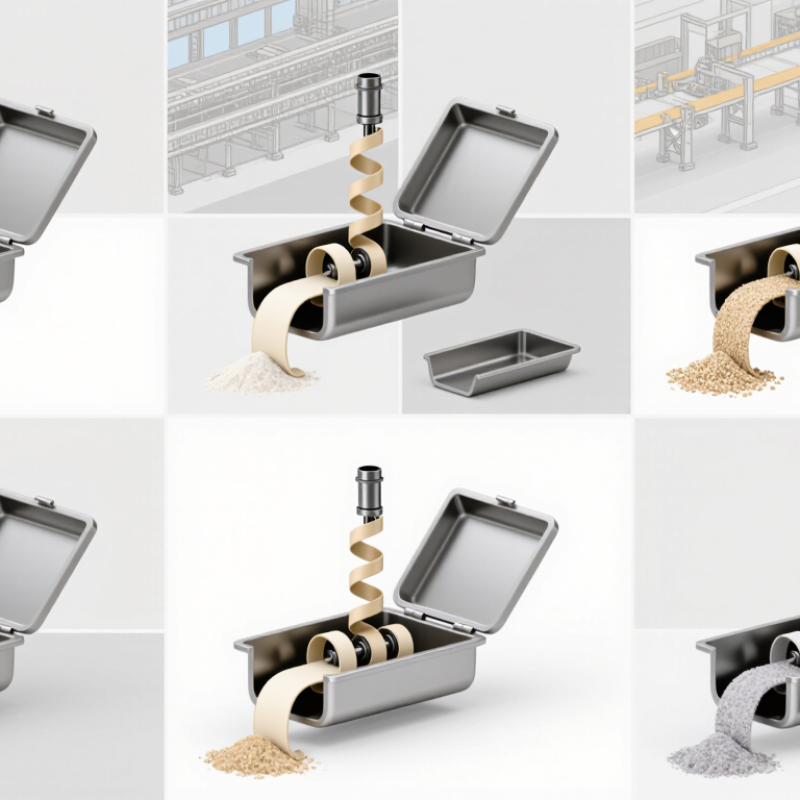
Table of Contents [Hide]
How Horizontal Ribbon Mixers Work
How Horizontal Ribbon Mixers Work
A horizontal ribbon mixer uses a U-shaped trough and a rotating shaft fitted with inner and outer helical ribbons. The outer ribbon pushes material toward one end; the inner ribbon moves it back. This opposing axial flow creates circulation, while particle movement across the trough adds blending. Picture dry ingredients lifting and folding like a slow, continuous wave. The action is mechanical, not magic: particle size, fill level, and mixing time all affect uniformity.
Operators should judge the blend with samples, not appearance alone. The NIST/SEMATECH e-Handbook of Statistical Methods defines the coefficient of variation as standard deviation divided by the mean, multiplied by 100. That gives teams a useful way to compare sample results, though no single CV target suits every product. Sampling location matters, too. A scoop from the center may miss uneven material near the discharge. Small detail, big consequence.
The U.S. FDA’s 2011 Process Validation guidance emphasizes using scientific evidence to show a process performs consistently. Applied to ribbon mixing, that means recording batch size, speed, time, and sample results across repeat runs. A longer cycle may improve distribution, but it can also damage fragile particles or waste energy. And a familiar recipe is not proof. Recheck the blend when ingredients or loading conditions change.

© Copyright - Pro Tool & Supply - Site by SVM E-Marketing Solutions - Sitemap
- Privacy policy