Sales & Rental of Construction | Industrial Equipment & Supplies

10 Best Electrical Test Kits for Professionals

Choosing an Electrical Test Kit is not simply a matter of counting tools. A professional needs instruments suited to the work, the environment, and the readings required. On a service call, that may mean checking voltage at a panel, tracing a circuit, or confirming continuity at a small terminal. The right kit makes these checks more efficient. It does not replace training or careful judgment.

Electrical safety educator Jim Phillips has emphasized the importance of safe work practices and training. The following line is an editorial summary of that principle, not a verbatim quotation: “A reading is only trustworthy when the instrument, leads, setup, and user are ready.” It is worth remembering. A damaged probe or incorrect meter setting can undermine an otherwise careful measurement. Specifications matter, but so do clear displays, durable cases, and leads that are easy to inspect.

This guide compares ten test kits for working professionals, including options for common electrical troubleshooting and more demanding measurement tasks. It considers measurement range, included accessories, portability, and practical ease of use. Some kits offer impressive breadth; others keep the essentials close at hand. Neither approach suits every technician. A kit that looks complete on paper may still feel awkward beside a crowded panel. Use these comparisons as a starting point, then check each instrument’s ratings and instructions against the work you actually perform. A little doubt is useful. It keeps the choice grounded in the job, not just the product description.
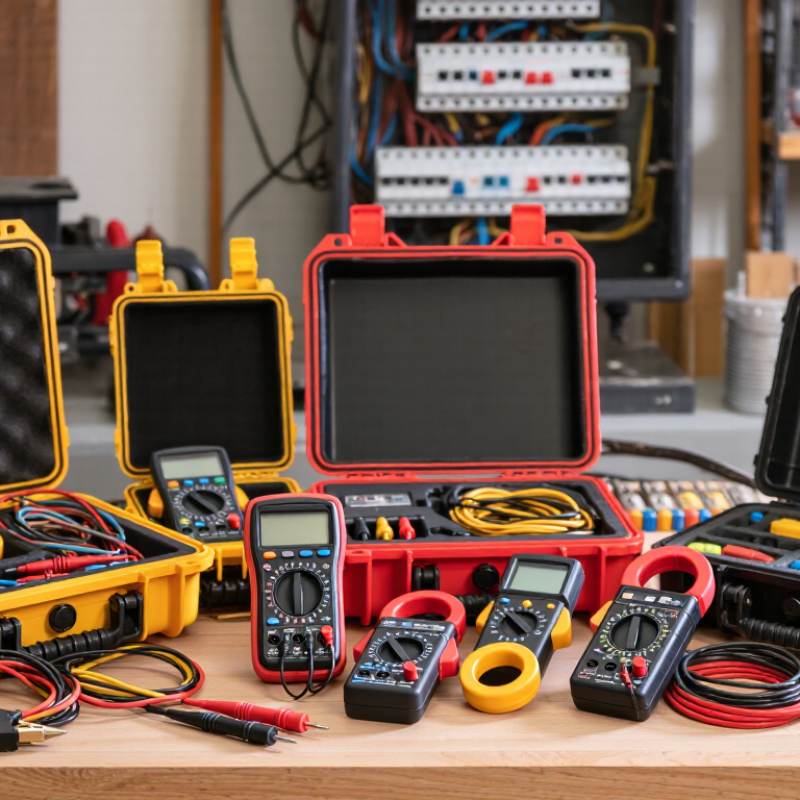
10 Best Electrical Test Kits for Professionals

What Electrical Test Kits Are and How Professionals Use Them

An electrical test kit groups tools used to check voltage, current, continuity, and insulation. A typical kit may include a digital multimeter, clamp meter, voltage detector, and insulated probes. Each tool answers a different question: Is a circuit energized? Is a conductor carrying current? Is a connection open? For example, a technician might check a panel, then clamp around one conductor to measure current without disconnecting it. The right tool depends on the task and its measurement category. A high voltage rating alone does not establish suitability for every installation.

The U.S. Bureau of Labor Statistics reported 145 fatal work injuries involving exposure to electricity in its 2022 Census of Fatal Occupational Injuries. That figure is a reminder, not proof that test kits alone prevent harm. Professionals inspect leads, select equipment with an appropriate measurement category, and verify a tester on a known source before and after checking a circuit. Small steps matter. Still, a meter can give false confidence if used incorrectly. Readings need context: unexpected values may reflect a poor connection, an unsuitable setting, or a real fault. Even experienced workers should pause and reassess when a result does not fit the equipment or the job.

Key Features to Compare When Evaluating Electrical Test Kits

A useful electrical test kit is not simply the one with the most functions. Compare its measurement range, stated accuracy, and safety rating against the work you actually perform. A meter used at a distribution panel faces different transient hazards from one used on low-voltage control circuits. Check that its measurement category and voltage rating suit the test location, and confirm that probes carry matching ratings. The U.S. Bureau of Labor Statistics reported 5,283 fatal work injuries across all industries in 2023; this figure is not specific to electrical incidents, but it underscores why equipment selection and safe procedures deserve careful attention.

Look for clear specifications: true-RMS capability for distorted waveforms, a dependable continuity response, and a clamp opening wide enough for the conductors you encounter. A bright display helps in dim cabinets. A compact case matters when climbing ladders. Calibration support and replaceable leads can also reduce downtime, though they are easy to overlook when comparing prices. Small details matter. Review the manufacturer’s stated accuracy across the ranges you use, not just the headline figure, and inspect the lead insulation before each job. A kit can be technically capable yet poorly suited to a cramped panel or gloved hands. That trade-off is worth admitting. The BLS Census of Fatal Occupational Injuries is a useful source for workplace risk context, while the instrument’s safety markings and documentation should guide the specific comparison.

Ten Professional Electrical Test Kits and Their Core Capabilities

Professional electrical test kits serve different tasks, so compare capabilities rather than counting accessories. A digital multimeter measures voltage, resistance, and current for general fault checks. A non-contact voltage tester offers a quick preliminary indication near conductors. A clamp meter measures current without opening a circuit. An insulation resistance tester checks insulation condition using a selected test voltage. A continuity tester helps locate open paths in de-energized wiring.

The remaining five kits add more specialized checks. An earth ground tester evaluates grounding resistance. A power quality analyzer records voltage variation and harmonic distortion over time. A thermal camera reveals hot spots around connections and equipment. A phase rotation tester identifies phase sequence on three-phase systems. A circuit tracer helps follow conductors or locate breakers. Some kits combine instruments, but extra tools do not automatically improve a job. Check measurement ranges, lead ratings, calibration status, and whether the included probes suit the equipment. That detail is easy to overlook.

Tips: Treat a voltage indication as a prompt to verify, not a complete safety check. Follow the instrument’s instructions, inspect leads for damaged insulation, and use suitable protective equipment. Record readings with location and load conditions; otherwise, useful comparisons can become guesswork.

Matching Test Kit Types to Common Electrical Tasks

The best electrical test kit depends on the task, not the number of tools in the case. For outlet and circuit checks, a digital multimeter with voltage, resistance, and continuity functions covers common diagnostic work. A non-contact voltage tester helps screen for energized conductors before contact, but it cannot confirm a circuit is safe by itself. Verify instruments on a known source before and after testing, and follow the meter’s instructions.

For panel measurements or troubleshooting under load, choose a meter and leads with a suitable measurement category and voltage rating for the installation. A clamp meter is useful when current must be measured without disconnecting a conductor; check jaw size and the measurement range first. Need to trace a cable? A circuit tracer can help identify a breaker, though crowded or shared circuits may confuse readings. Small details count.

For insulation checks on motors or long cable runs, an insulation resistance tester may reveal degradation that a basic multimeter will miss. Use it only when equipment is isolated and prepared according to its manual. A kit with probes, clips, and a proving unit can make repeated checks steadier. One easy mistake is trusting a single reading. Record conditions, compare results with equipment guidance, and pause when readings seem inconsistent.

Safety and Maintenance Practices for Electrical Test Equipment

Electrical test equipment is only useful when its condition and rating suit the task. Before use, inspect the meter, probes, and insulation for cracks, cuts, loose connections, or bent pins. Check that the instrument’s measurement category and voltage rating match the installation. A suitable rating matters. Remove damaged equipment from service rather than relying on tape or a quick repair.

For voltage checks, follow a safe isolation procedure and use the prove-test-prove method: confirm the tester on a known source, check the circuit, then confirm the tester again. Keep fingers behind probe guards, and use the correct input terminals and function. Even experienced technicians can rush a familiar check. That habit deserves attention, especially in crowded panels or dim work areas.

Clean equipment with a method approved for its materials, and keep moisture, dust, and metal debris away from terminals. Store probes without tight bends, replace weak batteries promptly, and record calibration or verification checks according to workplace procedures. Calibration intervals should reflect use, handling, and accuracy needs. A tidy case helps, but it does not prove the instrument works. Before each job, take a moment to check.

10 Best Electrical Test Kits for Professionals – Safety and Maintenance Practices for Electrical Test Equipment

Test kit type Best suited for Typical instruments or capabilities Selection and safety considerations Maintenance practice
Digital multimeter kit General electrical troubleshooting and measurements Measures AC/DC voltage, resistance, and continuity; many models also measure current, capacitance, or frequency. Choose a meter and leads with CAT ratings and voltage limits appropriate for the measurement location. Verify the meter on a known source before and after proving a circuit dead. Inspect leads, probes, fuses, and case; check battery condition and confirm readings against a known reference.
Clamp meter kit Measuring current without disconnecting a conductor Clamp-jaw current measurement; common versions also provide voltage, resistance, and continuity functions. Some measure AC and DC current. Check the current range and AC/DC capability. Clamp around one conductor at a time, and observe the instrument’s CAT rating and safe working limits. Keep jaw faces clean and closing fully; inspect leads and verify zero or baseline behavior as directed by the instrument instructions.
Insulation resistance tester kit Assessing insulation in cables, motors, and electrical installations Applies a selected DC test voltage and measures insulation resistance. Common selectable test voltages include 50, 100, 250, 500, and 1,000 V DC, depending on the instrument. Disconnect sensitive equipment where required, isolate the circuit, and follow the applicable test procedure. Discharge the tested item after testing. Check test leads and insulation; verify operation using the instrument’s prescribed checks and keep calibration records when required.
Earth resistance tester kit Testing grounding electrodes and earthing systems Typically uses a three- or four-pole method with auxiliary stakes; some systems support clamp-based testing for suitable installations. Select a method appropriate to the grounding arrangement and site conditions. Follow the test procedure and account for parallel paths that may affect readings. Inspect test cables, stake connections, and clamps; check for damaged insulation and confirm reliable contact before recording results.
Low-resistance continuity kit Checking protective conductors, bonds, and electrical connections A low-resistance ohmmeter uses a higher test current than a standard continuity function; four-wire Kelvin measurement can reduce lead-resistance error. Isolate circuits before testing and use the test current and method specified by the relevant procedure. Ensure probe contact is clean and stable. Inspect probe tips and cables; compensate for lead resistance when applicable and compare results with documented baselines.
Voltage detector and proving-unit kit Checking for voltage and confirming a detector operates correctly A contact voltage indicator detects voltage within its stated range; a proving unit provides a known output for functional checks. Use an approved detector suitable for the system. Follow the live-dead-live procedure: prove the detector, test the circuit, then prove the detector again. Inspect the detector body and probes for damage, check batteries if fitted, and function-check it before and after use.
Phase-sequence tester kit Identifying phase rotation in three-phase systems Indicates phase sequence or rotation; some instruments also identify phase presence and provide non-contact rotation indication. Check the instrument’s voltage and frequency ranges, connection method, and CAT rating before connecting to a three-phase circuit. Inspect leads and clips, keep connection points clean, and verify the tester’s indicators or self-test function where provided.
Loop impedance and RCD tester kit Installation verification and checks of protective devices Depending on the instrument, measures earth fault loop impedance and tests residual-current devices (RCDs) at selected test currents and timings. Use settings and test sequences suitable for the RCD type and installation. Testing may interrupt supply; account for connected equipment and site procedures. Check leads, plug adapters, and test buttons; retain dated results and verify calibration according to the maintenance schedule.
Power quality analyzer kit Investigating supply disturbances and electrical load behavior Depending on model, records voltage, current, frequency, power, energy, harmonics, and events such as sags or swells. Confirm voltage and current input ratings, sensor orientation, phase configuration, and CAT rating. Use suitable current probes and secure connections. Inspect voltage leads and current sensors, check instrument time and configuration, and review stored data before clearing it.
Thermal inspection kit Non-contact screening of electrical equipment for temperature differences An infrared camera or thermal imager records surface temperature patterns; some kits include a visible-light camera and reporting software. Thermal imaging does not establish that equipment is safe to touch or prove a circuit is de-energized. Follow electrical safe-work procedures and interpret readings in context. Clean the lens as instructed, check battery and image storage, and keep inspection distance, load conditions, and emissivity settings consistent.

Safety note: Instrument features and ratings vary. Select equipment and accessories for the actual system and measurement location, follow applicable regulations and manufacturer instructions, and use only trained personnel for electrical testing.

© Copyright - Pro Tool & Supply - Site by SVM E-Marketing Solutions - Sitemap - Privacy policy
