- Products
- Air Compressors & Air Tools
- Climate Control
- Compaction Equipment
- Concrete Cutting Tools & Equipment
- Concrete and Masonry
- Demolition & Excavation
- Electrical & Mechanical
- Fasteners and Anchoring Adhesives
- Floor Protection
- Generators and Welders
- Hand Tools
- Heaters
- Janitorial and Office Supplies
- Jobsite Protection
- Ladders & Storage
- Lighting & Lighting Accessories
- Man Lifts
- Material Handling Equipment
- Power Tools
- Pressure Washers & Pumps
- Safety Gear
- Safety Products
- Saws
- Surface Preparation
- SEASONAL PRODUCTS
- Rentals
- Air Compressor and Air Tool Rentals
- Climate Control Rental
- Compaction Rentals
- Concrete Equipment Rentals
- Demolition & Excavation Equipment Rentals
- Concrete Floor Grinder Rentals
- General Construction Equipment Rentals
- Generator Rentals and Welder Rentals
- Heater Rentals
- Light Tower Rentals
- Man Lift Rentals in Massachusetts and Rhode Island
- Material Handling Equipment Rentals
- Pressure Washer & Pump Rentals
- Saw Rentals in New England
- SEASONAL PRODUCTS
- Products
- Air Compressors & Air Tools
- Climate Control
- Compaction Equipment
- Concrete Cutting Tools & Equipment
- Demolition & Excavation
- Electrical & Mechanical
- Floor Protection
- Generators and Welders
- Construction Heaters
- Construction Ladders, Staging, & Storage
- Construction Lighting
- Man Lifts
- Material Handling Equipment
- Industrial Janitorial and Office Supplies
- Pressure Washers & Pumps
- Construction Safety Products
- Construction Safety Gear
- Surface Preparation
- Building Protection
- Diesel Accessories
- Zero Emissions
- Rentals
- Air Compressor and Air Tool Rentals
- Climate Control Rental
- Compaction Rentals
- Concrete Equipment Rental
- Demolition & Excavation Equipment Rental
- General Construction Equipment Rental
- Generator Rentals and Welder Rentals
- Construction Heaters Rental
- Light Tower Rentals
- Man Lift Rentals
- Material Handling Equipment Rental
- Pressure Washer & Pump Rentals
- Saw Rentals in New England
- Concrete Floor Grinder Rentals
- Zero Emissions Rentals
- Repairs & Used
- Parts
- Blog
- Services
- Resources
- About Us
- Contact Us
Sales & Rental of Construction | Industrial Equipment & Supplies


10 Best Drying Oven Manufacturers for Global Buyers
Choosing an industrial drying oven is rarely about heat alone. Buyers need repeatable temperature control, uniform airflow, usable chamber capacity, and reliable service after installation. A unit drying small glass vials has different needs from one handling coated metal parts or moisture-sensitive powders. Details matter. Shelf spacing, door seals, exhaust options, and recovery time can affect product quality and daily output.
This guide reviews 10 Drying Oven Manufacturers for global buyers, considering product range, customization, controls, documentation, and support. It is a practical starting point, not a universal ranking. Manufacturer claims should be checked against operating data, test reports, and actual process conditions. Ask for temperature-uniformity results at your working load, not only an empty-chamber specification. Also confirm voltage, installation requirements, spare-parts access, and response times in your region. These questions can feel tedious. They often prevent expensive mismatches.
The strongest supplier is not always the largest or most familiar name. A smaller specialist may offer a better chamber layout, while a broad-line producer may simplify procurement across sites. Some information is difficult to compare consistently, and published figures do not tell the whole story. Use the profiles that follow to narrow your options, then validate fit with samples, references, and a clear acceptance test. Fit comes first. That final step is easy to overlook.
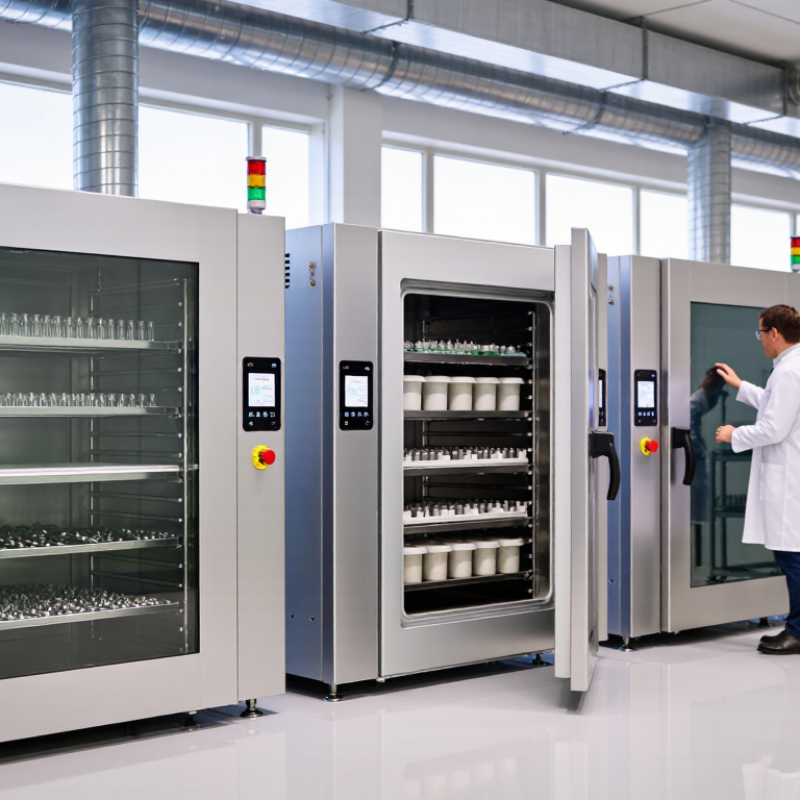
Table of Contents [Hide]
Drying Oven Basics: Convection Types and Typical Laboratory Ratings up to 250°C
Laboratory drying ovens use convection to move heat around a chamber. Natural-convection models rely on warm air rising and cooler air falling. They suit light loads that need gentle heating, such as glassware or small samples. Forced-convection models use a fan to circulate air and often recover temperature faster after the door opens. The fan can also disturb powders or lightweight materials, so airflow is not always an advantage. Some ovens reach roughly 200–250°C, but the maximum rating varies by design. A 250°C setting is not a promise of equal temperature at every shelf.
Look beyond the number on the control panel. Ask for the stated temperature uniformity, stability, and recovery time, and check the conditions used for those measurements. Empty-chamber results may differ from a fully loaded oven. Not enough.
For a practical check, place a calibrated probe near the front, rear, and center shelves during a representative run. Keep trays spaced so air can circulate; tightly stacked glassware can create cool pockets. A rating alone is a blunt guide. It is easy to focus on the maximum temperature and overlook the load pattern, door use, or sensor placement. Those details can change the result.

© Copyright - Pro Tool & Supply - Site by SVM E-Marketing Solutions - Sitemap
- Privacy policy