- Products
- Air Compressors & Air Tools
- Climate Control
- Compaction Equipment
- Concrete Cutting Tools & Equipment
- Concrete and Masonry
- Demolition & Excavation
- Electrical & Mechanical
- Fasteners and Anchoring Adhesives
- Floor Protection
- Generators and Welders
- Hand Tools
- Heaters
- Janitorial and Office Supplies
- Jobsite Protection
- Ladders & Storage
- Lighting & Lighting Accessories
- Man Lifts
- Material Handling Equipment
- Power Tools
- Pressure Washers & Pumps
- Safety Gear
- Safety Products
- Saws
- Surface Preparation
- SEASONAL PRODUCTS
- Rentals
- Air Compressor and Air Tool Rentals
- Climate Control Rental
- Compaction Rentals
- Concrete Equipment Rentals
- Demolition & Excavation Equipment Rentals
- Concrete Floor Grinder Rentals
- General Construction Equipment Rentals
- Generator Rentals and Welder Rentals
- Heater Rentals
- Light Tower Rentals
- Man Lift Rentals in Massachusetts and Rhode Island
- Material Handling Equipment Rentals
- Pressure Washer & Pump Rentals
- Saw Rentals in New England
- SEASONAL PRODUCTS
- Products
- Air Compressors & Air Tools
- Climate Control
- Compaction Equipment
- Concrete Cutting Tools & Equipment
- Demolition & Excavation
- Electrical & Mechanical
- Floor Protection
- Generators and Welders
- Construction Heaters
- Construction Ladders, Staging, & Storage
- Construction Lighting
- Man Lifts
- Material Handling Equipment
- Industrial Janitorial and Office Supplies
- Pressure Washers & Pumps
- Construction Safety Products
- Construction Safety Gear
- Surface Preparation
- Building Protection
- Diesel Accessories
- Zero Emissions
- Rentals
- Air Compressor and Air Tool Rentals
- Climate Control Rental
- Compaction Rentals
- Concrete Equipment Rental
- Demolition & Excavation Equipment Rental
- General Construction Equipment Rental
- Generator Rentals and Welder Rentals
- Construction Heaters Rental
- Light Tower Rentals
- Man Lift Rentals
- Material Handling Equipment Rental
- Pressure Washer & Pump Rentals
- Saw Rentals in New England
- Concrete Floor Grinder Rentals
- Zero Emissions Rentals
- Repairs & Used
- Parts
- Blog
- Services
- Resources
- About Us
- Contact Us
Sales & Rental of Construction | Industrial Equipment & Supplies


What Are the Best Commercial Downlights for 2026?
Choosing the best Commercial Downlights for 2026 takes more than comparing wattage or sleek product photos. A fitting should deliver useful light across the actual ceiling height, task, and operating hours. Check efficacy, glare control, color rendering, dimming compatibility, and replaceable components. A bright beam can still feel harsh over a checkout counter or leave dark patches between aisles. Details matter.
Lighting researcher Mark Rea’s work offers a useful reminder, paraphrased here: “Good lighting should serve people, not just satisfy a specification.” That is a practical lens for evaluating products, not a substitute for a project-specific lighting plan. Compare photometric data and confirm that drivers work with the intended controls. Ask suppliers about warranty terms, testing, and long-term product availability. Small print matters.
This guide will compare options for offices, retail spaces, hospitality venues, and other commercial settings. It will also examine beam angles, color temperature, glare, energy use, and installation considerations. The right choice depends on the room. A narrow beam may suit a display, while a wider distribution can help create more even general lighting. There is no single winner for every project, and product specifications do not always predict how a space will feel. That deserves a second look. Before selecting a fixture, verify its performance against the room layout and the needs of the people using it.
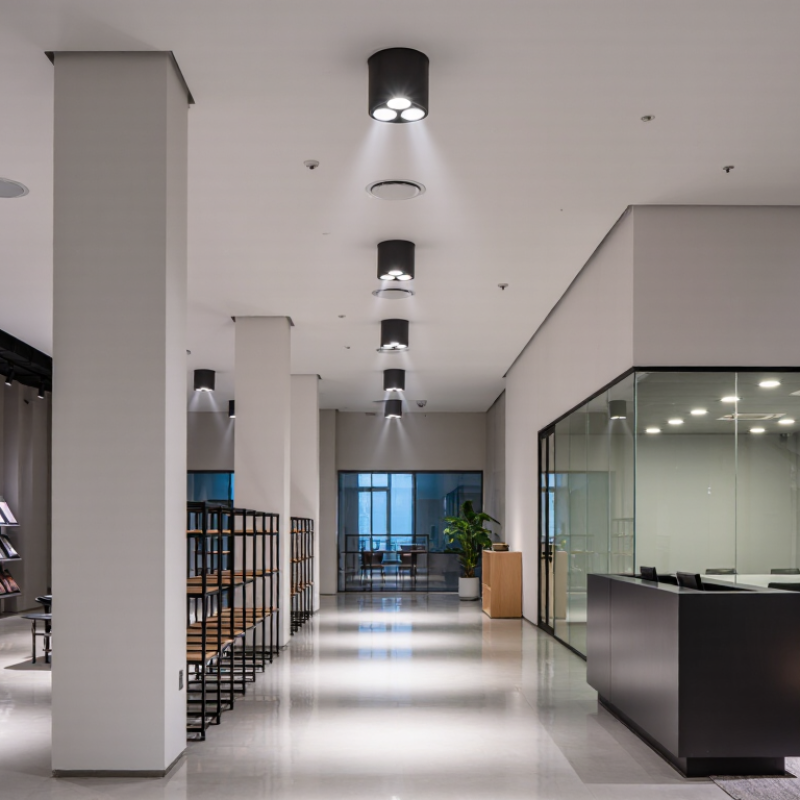
Table of Contents [Hide]
What Are Commercial Downlights and How Are They Used?
Commercial downlights are ceiling-mounted luminaires that send light downward, usually from a recessed opening. They can use replaceable lamps or integrated LED modules. In offices, they illuminate desks and walkways; in shops, adjustable versions can highlight shelves or displays. Their compact appearance is useful, but spacing and beam angle matter: poorly planned fixtures can leave bright patches beside dim corners. The U.S. Energy Information Administration’s 2018 Commercial Buildings Energy Consumption Survey reported that lighting used about 17% of commercial-building electricity. That makes efficient, well-controlled lighting a practical design consideration.
Downlights are selected by more than wattage. Check lumen output, color temperature, color rendering, glare, dimming compatibility, and whether the fixture suits the ceiling and room conditions. The U.S. Department of Energy’s Energy Saver guidance says LEDs use at least 75% less energy and can last up to 25 times longer than incandescent lighting. Those figures are broad comparisons, not a promise for every fixture or installation. A mock-up can reveal uncomfortable glare before a whole ceiling is fitted. Sometimes the simpler layout wins.
Tips: Match beam spread to ceiling height and task. For a desk, check glare from a seated position; for a display, aim the beam at the product, not visitors’ eyes. Record the selected settings, too. That step is easy to forget.

© Copyright - Pro Tool & Supply - Site by SVM E-Marketing Solutions - Sitemap
- Privacy policy