- Products
- Air Compressors & Air Tools
- Climate Control
- Compaction Equipment
- Concrete Cutting Tools & Equipment
- Concrete and Masonry
- Demolition & Excavation
- Electrical & Mechanical
- Fasteners and Anchoring Adhesives
- Floor Protection
- Generators and Welders
- Hand Tools
- Heaters
- Janitorial and Office Supplies
- Jobsite Protection
- Ladders & Storage
- Lighting & Lighting Accessories
- Man Lifts
- Material Handling Equipment
- Power Tools
- Pressure Washers & Pumps
- Safety Gear
- Safety Products
- Saws
- Surface Preparation
- SEASONAL PRODUCTS
- Rentals
- Air Compressor and Air Tool Rentals
- Climate Control Rental
- Compaction Rentals
- Concrete Equipment Rentals
- Demolition & Excavation Equipment Rentals
- Concrete Floor Grinder Rentals
- General Construction Equipment Rentals
- Generator Rentals and Welder Rentals
- Heater Rentals
- Light Tower Rentals
- Man Lift Rentals in Massachusetts and Rhode Island
- Material Handling Equipment Rentals
- Pressure Washer & Pump Rentals
- Saw Rentals in New England
- SEASONAL PRODUCTS
- Products
- Air Compressors & Air Tools
- Climate Control
- Compaction Equipment
- Concrete Cutting Tools & Equipment
- Demolition & Excavation
- Electrical & Mechanical
- Floor Protection
- Generators and Welders
- Construction Heaters
- Construction Ladders, Staging, & Storage
- Construction Lighting
- Man Lifts
- Material Handling Equipment
- Industrial Janitorial and Office Supplies
- Pressure Washers & Pumps
- Construction Safety Products
- Construction Safety Gear
- Surface Preparation
- Building Protection
- Diesel Accessories
- Zero Emissions
- Rentals
- Air Compressor and Air Tool Rentals
- Climate Control Rental
- Compaction Rentals
- Concrete Equipment Rental
- Demolition & Excavation Equipment Rental
- General Construction Equipment Rental
- Generator Rentals and Welder Rentals
- Construction Heaters Rental
- Light Tower Rentals
- Man Lift Rentals
- Material Handling Equipment Rental
- Pressure Washer & Pump Rentals
- Saw Rentals in New England
- Concrete Floor Grinder Rentals
- Zero Emissions Rentals
- Repairs & Used
- Parts
- Blog
- Services
- Resources
- About Us
- Contact Us
Sales & Rental of Construction | Industrial Equipment & Supplies


What Is the Best China Bridge Gantry for Global Buyers?
Choosing the best Bridge Gantry for global buyers requires more than comparing lifting capacity and price. The right system must match the site, cargo, climate, power supply, and maintenance resources. A gantry that performs well in a dry factory may struggle beside a humid coastline. Small details matter.
Dr. Michael A. Verma, a lifting-equipment engineer with international project experience, says, “The best gantry is not the largest one; it is the one that fits the work safely and consistently.” This principle gives buyers a practical starting point. Load capacity, span, lifting height, duty class, wheel arrangement, and control technology should be assessed together. Certification and traceable manufacturing records also deserve close attention. A low initial quotation can become expensive when spare parts arrive slowly or technicians cannot diagnose faults.
Performance is not only a specification.
This guide compares Bridge Gantry solutions for ports, shipyards, factories, warehouses, and construction sites. It considers steel quality, welding control, electrical protection, weather resistance, installation support, and long-term operating costs. Buyers should also question unclear claims. “Heavy-duty” may sound convincing, yet it can hide missing duty-cycle data or incomplete safety documentation.
There is no perfect choice.
Even experienced purchasers can overlook local service capacity or future production changes. That weakness deserves honest review. Global buyers need dependable evidence, not attractive promises. By examining technical fit, supplier reliability, compliance documentation, and real operating conditions, this article helps identify a Bridge Gantry that supports safer handling and more predictable investment results.
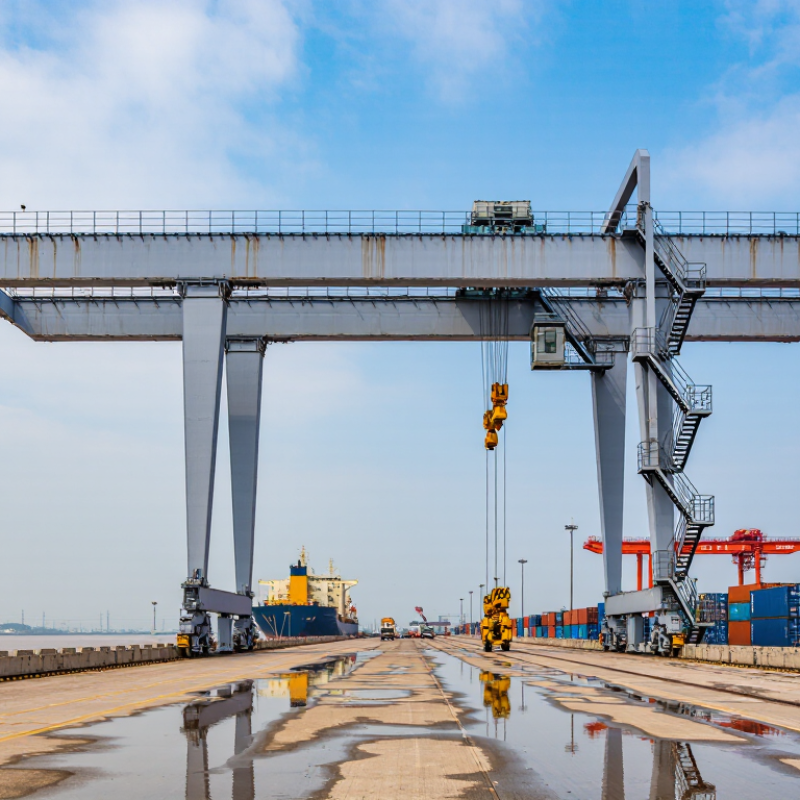
Table of Contents [Hide]
What Is a China Bridge Gantry and How Does It Work?
A China bridge gantry is a steel lifting structure that moves loads across a defined working span. It usually includes girders, end carriages, supporting legs, a trolley, and an electric hoist. The trolley travels along the bridge girder. The hoist raises or lowers the load. Motors then move the whole frame along ground rails. Some designs run on elevated runways instead. That distinction matters.
During operation, the load path should remain clear and balanced. Limit switches stop dangerous overtravel. Emergency stops interrupt motion quickly. Variable-frequency drives can reduce sudden starting forces. According to Grand View Research’s 2024 overhead crane analysis, the global overhead crane market was valued at about USD 4 billion in 2023, with continued growth expected through 2030. This reflects wider demand for controlled material handling, not automatic proof of quality.
A practical buyer should check rated capacity, span, lifting height, duty classification, wind exposure, and power conditions. ISO 4301-1 supports crane classification by operating cycles and load spectrum. A 20-ton crane for occasional lifting is not equal to one handling heavy loads all day. The “best” China bridge gantry is therefore a site-matched system. Price alone misleads. I would also inspect weld records, test certificates, brake response, and pendant-control ergonomics. Specifications can look complete, yet installation drawings may still miss drainage or rail alignment. That uncomfortable gap deserves attention.

© Copyright - Pro Tool & Supply - Site by SVM E-Marketing Solutions - Sitemap
- Privacy policy