- Products
- Air Compressors & Air Tools
- Climate Control
- Compaction Equipment
- Concrete Cutting Tools & Equipment
- Concrete and Masonry
- Demolition & Excavation
- Electrical & Mechanical
- Fasteners and Anchoring Adhesives
- Floor Protection
- Generators and Welders
- Hand Tools
- Heaters
- Janitorial and Office Supplies
- Jobsite Protection
- Ladders & Storage
- Lighting & Lighting Accessories
- Man Lifts
- Material Handling Equipment
- Power Tools
- Pressure Washers & Pumps
- Safety Gear
- Safety Products
- Saws
- Surface Preparation
- SEASONAL PRODUCTS
- Rentals
- Air Compressor and Air Tool Rentals
- Climate Control Rental
- Compaction Rentals
- Concrete Equipment Rentals
- Demolition & Excavation Equipment Rentals
- Concrete Floor Grinder Rentals
- General Construction Equipment Rentals
- Generator Rentals and Welder Rentals
- Heater Rentals
- Light Tower Rentals
- Man Lift Rentals in Massachusetts and Rhode Island
- Material Handling Equipment Rentals
- Pressure Washer & Pump Rentals
- Saw Rentals in New England
- SEASONAL PRODUCTS
- Products
- Air Compressors & Air Tools
- Climate Control
- Compaction Equipment
- Concrete Cutting Tools & Equipment
- Demolition & Excavation
- Electrical & Mechanical
- Floor Protection
- Generators and Welders
- Construction Heaters
- Construction Ladders, Staging, & Storage
- Construction Lighting
- Man Lifts
- Material Handling Equipment
- Industrial Janitorial and Office Supplies
- Pressure Washers & Pumps
- Construction Safety Products
- Construction Safety Gear
- Surface Preparation
- Building Protection
- Diesel Accessories
- Zero Emissions
- Rentals
- Air Compressor and Air Tool Rentals
- Climate Control Rental
- Compaction Rentals
- Concrete Equipment Rental
- Demolition & Excavation Equipment Rental
- General Construction Equipment Rental
- Generator Rentals and Welder Rentals
- Construction Heaters Rental
- Light Tower Rentals
- Man Lift Rentals
- Material Handling Equipment Rental
- Pressure Washer & Pump Rentals
- Saw Rentals in New England
- Concrete Floor Grinder Rentals
- Zero Emissions Rentals
- Repairs & Used
- Parts
- Blog
- Services
- Resources
- About Us
- Contact Us
Sales & Rental of Construction | Industrial Equipment & Supplies


Best China SS Strip Coil 304 Stainless Steel Coil?
Choosing the best China Ss Strip Coil 304 Stainless Steel Coil requires more than comparing price or polished photographs. The material is typically UNS S30400, containing about 18% chromium and 8% nickel. These elements support corrosion resistance, formability, and clean surface appearance. However, performance changes with thickness, annealing, surface finish, edge condition, and the final application.
The International Stainless Steel Forum reported approximately 58.4 million tonnes of global stainless-steel crude production in 2023. China contributed about 36.7 million tonnes, confirming its dominant manufacturing position. Scale matters, but scale alone does not prove consistency. A capable supplier should provide heat numbers, chemical analysis, mechanical results, dimensional records, and traceable inspection documents. ASTM A240 and ASTM A480 remain useful reference points for plate, sheet, strip, and surface requirements. EN 10088 may also matter for European buyers.
John C. Lippold, a widely recognized stainless-steel welding expert, states, “Stainless steels are a family of alloys, not a single material.” That distinction is easy to overlook. A 2B strip may suit stamping, kitchen equipment, or welded components, while BA material may better support decorative applications. Narrow slit coils also need stable width tolerance and a clean, burr-controlled edge. Ask about coil ID, packaging, minimum order quantity, and salt-spray or corrosion testing where relevant. The cheapest offer can become expensive after slitting defects, waviness, or rejected batches appear. This guide examines Chinese producers through evidence, not assumptions. Some conclusions may remain imperfect, because supplier data and market conditions change.
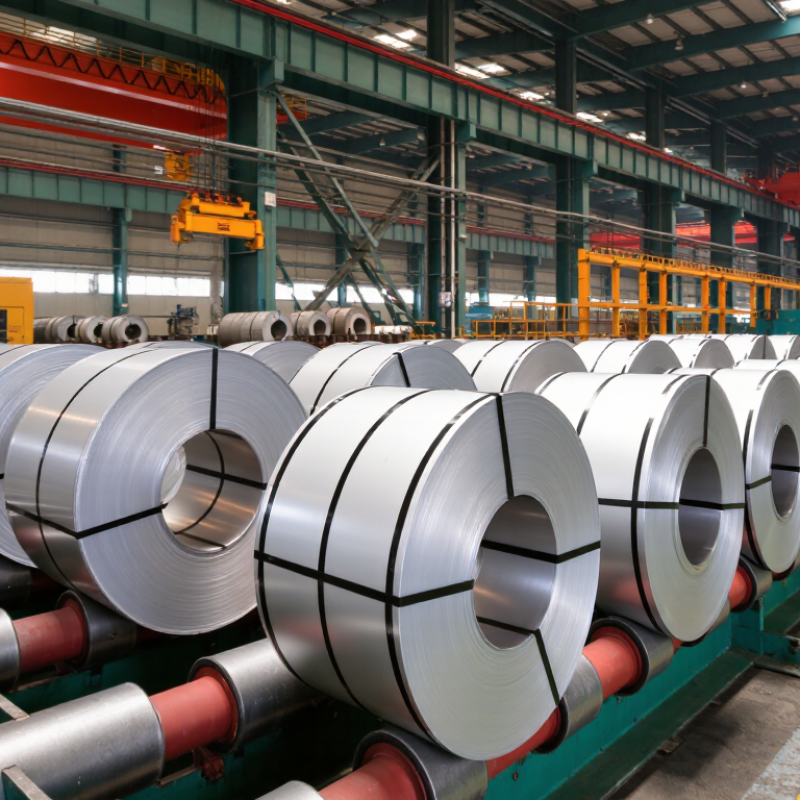
Table of Contents [Hide]
What Is 304 Stainless Steel Strip Coil?
304 stainless steel strip coil is a narrow, flat metal strip wound into a continuous coil. It usually contains about 18% chromium and 8% nickel, although the exact chemistry depends on the applicable standard. Chromium forms a passive surface layer, helping the strip resist moisture and everyday atmospheric corrosion. Nickel improves ductility and supports smooth forming. The material is non-magnetic or only slightly magnetic when annealed.
It is commonly supplied in cold-rolled condition. Typical surfaces include bright annealed and dull finishes. Width, thickness, edge condition, and hardness must match the application. A thin strip may serve in clamps, stamped parts, kitchen equipment, or precision components.
A thicker strip can tolerate greater handling stress. It also welds well when the process is properly controlled. However, 304 is not immune to saltwater or chemical attack. Chloride exposure can still cause pitting.
Practical inspection matters. Check the mill certificate, chemical composition, tensile data, and dimensional tolerances. Then inspect the coil edge under good lighting. Burrs, camber, scratches, or uneven winding can create problems during slitting and stamping. Coil memory is easy to underestimate. I have seen a visually clean coil produce unstable feeding after cutting. That mistake often starts with incomplete temper selection. Surface appearance alone is not enough. A reliable purchase should connect the steel grade, production condition, testing records, and intended use.

© Copyright - Pro Tool & Supply - Site by SVM E-Marketing Solutions - Sitemap
- Privacy policy