- Products
- Air Compressors & Air Tools
- Climate Control
- Compaction Equipment
- Concrete Cutting Tools & Equipment
- Concrete and Masonry
- Demolition & Excavation
- Electrical & Mechanical
- Fasteners and Anchoring Adhesives
- Floor Protection
- Generators and Welders
- Hand Tools
- Heaters
- Janitorial and Office Supplies
- Jobsite Protection
- Ladders & Storage
- Lighting & Lighting Accessories
- Man Lifts
- Material Handling Equipment
- Power Tools
- Pressure Washers & Pumps
- Safety Gear
- Safety Products
- Saws
- Surface Preparation
- SEASONAL PRODUCTS
- Rentals
- Air Compressor and Air Tool Rentals
- Climate Control Rental
- Compaction Rentals
- Concrete Equipment Rentals
- Demolition & Excavation Equipment Rentals
- Concrete Floor Grinder Rentals
- General Construction Equipment Rentals
- Generator Rentals and Welder Rentals
- Heater Rentals
- Light Tower Rentals
- Man Lift Rentals in Massachusetts and Rhode Island
- Material Handling Equipment Rentals
- Pressure Washer & Pump Rentals
- Saw Rentals in New England
- SEASONAL PRODUCTS
- Products
- Air Compressors & Air Tools
- Climate Control
- Compaction Equipment
- Concrete Cutting Tools & Equipment
- Demolition & Excavation
- Electrical & Mechanical
- Floor Protection
- Generators and Welders
- Construction Heaters
- Construction Ladders, Staging, & Storage
- Construction Lighting
- Man Lifts
- Material Handling Equipment
- Industrial Janitorial and Office Supplies
- Pressure Washers & Pumps
- Construction Safety Products
- Construction Safety Gear
- Surface Preparation
- Building Protection
- Diesel Accessories
- Zero Emissions
- Rentals
- Air Compressor and Air Tool Rentals
- Climate Control Rental
- Compaction Rentals
- Concrete Equipment Rental
- Demolition & Excavation Equipment Rental
- General Construction Equipment Rental
- Generator Rentals and Welder Rentals
- Construction Heaters Rental
- Light Tower Rentals
- Man Lift Rentals
- Material Handling Equipment Rental
- Pressure Washer & Pump Rentals
- Saw Rentals in New England
- Concrete Floor Grinder Rentals
- Zero Emissions Rentals
- Repairs & Used
- Parts
- Blog
- Services
- Resources
- About Us
- Contact Us
Sales & Rental of Construction | Industrial Equipment & Supplies


2026 Best Carbon Tube Types for Global Buyers?
Choosing the right Carbon Tube in 2026 will require more than comparing wall thickness and supplier prices. Global buyers must examine fiber grade, resin system, braid orientation, dimensional tolerance, and test documentation. A tube that feels rigid on a warehouse bench may still fail under vibration, heat, or repeated bending.
Market estimates show strong demand. MarketsandMarkets projects the global carbon-fiber market to grow from about USD 4.7 billion in 2023 to USD 7.4 billion by 2028, at a compound annual growth rate near 9.5%. The International Energy Agency also reports rising demand for lightweight materials across electric vehicles, wind energy, and other clean-energy technologies. These trends support wider Carbon Tube adoption. However, published forecasts use different definitions. Buyers should compare assumptions carefully.
Professor Wolfgang Krenkel, a recognized composites-materials expert, has emphasized, “The material must be selected according to the application.” That principle remains practical. Pultruded tubes may suit straight, repeatable structures. Roll-wrapped tubes can offer better directional customization. Braided constructions may handle complex loading more effectively. Small details matter. A 0.2-millimeter tolerance can affect assembly. Moisture exposure can change bonding results. Some suppliers provide impressive tensile figures but limited fatigue data. That gap deserves attention.
The best 2026 choice will balance performance, traceability, production consistency, and total cost. Not every premium Carbon Tube is necessary. Not every low-cost option is dependable. Buyers should request certificates, sample testing, and application-specific validation before placing global orders.
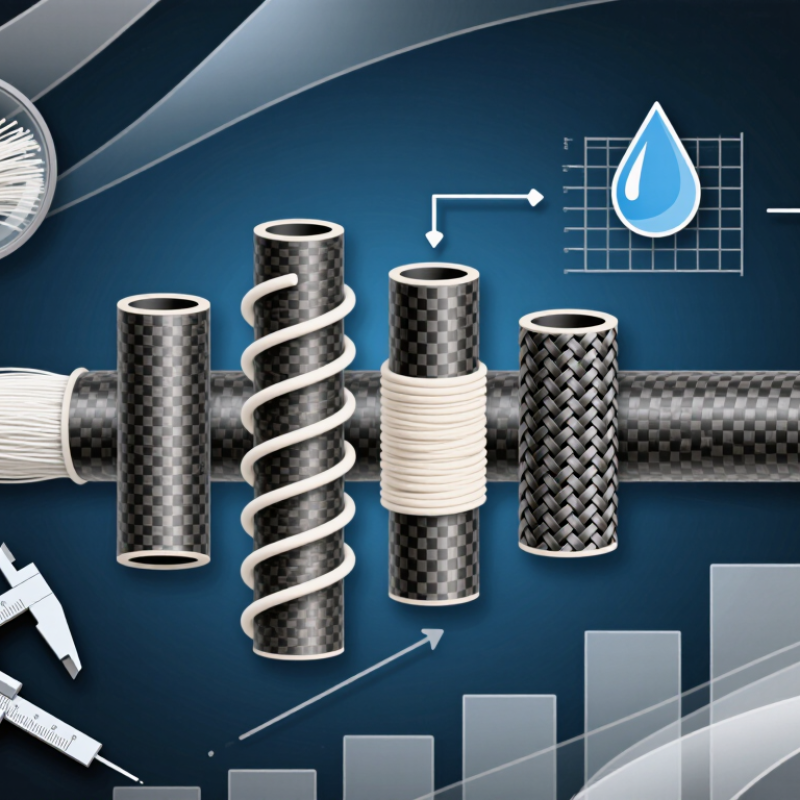
Table of Contents [Hide]
Carbon Tube Basics and Key Performance Characteristics
Carbon tubes are not a single material category. Carbon-fiber-reinforced polymer tubes combine strong fibers with a resin matrix. Graphite tubes use carbonized material and often tolerate higher temperatures. Their behavior differs sharply.
A pultruded tube usually places fibers along its length. It offers high axial stiffness and consistent dimensions. A filament-wound tube can use angled fibers, improving torsional resistance. Fiber orientation matters more than appearance. A glossy surface proves little. According to ASTM D3039 and ASTM D790 testing practices, tensile and flexural results must be reported with specimen direction, temperature, and conditioning details. Without those details, catalog figures can mislead.
Weight reduction is a major advantage. Carbon composites can deliver high stiffness at low mass, but impact resistance may be limited. Moisture, ultraviolet exposure, drilling, and poor joints can reduce service life. I would not trust a strength value alone. Ask for wall thickness, fiber angle, resin system, tolerance, and test method. The 2024 International Energy Agency Global Critical Minerals Outlook projects graphite demand to roughly triple by 2030 under stated policies, while the U.S. Geological Survey reported about 1.6 million metric tons of natural graphite mine production in 2024. Supply is expanding, but material consistency still requires verification. Small defects matter.

© Copyright - Pro Tool & Supply - Site by SVM E-Marketing Solutions - Sitemap
- Privacy policy