- Products
- Air Compressors & Air Tools
- Climate Control
- Compaction Equipment
- Concrete Cutting Tools & Equipment
- Concrete and Masonry
- Demolition & Excavation
- Electrical & Mechanical
- Fasteners and Anchoring Adhesives
- Floor Protection
- Generators and Welders
- Hand Tools
- Heaters
- Janitorial and Office Supplies
- Jobsite Protection
- Ladders & Storage
- Lighting & Lighting Accessories
- Man Lifts
- Material Handling Equipment
- Power Tools
- Pressure Washers & Pumps
- Safety Gear
- Safety Products
- Saws
- Surface Preparation
- SEASONAL PRODUCTS
- Rentals
- Air Compressor and Air Tool Rentals
- Climate Control Rental
- Compaction Rentals
- Concrete Equipment Rentals
- Demolition & Excavation Equipment Rentals
- Concrete Floor Grinder Rentals
- General Construction Equipment Rentals
- Generator Rentals and Welder Rentals
- Heater Rentals
- Light Tower Rentals
- Man Lift Rentals in Massachusetts and Rhode Island
- Material Handling Equipment Rentals
- Pressure Washer & Pump Rentals
- Saw Rentals in New England
- SEASONAL PRODUCTS
- Products
- Air Compressors & Air Tools
- Climate Control
- Compaction Equipment
- Concrete Cutting Tools & Equipment
- Demolition & Excavation
- Electrical & Mechanical
- Floor Protection
- Generators and Welders
- Construction Heaters
- Construction Ladders, Staging, & Storage
- Construction Lighting
- Man Lifts
- Material Handling Equipment
- Industrial Janitorial and Office Supplies
- Pressure Washers & Pumps
- Construction Safety Products
- Construction Safety Gear
- Surface Preparation
- Building Protection
- Diesel Accessories
- Zero Emissions
- Rentals
- Air Compressor and Air Tool Rentals
- Climate Control Rental
- Compaction Rentals
- Concrete Equipment Rental
- Demolition & Excavation Equipment Rental
- General Construction Equipment Rental
- Generator Rentals and Welder Rentals
- Construction Heaters Rental
- Light Tower Rentals
- Man Lift Rentals
- Material Handling Equipment Rental
- Pressure Washer & Pump Rentals
- Saw Rentals in New England
- Concrete Floor Grinder Rentals
- Zero Emissions Rentals
- Repairs & Used
- Parts
- Blog
- Services
- Resources
- About Us
- Contact Us
Sales & Rental of Construction | Industrial Equipment & Supplies


Who Is the Best Carbon Steel Mesh Supplier in China?
Choosing the best Carbon Steel Mesh Supplier in China is less about finding the lowest quote and more about confirming fit, consistency, and dependable communication. Mesh may be used in filtration, screening, reinforcement, or fabrication, and each application places different demands on wire diameter and opening size. A panel that looks uniform at first glance may still vary in aperture, flatness, or edge quality. Small differences matter. A useful comparison starts with measurable details: wire diameter, mesh opening, panel dimensions, surface finish, and required mechanical properties. Ask how these details are inspected during production, not only listed on a quotation. Good records help.
Who is the best supplier? The answer depends on your project and the evidence each manufacturer can provide. Request a sample, a written specification, and relevant inspection or material documents before placing a large order. Check that the sample matches the stated measurements, and clarify packaging, lead time, and how changes are handled. For repeat purchases, stable production and clear responses can be more valuable than a one-time discount. A professional supplier should explain limits plainly, including when a requested tolerance or finish needs confirmation. No checklist is perfect. A polished brochure cannot prove consistent output, and one sample cannot guarantee every batch. Compare practical evidence, ask specific questions, and leave room to reassess. That careful process makes it easier to identify a Chinese Carbon Steel Mesh partner suited to your actual needs.
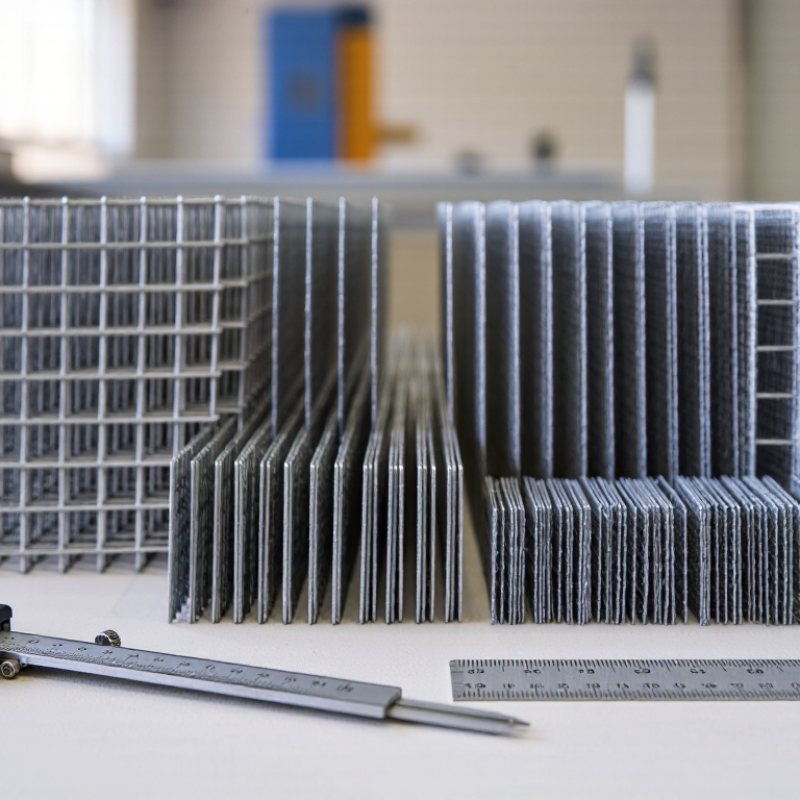
Table of Contents [Hide]
What Carbon Steel Mesh Is and Where It Is Used
Carbon steel mesh is a grid of intersecting steel wires, joined by welding or weaving. Its open pattern helps concrete surround the reinforcement, while the steel helps resist tensile forces. Welded mesh is commonly supplied in sheets or rolls, with wire diameter and spacing selected for the design. Small details matter: a sheet that is hard to position may shift during a pour.
Its uses are practical and varied. Contractors place it in concrete slabs, floors, pavements, and precast panels to help control cracking and distribute loads. It also appears in fencing, machine guards, partitions, and industrial screens, where the grid provides a sturdy barrier or support. World Steel Association reporting identifies construction and infrastructure as roughly half of global steel demand, showing how central steel products are to the built environment. Mesh is only one part of that picture.
For concrete applications, the required mesh depends on slab thickness, expected loads, exposure, and support conditions. The U.S. Geological Survey reported global cement production of about 4.1 billion metric tons in 2023, reflecting the vast scale of concrete-related construction. That figure does not measure mesh use directly. It does, however, underline why correct reinforcement selection and placement deserve care. Even well-made mesh cannot compensate for poor cover or careless installation.

© Copyright - Pro Tool & Supply - Site by SVM E-Marketing Solutions - Sitemap
- Privacy policy