- Products
- Air Compressors & Air Tools
- Climate Control
- Compaction Equipment
- Concrete Cutting Tools & Equipment
- Concrete and Masonry
- Demolition & Excavation
- Electrical & Mechanical
- Fasteners and Anchoring Adhesives
- Floor Protection
- Generators and Welders
- Hand Tools
- Heaters
- Janitorial and Office Supplies
- Jobsite Protection
- Ladders & Storage
- Lighting & Lighting Accessories
- Man Lifts
- Material Handling Equipment
- Power Tools
- Pressure Washers & Pumps
- Safety Gear
- Safety Products
- Saws
- Surface Preparation
- SEASONAL PRODUCTS
- Rentals
- Air Compressor and Air Tool Rentals
- Climate Control Rental
- Compaction Rentals
- Concrete Equipment Rentals
- Demolition & Excavation Equipment Rentals
- Concrete Floor Grinder Rentals
- General Construction Equipment Rentals
- Generator Rentals and Welder Rentals
- Heater Rentals
- Light Tower Rentals
- Man Lift Rentals in Massachusetts and Rhode Island
- Material Handling Equipment Rentals
- Pressure Washer & Pump Rentals
- Saw Rentals in New England
- SEASONAL PRODUCTS
- Products
- Air Compressors & Air Tools
- Climate Control
- Compaction Equipment
- Concrete Cutting Tools & Equipment
- Demolition & Excavation
- Electrical & Mechanical
- Floor Protection
- Generators and Welders
- Construction Heaters
- Construction Ladders, Staging, & Storage
- Construction Lighting
- Man Lifts
- Material Handling Equipment
- Industrial Janitorial and Office Supplies
- Pressure Washers & Pumps
- Construction Safety Products
- Construction Safety Gear
- Surface Preparation
- Building Protection
- Diesel Accessories
- Zero Emissions
- Rentals
- Air Compressor and Air Tool Rentals
- Climate Control Rental
- Compaction Rentals
- Concrete Equipment Rental
- Demolition & Excavation Equipment Rental
- General Construction Equipment Rental
- Generator Rentals and Welder Rentals
- Construction Heaters Rental
- Light Tower Rentals
- Man Lift Rentals
- Material Handling Equipment Rental
- Pressure Washer & Pump Rentals
- Saw Rentals in New England
- Concrete Floor Grinder Rentals
- Zero Emissions Rentals
- Repairs & Used
- Parts
- Blog
- Services
- Resources
- About Us
- Contact Us
Sales & Rental of Construction | Industrial Equipment & Supplies


2026 Best Ball End Mills for CNC Machining?
Choosing the best Ball End End Mill for CNC machining in 2026 is not just a matter of picking a familiar diameter. Tool material, flute geometry, coating, reach, and workpiece alloy all affect surface finish, tool life, and cycle time. A small difference at the tip can leave visible scallops on a curved mold surface.
Grand View Research valued the global CNC machine market at USD 101.22 billion in 2023 and projected a 9.8% compound annual growth rate through 2030. That figure measures the broader CNC market, not ball end mills specifically. Still, it signals why accurate tool selection matters to more shops. Small details matter. Manufacturing quality authority W. Edwards Deming offered a useful reminder: “It is not enough to do your best; you must know what to do, and then do your best.” Applied here, that means checking toolmaker data, machine limits, and actual cutting results—not relying on catalog claims alone.
This guide compares leading ball end mills for common CNC tasks, from finishing hardened steel to machining aluminum. It examines cutting-edge design, substrate, coating, and recommended operating ranges. The best choice depends on the job. A long-reach cutter may reach deep contours, but it can also deflect under load. Not always. Readers should verify speeds and feeds against the toolmaker’s current recommendations and their own setup. The rankings are a starting point, not a substitute for a controlled test cut.
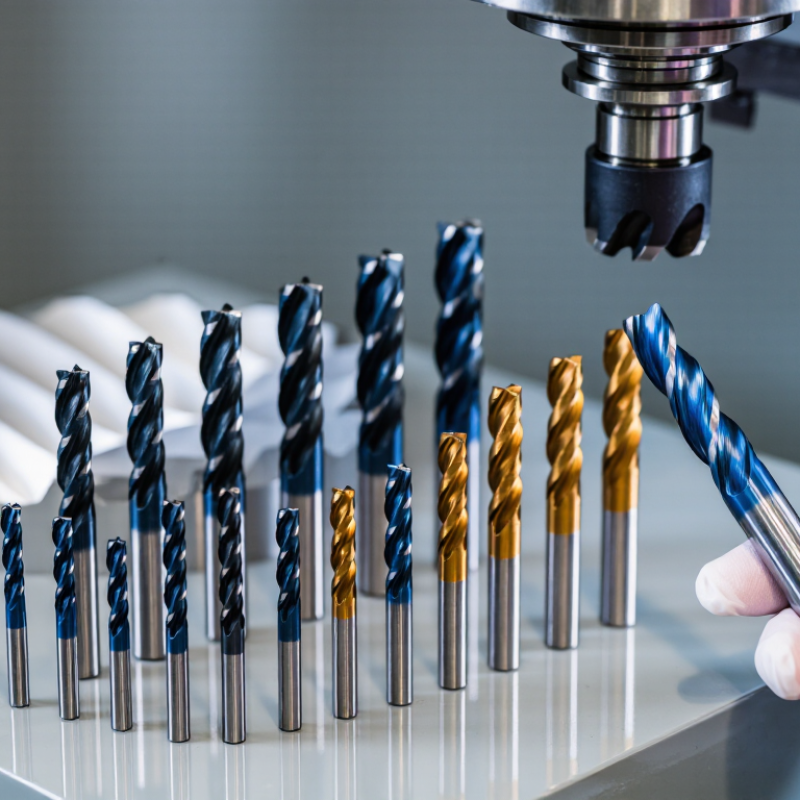
Table of Contents [Hide]
Ball End Mills: Design, Geometry, and CNC Applications
Ball end mills use a rounded cutting tip to machine curved surfaces, fillets, and sculpted contours. Their geometry affects finish, tool life, and dimensional accuracy. The ball radius sets the smallest practical concave feature, while flute count influences chip space and feed potential. Small details matter. Runout can leave one flute doing most of the work, creating uneven wear and visible marks.
The USCTI and AMT’s 2023 cutting-tool market data reported approximately $2.6 billion in U.S. cutting-tool consumption. This figure covers the wider tool market, not ball end mills alone, but signals the scale of precision machining. In practice, select radius and flute geometry for the material, tool reach, and finishing allowance. A long-reach tool may clear a deep cavity, yet its added deflection can spoil the surface. More reach is not always better.
In CNC finishing, step-over controls the scallop height left between adjacent passes. Smaller step-overs often improve surface quality, but increase cycle time. Near the tool’s center, cutting speed falls sharply, so ball tips can rub rather than cut cleanly. Tilting the tool or changing the toolpath can move contact away from the center. Test cuts still matter. Chips, spindle load, and the actual finish reveal what a simulation may miss.

© Copyright - Pro Tool & Supply - Site by SVM E-Marketing Solutions - Sitemap
- Privacy policy