- Products
- Air Compressors & Air Tools
- Climate Control
- Compaction Equipment
- Concrete Cutting Tools & Equipment
- Concrete and Masonry
- Demolition & Excavation
- Electrical & Mechanical
- Fasteners and Anchoring Adhesives
- Floor Protection
- Generators and Welders
- Hand Tools
- Heaters
- Janitorial and Office Supplies
- Jobsite Protection
- Ladders & Storage
- Lighting & Lighting Accessories
- Man Lifts
- Material Handling Equipment
- Power Tools
- Pressure Washers & Pumps
- Safety Gear
- Safety Products
- Saws
- Surface Preparation
- SEASONAL PRODUCTS
- Rentals
- Air Compressor and Air Tool Rentals
- Climate Control Rental
- Compaction Rentals
- Concrete Equipment Rentals
- Demolition & Excavation Equipment Rentals
- Concrete Floor Grinder Rentals
- General Construction Equipment Rentals
- Generator Rentals and Welder Rentals
- Heater Rentals
- Light Tower Rentals
- Man Lift Rentals in Massachusetts and Rhode Island
- Material Handling Equipment Rentals
- Pressure Washer & Pump Rentals
- Saw Rentals in New England
- SEASONAL PRODUCTS
- Products
- Air Compressors & Air Tools
- Climate Control
- Compaction Equipment
- Concrete Cutting Tools & Equipment
- Demolition & Excavation
- Electrical & Mechanical
- Floor Protection
- Generators and Welders
- Construction Heaters
- Construction Ladders, Staging, & Storage
- Construction Lighting
- Man Lifts
- Material Handling Equipment
- Industrial Janitorial and Office Supplies
- Pressure Washers & Pumps
- Construction Safety Products
- Construction Safety Gear
- Surface Preparation
- Building Protection
- Diesel Accessories
- Zero Emissions
- Rentals
- Air Compressor and Air Tool Rentals
- Climate Control Rental
- Compaction Rentals
- Concrete Equipment Rental
- Demolition & Excavation Equipment Rental
- General Construction Equipment Rental
- Generator Rentals and Welder Rentals
- Construction Heaters Rental
- Light Tower Rentals
- Man Lift Rentals
- Material Handling Equipment Rental
- Pressure Washer & Pump Rentals
- Saw Rentals in New England
- Concrete Floor Grinder Rentals
- Zero Emissions Rentals
- Repairs & Used
- Parts
- Blog
- Services
- Resources
- About Us
- Contact Us
Sales & Rental of Construction | Industrial Equipment & Supplies


What Are the Best Angle Grinder Parts in 2026?
Choosing the right Angle Grinder Parts in 2026 requires more than comparing prices or reading glossy specifications. A grinder may look powerful on a workbench, yet a worn bearing, weak carbon brush, or poorly matched guard can reduce control within minutes. The most useful choices come from real maintenance experience, manufacturer compatibility data, and careful inspection of materials. Fit matters. So does timing.
Michael Turner, a veteran power-tool service engineer with more than two decades of repair experience, says, “A reliable grinder begins with the right part, not the cheapest part.” His point is easy to test. A genuine gear set should mesh smoothly, while a quality spindle should turn without grinding or side movement. Brushes need the correct dimensions, spring pressure, and compound. Small differences can create heat, vibration, or premature failure.
This guide examines the best Angle Grinder Parts for professional workshops, renovation projects, and demanding home repairs. It compares durability, safety features, compatibility, and practical value across common 2026 options. We will look closely at armatures, bearings, switches, guards, flanges, discs, and dust-control accessories. Some “universal” parts fit several models, but not perfectly. That detail is often overlooked.
Real users should still verify the model number before ordering. Manuals can be incomplete, and online listings sometimes contain careless measurements. I have found that assumption becomes expensive quickly. A ten-minute inspection may prevent hours of rework, excessive sparks, or an unsafe repair.
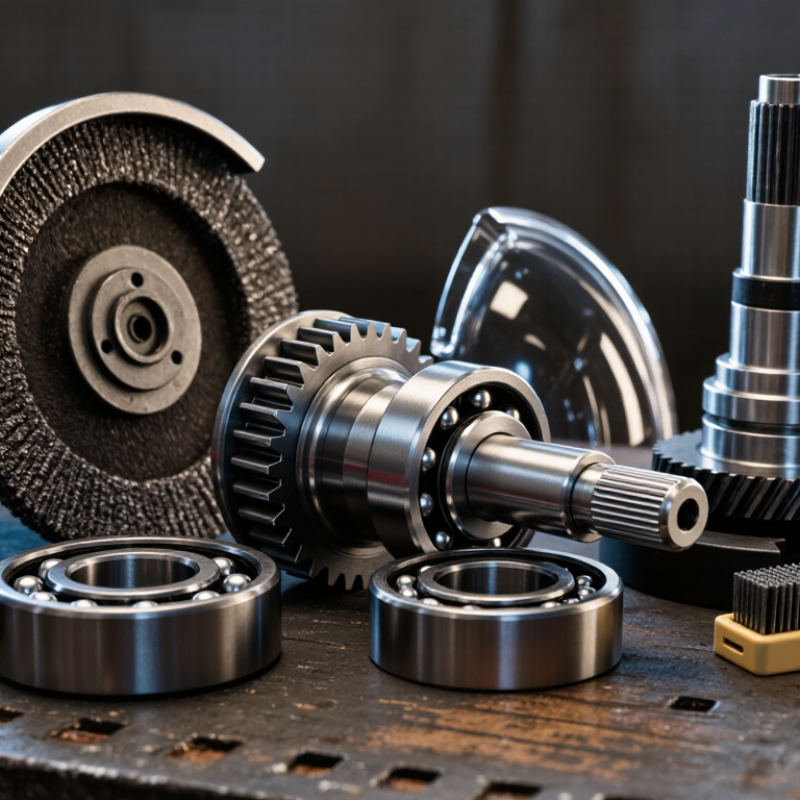
Table of Contents [Hide]
What Are Angle Grinder Parts and How Do They Work?
An angle grinder is a compact power system, not merely a spinning disc. The motor converts electrical energy into rotation, while the gear set redirects that rotation through the spindle. The spindle holds the abrasive wheel with a flange and locking nut. Bearings support smooth movement. Carbon brushes transfer current in many corded models, although they eventually wear and require inspection. Battery models add cells, a controller, and temperature protection.
The guard is essential. It helps redirect fragments and limits accidental contact when positioned correctly. ANSI B7.1 guidance emphasizes compatible wheels, correct flanges, and controlled operating speeds. A disc rated below the grinder’s speed can fail dangerously. The side handle improves leverage, especially when sparks bounce from a steel edge. A 2024 MarketsandMarkets report valued the global power tools market at about 36 billion dollars and forecast continued growth through 2029. That expansion increases demand for durable motors, safer switches, and replaceable wear parts. Still, market growth does not prove every component is reliable. I have seen clean-looking bearings develop rough spots after dusty cutting. Check the spindle by hand. Listen for grinding noise. Small clues matter.
The best parts in 2026 should match the grinder’s speed, power source, and workload. Sealed bearings suit dusty workshops, while reinforced guards suit frequent cutting. Soft-start circuits can reduce startup movement. Electronic braking may stop the wheel faster, but performance varies by design. Inspect the nut, flange, cord, and guard before each use. A perfect part list cannot correct careless assembly. That is the uncomfortable detail.
What Are the Best Angle Grinder Parts in 2026? - What Are Angle Grinder Parts and How Do They Work?
| Part | Primary Function | Typical Material or Construction | How It Works | Common Wear Signs | Maintenance or Replacement Guidance | Importance |
|---|---|---|---|---|---|---|
| Electric Motor | Converts electrical energy into rotary motion. | Copper windings, laminated steel core, insulated housing, and a rotating armature in brushed designs. | Electrical current creates a magnetic field that turns the rotor and transfers power to the gearing system. | Loss of power, overheating, burning odor, excessive sparking, or inconsistent speed. | Keep ventilation openings clear. Replace worn internal components only with compatible parts; disconnect power before inspection. | Essential |
| Carbon Brushes | Deliver electrical current to the rotating armature in brushed motors. | Conductive carbon compound with a spring and flexible lead. | The brush remains in contact with the rotating commutator while the spring maintains contact pressure. | Intermittent operation, visible arcing, reduced output, or brushes worn near their service limit. | Inspect as recommended by the tool manufacturer. Replace brushes as a matched set when applicable. | High |
| Armature and Commutator | Transfers motor torque to the spindle through the gear train. | Copper commutator segments, steel shaft, laminated iron core, and copper windings. | The armature rotates inside the magnetic field; the commutator switches current through the windings to maintain rotation. | Heavy sparking, burnt marks, rough rotation, unusual vibration, or a shorted winding. | Do not use abrasive cleaning methods that damage the commutator. Replace the assembly if windings or the shaft are damaged. | Essential |
| Gears and Gearbox | Changes motor speed and transfers torque to the spindle, usually through bevel gears. | Hardened steel gears, bearings, seals, and a metal or reinforced housing. | The pinion gear drives a larger bevel gear, reducing speed while increasing usable torque at the disc. | Grinding noise, gear chatter, excessive play, leaks, or abnormal vibration. | Use the specified gear lubricant and avoid overloading the tool. Replace damaged gears or bearings rather than continuing to operate the grinder. | Essential |
| Spindle | Supports the abrasive accessory and transfers rotational force. | Heat-treated steel shaft with a threaded end and retaining shoulder. | The spindle rotates with the output gear while the flange and nut clamp the wheel or accessory in place. | Visible wobble, damaged threads, difficult accessory installation, or excessive radial play. | Clean the threads and shoulder before fitting an accessory. Replace a bent or damaged spindle; never compensate with loose washers. | Essential |
| Flanges and Lock Nut | Center and secure the wheel or accessory on the spindle. | Machined steel or hardened metal, commonly with a backing flange and threaded lock nut. | The flanges distribute clamping pressure across the accessory while the nut prevents movement during rotation. | Damaged faces, cross-threading, slipping accessories, or an accessory that does not seat flat. | Use the correct flange orientation for the accessory. Tighten securely without excessive force or impact-tool use. | Essential |
| Wheel Guard | Helps contain fragments and deflects sparks away from the operator. | Stamped or cast steel, sometimes with a corrosion-resistant finish. | The guard forms a protective barrier around part of the rotating wheel while leaving the working area accessible. | Cracks, distortion, missing fasteners, poor adjustment, or movement during operation. | Install the guard required for the specific accessory and operation. Do not operate the grinder with a damaged or missing guard. | Safety-critical |
| Side Handle | Improves control and reduces the chance of losing grip during high-torque work. | Threaded metal mounting insert with a molded polymer or rubberized grip. | The handle attaches to one of the available mounting positions so the user can control the tool with two hands. | Loose threads, cracked grip, damaged mount, or excessive handle movement. | Install it in the position that provides the best control. Tighten by hand and inspect the mounting threads regularly. | High |
| Power Switch and Lock Mechanism | Controls electrical power and, on some tools, maintains operation without continuous finger pressure. | Insulated polymer body, conductive contacts, spring, and mechanical actuator. | Moving the actuator closes or opens the circuit; a lock mechanism holds the switch in the operating position when designed for that function. | Sticking, failure to latch, unexpected shutdown, or failure to stop when released. | Keep dust away from the switch area. Replace a faulty switch immediately; do not bypass safety mechanisms. | Safety-critical |
| Power Cord or Battery Pack | Supplies electrical energy to the motor. | Flexible insulated cable for corded models, or a rechargeable cell pack with protective electronics for cordless models. | The cord delivers mains power, while a battery pack provides controlled direct current through its protection and control circuitry. | Frayed insulation, loose connections, reduced runtime, overheating, or failure to start. | Do not use damaged cords or swollen battery packs. Store batteries in suitable conditions and use the correct charger. | Safety-critical |
| Cooling Fan and Air Vents | Moves air through the tool to remove heat from the motor and internal components. | Plastic or metal fan connected to the motor shaft, with molded or machined ventilation openings. | Fan rotation draws ambient air through the housing and expels heated air during operation. | Overheating, reduced airflow, blocked vents, or a rattling fan. | Clean vents with dry air or a soft brush. Avoid covering the openings and allow the tool to cool during heavy work. | High |
| Bearings | Support rotating shafts and reduce friction. | Sealed ball bearings with hardened steel races and balls. | The balls roll between the inner and outer races, allowing the armature, gears, and spindle to rotate smoothly. | Grinding or humming noise, rough rotation, heat, shaft play, or vibration. | Bearings are generally replaced rather than lubricated in place. Inspect them whenever the gearbox or motor is serviced. | High |
| Abrasive Disc or Accessory | Performs the cutting, grinding, sanding, polishing, or wire-brushing task. | Aluminum oxide, zirconia, diamond, silicon carbide, abrasive fiber, or steel wire depending on the application. | The rotating abrasive surface removes material through cutting edges, abrasive grains, or wire contact. | Cracks, chips, glazing, excessive vibration, reduced cutting speed, or an expired or damaged disc. | Match the accessory type, diameter, bore, and maximum rated speed to the grinder. Inspect before every use and replace damaged accessories. | Safety-critical |
Safety note: Always disconnect a corded tool or remove the battery before servicing. Use the correct guard, accessory, flange, and rated speed for the operation, and wear suitable eye, hearing, respiratory, and hand protection.

© Copyright - Pro Tool & Supply - Site by SVM E-Marketing Solutions - Sitemap
- Privacy policy