- Products
- Air Compressors & Air Tools
- Climate Control
- Compaction Equipment
- Concrete Cutting Tools & Equipment
- Concrete and Masonry
- Demolition & Excavation
- Electrical & Mechanical
- Fasteners and Anchoring Adhesives
- Floor Protection
- Generators and Welders
- Hand Tools
- Heaters
- Janitorial and Office Supplies
- Jobsite Protection
- Ladders & Storage
- Lighting & Lighting Accessories
- Man Lifts
- Material Handling Equipment
- Power Tools
- Pressure Washers & Pumps
- Safety Gear
- Safety Products
- Saws
- Surface Preparation
- SEASONAL PRODUCTS
- Rentals
- Air Compressor and Air Tool Rentals
- Climate Control Rental
- Compaction Rentals
- Concrete Equipment Rentals
- Demolition & Excavation Equipment Rentals
- Concrete Floor Grinder Rentals
- General Construction Equipment Rentals
- Generator Rentals and Welder Rentals
- Heater Rentals
- Light Tower Rentals
- Man Lift Rentals in Massachusetts and Rhode Island
- Material Handling Equipment Rentals
- Pressure Washer & Pump Rentals
- Saw Rentals in New England
- SEASONAL PRODUCTS
- Products
- Air Compressors & Air Tools
- Climate Control
- Compaction Equipment
- Concrete Cutting Tools & Equipment
- Demolition & Excavation
- Electrical & Mechanical
- Floor Protection
- Generators and Welders
- Construction Heaters
- Construction Ladders, Staging, & Storage
- Construction Lighting
- Man Lifts
- Material Handling Equipment
- Industrial Janitorial and Office Supplies
- Pressure Washers & Pumps
- Construction Safety Products
- Construction Safety Gear
- Surface Preparation
- Building Protection
- Diesel Accessories
- Zero Emissions
- Rentals
- Air Compressor and Air Tool Rentals
- Climate Control Rental
- Compaction Rentals
- Concrete Equipment Rental
- Demolition & Excavation Equipment Rental
- General Construction Equipment Rental
- Generator Rentals and Welder Rentals
- Construction Heaters Rental
- Light Tower Rentals
- Man Lift Rentals
- Material Handling Equipment Rental
- Pressure Washer & Pump Rentals
- Saw Rentals in New England
- Concrete Floor Grinder Rentals
- Zero Emissions Rentals
- Repairs & Used
- Parts
- Blog
- Services
- Resources
- About Us
- Contact Us
Sales & Rental of Construction | Industrial Equipment & Supplies


Why Choose a Glass Chamfering Machine?
Choosing a Glass Chamfering Machine is not simply a purchasing decision. It is a decision about edge quality, operator safety, and production consistency. On a busy line, one poorly finished corner can interrupt handling, create rework, or weaken customer confidence.
Industry reports show why this investment deserves attention. Grand View Research estimates that the global flat glass market reached approximately USD 129 billion in 2023, with construction and automotive applications driving continued demand. Research and Markets also identifies automation and precision finishing as important developments in glass-processing equipment. These figures describe the wider market, not chamfering machines alone. That distinction matters.
As glass-processing specialist Dr. Helmut Huber explains, “A precise edge is the foundation of reliable glass handling.” The statement is simple. The engineering is not. A modern Glass Chamfering Machine can control grinding pressure, wheel alignment, cooling flow, and edge dimensions more consistently than manual methods. Operators can inspect smooth, uniform bevels instead of repeatedly correcting chipped corners.
The benefits become visible on the factory floor. Water carries away abrasive dust. A calibrated wheel creates a clean line along the panel. Fewer rejected pieces leave the cutting table. Yet automation is not magic. Poor maintenance, incorrect wheel selection, or unstable glass positioning can still produce defects. Buyers should examine throughput, tolerance control, service support, and training before comparing prices. The cheapest machine may become the most expensive choice.
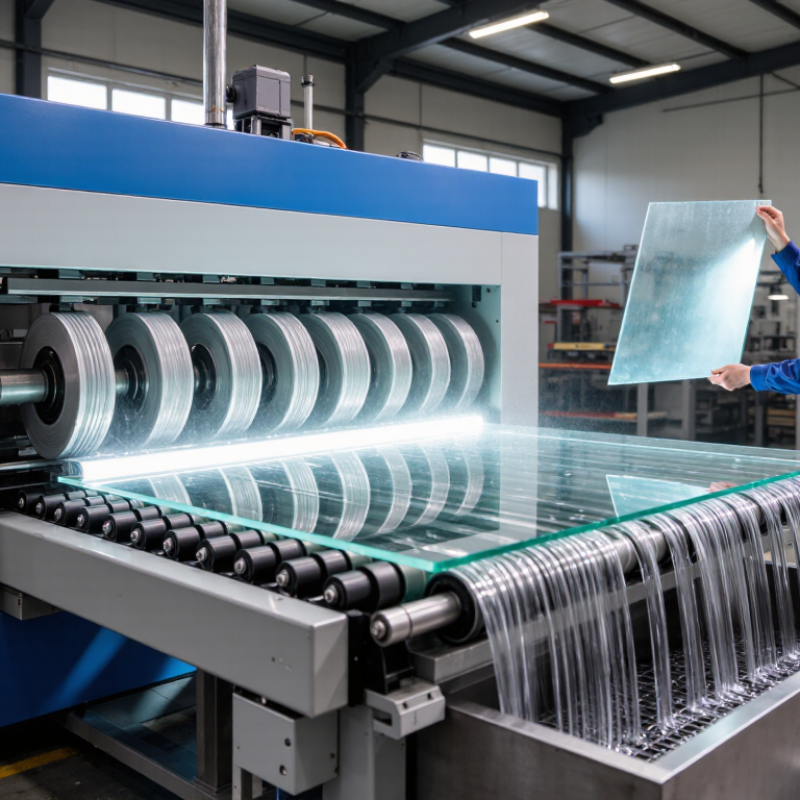
Table of Contents [Hide]
Glass Chamfering Machines: 45° Profiles and ±0.1 mm Edge Accuracy
Why Choose a Glass Chamfering Machine?
Glass Chamfering Machines: 45° Profiles and ±0.1 mm Edge Accuracy
A clean 45° chamfer does more than soften a sharp edge. It creates a consistent bevel for visible finishes, fitted panels, and downstream assembly. On a machine specified for ±0.1 mm accuracy, each pass can help keep the bevel width and edge position within a tight target. Small errors show. But that figure is a machine specification, not a promise for every glass type or setup.
The U.S. Department of Energy’s Energy Saver guidance estimates that windows account for 25–30% of residential heating and cooling energy use. That figure concerns whole-window performance, not chamfering; accurate edgework alone cannot guarantee energy savings. It can, however, support consistent component fit and finishing. Check actual output with calibrated measuring tools, especially after wheel changes. Glass thickness, feed speed, and cooling conditions can shift results. That part is easy to underestimate.
Tips: Run a sample first. Measure the bevel at several points, not just one corner. Record settings, then adjust gradually. Measure after cooling.

© Copyright - Pro Tool & Supply - Site by SVM E-Marketing Solutions - Sitemap
- Privacy policy