Sales & Rental of Construction | Industrial Equipment & Supplies

What Is an Automotive Vent Membrane and How Does It Work?

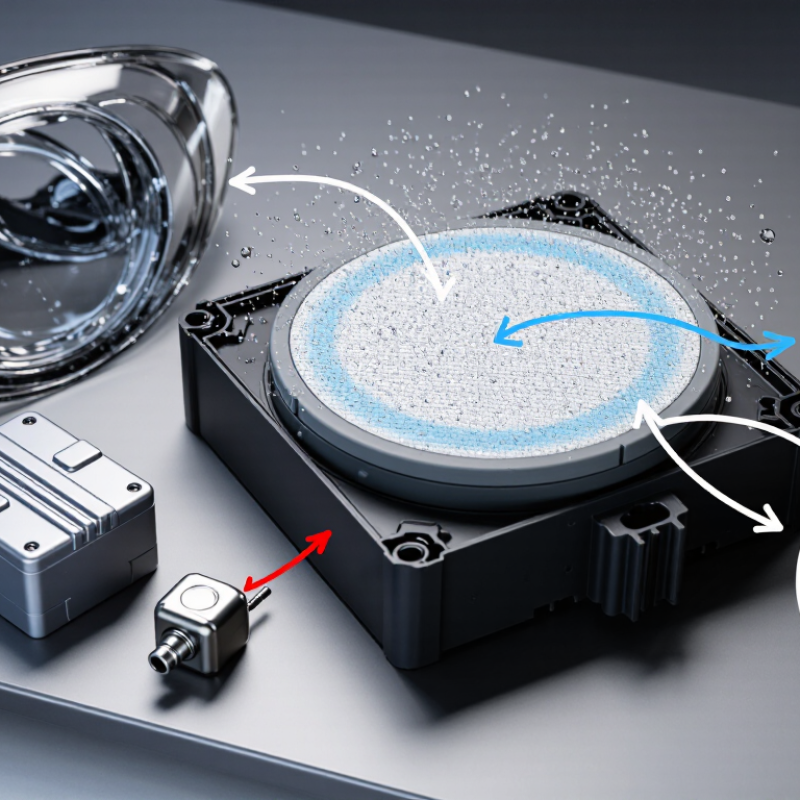
An Automotive Vent Membrane is a small protective component with a demanding job. It helps enclosed vehicle systems breathe without exposing sensitive electronics to water, dust, or oil mist. You may find it on lamps, battery housings, electronic control units, sensors, and motor assemblies. Although it often looks like a simple patch, its performance depends on material choice, vent design, and installation quality.

The membrane usually contains a microporous material, such as expanded PTFE. Its pores allow air and pressure to pass while resisting liquid water and larger contaminants. Pressure changes occur when an enclosure heats during operation and cools after shutdown. Without pressure equalization, seals may experience stress, and moisture can enter through weak points. The vent also helps reduce condensation risks. It does not remove every environmental threat.

Real-world reliability requires more than a product datasheet. Engineers commonly assess airflow, water entry, oil resistance, temperature cycling, vibration, dust exposure, and adhesive bonding. A membrane that performs well in a laboratory may behave differently after road debris, thermal aging, or careless assembly. That limitation deserves attention.

Small details matter.

During inspection, look for wrinkles, blocked pores, damaged edges, and uneven compression. A poorly positioned membrane can restrict airflow or create a leakage path. Engineers should match the membrane’s ratings with the enclosure’s pressure range and operating environment. Testing should reflect actual vehicle conditions, not ideal assumptions. This article explains how an Automotive Vent Membrane works, where it is used, and why correct integration determines its long-term value.
What Is an Automotive Vent Membrane and How Does It Work?

Definition and Core Purpose of an Automotive Vent Membrane

An automotive vent membrane is a porous material fitted over a vent opening in a vehicle component. It allows air and certain gases to pass while helping limit the entry of liquid water, dust, and other contaminants. You may find one in a lamp housing, electronic control unit, or battery enclosure. The exact membrane design depends on the component and its operating conditions.

Its core purpose is pressure equalization. As a vehicle heats up, air inside an enclosure expands; when it cools, internal pressure falls. Without a vent, these changes can stress seals and draw moisture through weak points. The membrane provides a controlled path for airflow, helping reduce pressure differences while keeping droplets out. It is not a complete seal against every contaminant. Performance can vary with damage, blockage, and exposure, so the membrane should be considered part of a larger enclosure design.

Tips: Keep the vent opening clear during inspection. Look for tears, loose edges, or mud covering the surface. Avoid poking or scrubbing the membrane; it is easy to damage, and I might be too casual about how delicate it can be. If a housing repeatedly fogs or collects moisture, have the full sealing system checked.

Key Materials and Structural Features of Vent Membranes

An automotive vent membrane is a thin, selectively permeable layer fitted over a housing opening. It lets air move in and out as temperature and altitude change, while resisting liquid water and dust. Inside a headlamp, for example, a pressure shift can draw humid air through a poorly protected opening. A vent membrane helps equalize pressure without leaving the enclosure fully exposed.

Material choice shapes performance. Expanded PTFE is widely used because its microscopic, interconnected pores allow gas flow while resisting water penetration. Polyurethane and other polymer films may suit designs needing different airflow, bonding, or chemical resistance. The structure matters as much as the material: pore size, membrane thickness, support layer, and adhesive perimeter all affect reliability. A small wrinkle at the edge can create a leak path. Not glamorous, but important.

The International Energy Agency’s Global EV Outlook 2024 reports nearly 14 million electric cars were sold worldwide in 2023, about 18% of total car sales. That growth raises the importance of dependable venting in battery and electronic enclosures exposed to heat cycles and vibration. Engineers assess airflow and water resistance using controlled tests; ASTM F316 describes a method for measuring pore characteristics in membrane filters. Still, a lab result does not capture every aging condition. Installation quality deserves equal attention.

How Automotive Vent Membranes Control Air and Moisture

An automotive vent membrane is a breathable barrier fitted to an enclosure, such as a headlamp, sensor housing, or control module. It helps equalize pressure as temperatures change. A sealed housing can build pressure when warmed by sunlight or engine heat, then draw air inward as it cools. The membrane allows air to pass while resisting liquid water and many dust particles. It is not an open hole.

Its function depends on tiny pores and suitable surface properties. Air moves through the membrane in response to pressure differences, reducing stress on seals and covers. Water droplets are generally too large to pass through intact pores under specified conditions. However, performance varies with membrane design, installation, and exposure. Oil, road grime, or a damaged adhesive edge can impair airflow or sealing. The membrane also cannot remove moisture already trapped inside. That distinction matters.

Tips: Keep the vent unobstructed during assembly and avoid pressing tools against its active surface. Check the surrounding seal for wrinkles or gaps. If condensation persists, inspect the whole enclosure and its assembly process; replacing the membrane alone may not solve the cause. Real-world conditions can be messier than test conditions.

What Is an Automotive Vent Membrane and How Does It Work?

Automotive vent membranes let air and water vapor pass through to help equalize pressure, while resisting liquid water and contaminants.

Functional illustration: relative ratings show the membrane’s intended behavior, not measured test results. Actual performance depends on membrane design and test conditions.

Common Applications Across Vehicle Components

Automotive vent membranes appear in headlamps, taillamps, battery enclosures, sensors, and electronic control units. They allow air to pass while helping block liquid water, dust, and road grime. This matters when a sealed component heats up during operation, then cools in rain or at night. The resulting pressure change can strain seals or draw moisture through weak points. A membrane vent helps balance that pressure. It is a small part. Its job is not small.

The IEA’s Global EV Outlook 2024 reports that nearly 14 million electric cars were sold worldwide in 2023, about 18% of all car sales. That growth adds more battery and power-electronics enclosures where pressure management and moisture control matter. In lighting assemblies, vents can also reduce condensation that clouds a lens. Sensor housings face another challenge: a vent must support airflow without letting fine contaminants reach sensitive surfaces. Performance depends on placement, membrane area, housing design, and exposure conditions. A membrane alone cannot compensate for a poor enclosure seal.

Tips: Match the vent to the component’s pressure range and expected exposure. Check installation direction, adhesive compatibility, and whether nearby surfaces can block airflow. Test the complete assembly through temperature cycling and water exposure, not just the membrane in isolation. Small details are easy to overlook. That is worth reconsidering.

Performance Factors, Testing Methods, and Maintenance Considerations

An automotive vent membrane balances airflow with protection. It lets pressure escape when a sealed lamp, battery enclosure, or electronic module heats up, then admits air as it cools. The membrane’s microscopic pores resist liquid water while allowing gas to pass. Small details matter: pore structure, membrane area, housing design, and adhesive quality all affect airflow and sealing. A membrane can perform well on a lab coupon yet struggle after installation. That gap deserves attention.

Performance depends on pressure differences, temperature swings, humidity, dust, and chemical exposure. ISO 16750-4 outlines climatic loads for road-vehicle electrical equipment, while IEC 60529 defines ingress-protection tests; its IPX7 procedure includes immersion at one metre for 30 minutes. These tests help set conditions, but they do not replace component-specific checks. Engineers typically measure airflow at a stated pressure, water-entry resistance, and pressure equalization over repeated cycles. Test the assembled enclosure, too. Seams can fail first.

Maintenance is usually inspection, not routine replacement. Look for torn membranes, blocked vents, lifted adhesive edges, and residue after service or harsh exposure. Avoid probing the membrane with tools; a tiny puncture can become a leak path. Follow the component maker’s cleaning instructions, since solvents and compressed air may damage the membrane. Records help: note test pressure, temperature, exposure time, and observed defects. Real-world conditions vary, and one test result never tells the whole story.

What Is an Automotive Vent Membrane and How Does It Work? — Performance Factors, Testing Methods, and Maintenance Considerations
Topic What It Means How It Is Evaluated Practical Considerations
Purpose A vent membrane lets air pass between an enclosure and the surrounding environment while helping limit the entry of liquid water and particles. Assess airflow, liquid-water resistance, and particle protection against the enclosure’s design requirements. Commonly used on sealed vehicle electronics housings, lamps, sensors, and other enclosures subject to pressure or temperature changes.
Pressure equalization Air exchange can reduce pressure differences that develop as an enclosure heats, cools, or changes altitude. Measure airflow at specified pressure differences and monitor enclosure pressure during temperature cycling. Required airflow depends on enclosure volume, leakage, temperature-change rate, and the application’s pressure limits.
Water and dust protection Many vent membranes use a microporous structure that allows gas flow while resisting liquid water under specified conditions. Use application-relevant water-ingress and dust-ingress tests. ISO 20653 describes degrees of protection for road-vehicle electrical equipment; the complete assembly must be tested for an enclosure rating. Protection depends on the membrane, seal, mounting surface, and assembly. A membrane alone does not establish an enclosure’s IP or IP6K rating.
Air permeability Airflow capacity affects how quickly the vent can respond to pressure changes. Record airflow at defined pressure differences, using consistent sample area, conditioning, and test setup. Compare results only when test conditions are equivalent. Contamination, compression, or blocked vent openings can reduce airflow.
Liquid-entry resistance The membrane’s resistance to water depends on its material, pore structure, surface treatment, and exposure conditions. Apply water pressure or spray exposure appropriate to the design, then check for liquid ingress and changes in airflow. Oil, detergents, salts, and other low-surface-tension fluids may affect some membrane materials differently from clean water.
Temperature and aging Heat, cold, humidity, UV exposure, and thermal cycling can affect membrane materials, adhesives, and seals. Condition samples through application-specific environmental aging, then recheck airflow, adhesion, and water resistance. Use the vehicle or component supplier’s specified operating and storage limits; performance can vary by construction.
Chemical compatibility Contact with oils, cleaners, fuels, road fluids, or process chemicals can alter a membrane or its bonding materials. Expose assembled parts to relevant fluids using defined concentration, temperature, and duration, then inspect and retest. Confirm compatibility for the actual fluid and exposure scenario rather than assuming all hydrophobic membranes behave alike.
Mechanical durability Vibration, impact, abrasion, and handling may damage the membrane or its perimeter bond. Test the installed assembly under the applicable vibration, impact, and handling conditions; inspect for tears, lifting, or leakage. Protect the vent from sharp edges and direct mechanical damage, and follow the specified installation method.
Installation and sealing A correctly specified membrane can still fail if its adhesive, gasket, opening, or mounting surface is defective. Inspect alignment, bond coverage, surface condition, and the finished assembly; perform leak or ingress checks as required. Keep the bonding area clean and dry, avoid wrinkles or trapped debris, and do not cover the active vent area with paint or sealant.
Maintenance Routine care focuses on keeping the vent opening unobstructed and checking for visible damage or loss of adhesion. Follow the component service instructions; inspect during scheduled checks or after damage, contamination, or enclosure opening. Do not pierce, scrape, or aggressively wash the membrane. Replace damaged parts with a compatible specified component rather than attempting an unapproved repair.
© Copyright - Pro Tool & Supply - Site by SVM E-Marketing Solutions - Sitemap - Privacy policy
