- Products
- Air Compressors & Air Tools
- Climate Control
- Compaction Equipment
- Concrete Cutting Tools & Equipment
- Concrete and Masonry
- Demolition & Excavation
- Electrical & Mechanical
- Fasteners and Anchoring Adhesives
- Floor Protection
- Generators and Welders
- Hand Tools
- Heaters
- Janitorial and Office Supplies
- Jobsite Protection
- Ladders & Storage
- Lighting & Lighting Accessories
- Man Lifts
- Material Handling Equipment
- Power Tools
- Pressure Washers & Pumps
- Safety Gear
- Safety Products
- Saws
- Surface Preparation
- SEASONAL PRODUCTS
- Rentals
- Air Compressor and Air Tool Rentals
- Climate Control Rental
- Compaction Rentals
- Concrete Equipment Rentals
- Demolition & Excavation Equipment Rentals
- Concrete Floor Grinder Rentals
- General Construction Equipment Rentals
- Generator Rentals and Welder Rentals
- Heater Rentals
- Light Tower Rentals
- Man Lift Rentals in Massachusetts and Rhode Island
- Material Handling Equipment Rentals
- Pressure Washer & Pump Rentals
- Saw Rentals in New England
- SEASONAL PRODUCTS
- Products
- Air Compressors & Air Tools
- Climate Control
- Compaction Equipment
- Concrete Cutting Tools & Equipment
- Demolition & Excavation
- Electrical & Mechanical
- Floor Protection
- Generators and Welders
- Construction Heaters
- Construction Ladders, Staging, & Storage
- Construction Lighting
- Man Lifts
- Material Handling Equipment
- Industrial Janitorial and Office Supplies
- Pressure Washers & Pumps
- Construction Safety Products
- Construction Safety Gear
- Surface Preparation
- Building Protection
- Diesel Accessories
- Zero Emissions
- Rentals
- Air Compressor and Air Tool Rentals
- Climate Control Rental
- Compaction Rentals
- Concrete Equipment Rental
- Demolition & Excavation Equipment Rental
- General Construction Equipment Rental
- Generator Rentals and Welder Rentals
- Construction Heaters Rental
- Light Tower Rentals
- Man Lift Rentals
- Material Handling Equipment Rental
- Pressure Washer & Pump Rentals
- Saw Rentals in New England
- Concrete Floor Grinder Rentals
- Zero Emissions Rentals
- Repairs & Used
- Parts
- Blog
- Services
- Resources
- About Us
- Contact Us
Sales & Rental of Construction | Industrial Equipment & Supplies


What Is an AC Condenser and How Does It Work?
An air conditioner does more than blow cold air. It moves heat. At the center of that process is the outdoor condenser, a component many homeowners notice but rarely understand. Ac Condensers release indoor heat into the outdoor environment, helping refrigerant complete its cooling cycle. Without this step, the system cannot produce steady comfort.
HVAC educator John Barba explains the condenser’s role in practical terms: “The condenser is where the heat goes.” That simple statement captures the essential function. Warm, high-pressure refrigerant enters the outdoor coil after absorbing heat inside the building. The condenser fan pulls outdoor air across the coil. Heat then leaves the refrigerant and moves into the surrounding air. The refrigerant changes back into a liquid, ready for another cycle.
You can often see this process in summer. The outdoor unit hums, its fan spins, and warm air rises above the coil. That heat is not a fault. It is evidence that the system is working. Still, a warm discharge does not prove everything is healthy. A blocked coil, weak fan motor, or incorrect refrigerant charge may reduce performance.
This guide will examine what an AC condenser contains, how each part works, and why maintenance matters. It will also address common warning signs, including unusual noise, poor cooling, and excessive energy use. Some explanations may seem simplified. Real systems vary. That is worth remembering. A qualified technician should confirm difficult diagnoses before repairs begin.
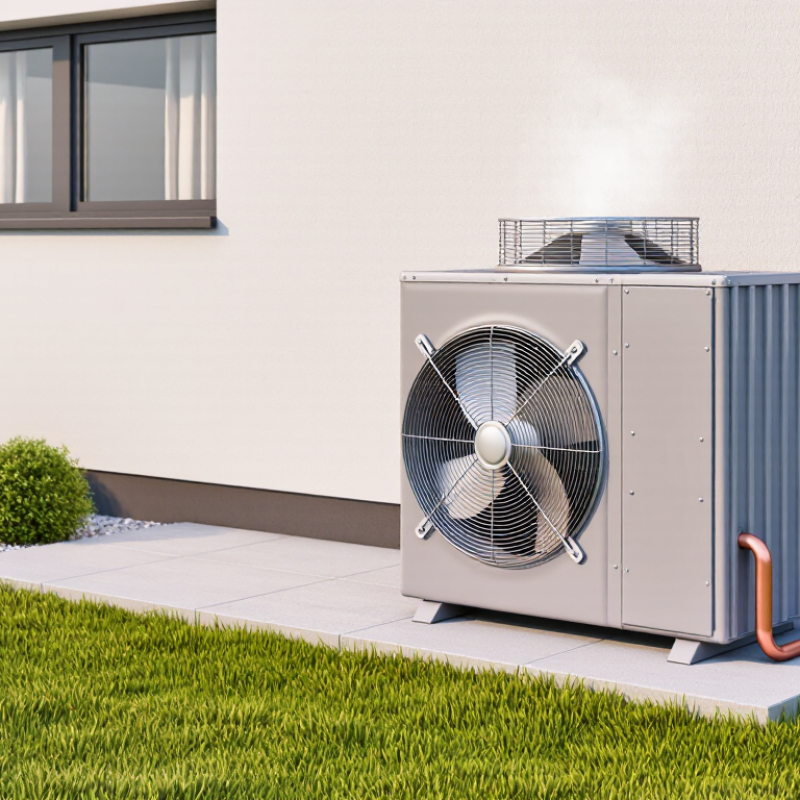
Table of Contents [Hide]
AC Condenser: Definition and Core Function
An AC condenser is the outdoor section that releases heat collected inside a building. It usually contains a coil, a fan, and refrigerant tubing. The compressor sends hot, high-pressure refrigerant vapor into this coil. Outdoor air then removes heat through the metal fins. As the refrigerant cools, it changes into a high-pressure liquid. This is the condenser’s core function: rejecting indoor heat and preparing refrigerant for the next stage.
A technician can often notice condenser problems through simple signs. The outdoor fan may run continuously, airflow may feel weak, or the cabinet may become unusually hot. Dirt between the fins can restrict heat transfer and raise operating pressure. However, a clean coil does not guarantee good performance. Electrical faults, low airflow, or incorrect refrigerant charge may produce similar symptoms. Proper diagnosis requires pressure readings, temperature measurements, and electrical testing. Refrigerant circuits can remain pressurized, so opening them without suitable training is unsafe.
Tips: Keep leaves and grass away from the outdoor cabinet. Leave clear space around its sides. Gently rinse the coil with power disconnected, avoiding bent fins. Do not guess the refrigerant charge from cooling performance alone. A small measurement error can affect efficiency, comfort, and compressor life. Regular professional inspection is wise, although inspection schedules may vary with climate, usage, and equipment condition.
What Is an AC Condenser and How Does It Work? - AC Condenser: Definition and Core Function
| Data Dimension | Verified Information | Practical Significance |
|---|---|---|
| Definition | The AC condenser is the outdoor heat-exchanging component of a vapor-compression air-conditioning system. | It releases heat removed from the indoor space into the outdoor air. |
| Primary Function | To reject heat from the high-pressure refrigerant vapor and convert it into a high-pressure liquid. | This prepares the refrigerant for pressure reduction and evaporation in the indoor coil. |
| Location | Normally located in the outdoor unit, where ambient air can flow across the coil. | Outdoor placement allows the system to discharge indoor heat to the surrounding environment. |
| Refrigerant Inlet State | High-pressure, high-temperature vapor leaving the compressor. | The refrigerant carries both absorbed indoor heat and compressor-generated heat. |
| Desuperheating Stage | The refrigerant vapor first loses sensible heat and its temperature drops toward the condensing temperature. | This removes excess vapor temperature before the refrigerant changes phase. |
| Condensation Stage | The refrigerant changes from vapor to liquid while rejecting latent heat at approximately constant pressure. | Phase change enables substantial heat transfer without requiring a large temperature drop. |
| Subcooling Stage | After condensation, the liquid may be cooled below its saturation temperature while remaining at high pressure. | Subcooling helps ensure that liquid, rather than vapor, reaches the expansion device. |
| Refrigerant Outlet State | High-pressure liquid, often slightly subcooled. | The liquid is ready to pass through the expansion device, where its pressure and temperature decrease. |
| Heat-Transfer Direction | Heat moves from the refrigerant, through the condenser tubing and fins, to the outdoor air. | A clean coil and adequate airflow are essential for effective heat rejection. |
| Main Structural Parts | Refrigerant tubes, heat-transfer fins, coil headers, a fan, a fan motor, and a protective cabinet are commonly used. | Together, these parts circulate air and maximize the surface area available for heat exchange. |
| Outdoor Fan Function | The fan draws or pushes outdoor air across the condenser coil. | Air movement carries rejected heat away from the coil and supports stable operating conditions. |
| Pressure Relationship | The condenser operates on the high-pressure side of the refrigeration circuit. | The compressor creates the pressure difference needed for refrigerant circulation and heat rejection. |
| Energy Balance | The condenser rejects the indoor cooling load plus the heat added by the compressor. | Therefore, the condenser normally releases more heat than the evaporator absorbs indoors. |
| Common Airflow Problems | Blocked fins, dirt, leaves, restricted clearance, or a malfunctioning fan can reduce airflow. | Restricted airflow can increase condensing temperature and pressure, reduce efficiency, and strain the compressor. |
| Basic Maintenance | Keep the coil clean, maintain unobstructed clearance, inspect the fan, and check for visible damage or refrigerant leaks. | Routine maintenance helps preserve heat-transfer performance and can extend equipment service life. |

© Copyright - Pro Tool & Supply - Site by SVM E-Marketing Solutions - Sitemap
- Privacy policy