- Products
- Air Compressors & Air Tools
- Climate Control
- Compaction Equipment
- Concrete Cutting Tools & Equipment
- Concrete and Masonry
- Demolition & Excavation
- Electrical & Mechanical
- Fasteners and Anchoring Adhesives
- Floor Protection
- Generators and Welders
- Hand Tools
- Heaters
- Janitorial and Office Supplies
- Jobsite Protection
- Ladders & Storage
- Lighting & Lighting Accessories
- Man Lifts
- Material Handling Equipment
- Power Tools
- Pressure Washers & Pumps
- Safety Gear
- Safety Products
- Saws
- Surface Preparation
- SEASONAL PRODUCTS
- Rentals
- Air Compressor and Air Tool Rentals
- Climate Control Rental
- Compaction Rentals
- Concrete Equipment Rentals
- Demolition & Excavation Equipment Rentals
- Concrete Floor Grinder Rentals
- General Construction Equipment Rentals
- Generator Rentals and Welder Rentals
- Heater Rentals
- Light Tower Rentals
- Man Lift Rentals in Massachusetts and Rhode Island
- Material Handling Equipment Rentals
- Pressure Washer & Pump Rentals
- Saw Rentals in New England
- SEASONAL PRODUCTS
- Products
- Air Compressors & Air Tools
- Climate Control
- Compaction Equipment
- Concrete Cutting Tools & Equipment
- Demolition & Excavation
- Electrical & Mechanical
- Floor Protection
- Generators and Welders
- Construction Heaters
- Construction Ladders, Staging, & Storage
- Construction Lighting
- Man Lifts
- Material Handling Equipment
- Industrial Janitorial and Office Supplies
- Pressure Washers & Pumps
- Construction Safety Products
- Construction Safety Gear
- Surface Preparation
- Building Protection
- Diesel Accessories
- Zero Emissions
- Rentals
- Air Compressor and Air Tool Rentals
- Climate Control Rental
- Compaction Rentals
- Concrete Equipment Rental
- Demolition & Excavation Equipment Rental
- General Construction Equipment Rental
- Generator Rentals and Welder Rentals
- Construction Heaters Rental
- Light Tower Rentals
- Man Lift Rentals
- Material Handling Equipment Rental
- Pressure Washer & Pump Rentals
- Saw Rentals in New England
- Concrete Floor Grinder Rentals
- Zero Emissions Rentals
- Repairs & Used
- Parts
- Blog
- Services
- Resources
- About Us
- Contact Us
Sales & Rental of Construction | Industrial Equipment & Supplies


7 Tips for Choosing a Cereal Bar Production Line
Choosing a Cereal Bar Production Line is a practical decision, not merely a machinery purchase. The right system must match your recipe, output target, labor capacity, and future product plans. A soft oat bar needs different handling from a dense protein bar. Small details matter, including mixing torque, slab thickness, cooling time, cutting accuracy, and wrapper alignment.
Quality-management expert W. Edwards Deming stated, “Quality comes not from inspection, but from the improvement of the production process.” This principle fits cereal bar manufacturing closely. A reliable line should prevent problems before they reach the final package. Operators need clear controls, stable temperatures, cleanable surfaces, and accessible maintenance points. Watch the details.
These seven tips will help you compare equipment with greater confidence. They cover production capacity, ingredient flexibility, forming methods, cooling systems, cutting precision, packaging integration, and after-sales support. A line producing 500 kilograms per hour may sound impressive, but it could waste ingredients if your market requires only 100 kilograms. Excessive speed can also create uneven bars, broken edges, or unnecessary energy use.
Do not assume the most automated option is always the best option. Your factory layout, workforce skills, local service access, and product texture should influence the decision. Ask suppliers for sample testing using your actual mixture. Review cleaning procedures carefully. Some specifications look excellent on paper, yet perform differently during long production runs. Careful questioning may feel slower now, but it can prevent expensive changes later.
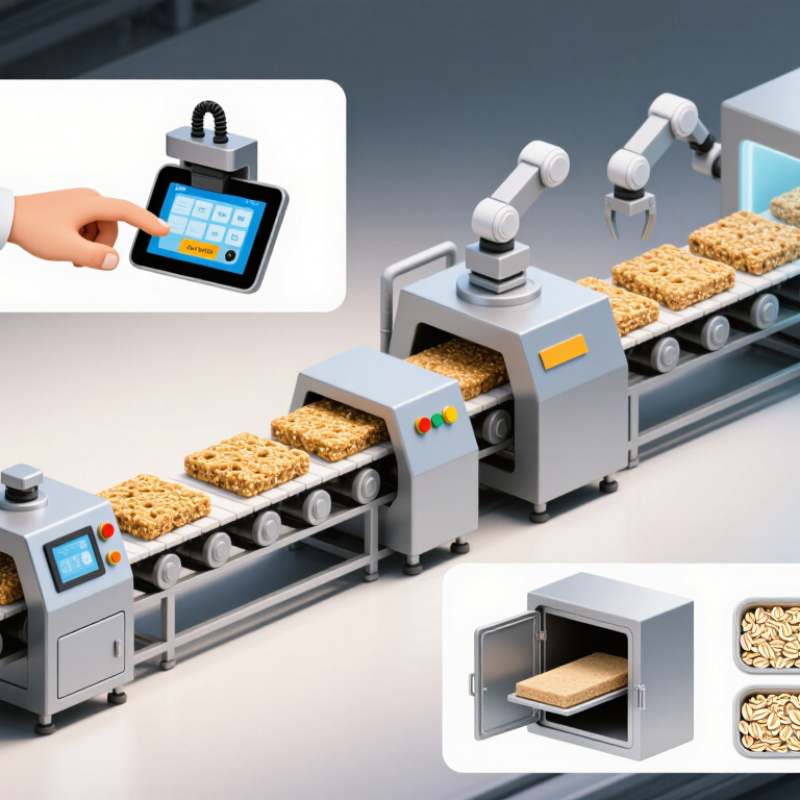
Table of Contents [Hide]
Define Your Cereal Bar Production Requirements
Before choosing a cereal bar production line, define the product precisely. Record the target bar weight, length, thickness, moisture level, and daily output. A 25-gram oat bar needs different forming pressure from a dense nut-and-fruit bar. Small details matter.
Market forecasts also support careful planning. Grand View Research estimated the global cereal bars market at about USD 13 billion in 2023, with continued growth through 2030. This growth may encourage higher capacity, but buying the fastest line is not always wise. Calculate realistic demand, including seasonal peaks and planned product changes. Then specify whether the line must handle flakes, crisps, dried fruit, seeds, syrups, or chocolate coatings. Some mixtures shear easily. Others crumble during cutting.
Packaging deserves equal attention. PMMI industry reports identify labor availability and automation as important packaging challenges. Therefore, compare manual adjustments with automatic weighing, cutting, cooling, and wrapping. Ask for verified output under your recipe, not only the supplier’s best laboratory result. Request trials using your actual ingredients.
We once assumed a sticky syrup would run smoothly; it caused uneven cutting and extra cleaning. That mistake was expensive.
Include sanitation access, allergen separation, temperature control, spare parts, and operator training in the specification. Leave room for improvement. Your first requirements sheet may be incomplete. That is normal. Recheck it after pilot production and customer testing.

© Copyright - Pro Tool & Supply - Site by SVM E-Marketing Solutions - Sitemap
- Privacy policy