- Products
- Air Compressors & Air Tools
- Climate Control
- Compaction Equipment
- Concrete Cutting Tools & Equipment
- Concrete and Masonry
- Demolition & Excavation
- Electrical & Mechanical
- Fasteners and Anchoring Adhesives
- Floor Protection
- Generators and Welders
- Hand Tools
- Heaters
- Janitorial and Office Supplies
- Jobsite Protection
- Ladders & Storage
- Lighting & Lighting Accessories
- Man Lifts
- Material Handling Equipment
- Power Tools
- Pressure Washers & Pumps
- Safety Gear
- Safety Products
- Saws
- Surface Preparation
- SEASONAL PRODUCTS
- Rentals
- Air Compressor and Air Tool Rentals
- Climate Control Rental
- Compaction Rentals
- Concrete Equipment Rentals
- Demolition & Excavation Equipment Rentals
- Concrete Floor Grinder Rentals
- General Construction Equipment Rentals
- Generator Rentals and Welder Rentals
- Heater Rentals
- Light Tower Rentals
- Man Lift Rentals in Massachusetts and Rhode Island
- Material Handling Equipment Rentals
- Pressure Washer & Pump Rentals
- Saw Rentals in New England
- SEASONAL PRODUCTS
- Products
- Air Compressors & Air Tools
- Climate Control
- Compaction Equipment
- Concrete Cutting Tools & Equipment
- Demolition & Excavation
- Electrical & Mechanical
- Floor Protection
- Generators and Welders
- Construction Heaters
- Construction Ladders, Staging, & Storage
- Construction Lighting
- Man Lifts
- Material Handling Equipment
- Industrial Janitorial and Office Supplies
- Pressure Washers & Pumps
- Construction Safety Products
- Construction Safety Gear
- Surface Preparation
- Building Protection
- Diesel Accessories
- Zero Emissions
- Rentals
- Air Compressor and Air Tool Rentals
- Climate Control Rental
- Compaction Rentals
- Concrete Equipment Rental
- Demolition & Excavation Equipment Rental
- General Construction Equipment Rental
- Generator Rentals and Welder Rentals
- Construction Heaters Rental
- Light Tower Rentals
- Man Lift Rentals
- Material Handling Equipment Rental
- Pressure Washer & Pump Rentals
- Saw Rentals in New England
- Concrete Floor Grinder Rentals
- Zero Emissions Rentals
- Repairs & Used
- Parts
- Blog
- Services
- Resources
- About Us
- Contact Us
Sales & Rental of Construction | Industrial Equipment & Supplies

7 Best Recycling Machines for Global Buyers?
Choosing the right Recycling Machine is rarely about buying the largest or fastest model. Global buyers face different waste streams, labor costs, energy prices, and recovery targets. A compact baler may suit a supermarket, while a recycling plant may require shredders, granulators, and optical sorters. The best choice depends on material quality, daily volume, maintenance access, and the final product’s value.
Andrew Morlet, CEO of the Ellen MacArthur Foundation, describes the circular economy as “a systems solution framework that tackles global challenges like climate change, biodiversity loss, waste, and pollution.” His words are relevant to machine selection. Equipment should not merely reduce waste. It should help recover useful materials consistently. That sounds simple. It is not.
This guide examines seven practical machine categories for international buyers: balers, shredders, plastic granulators, washing lines, optical sorters, glass crushers, and compactors. Each machine solves a different operational problem. A baler can turn loose cardboard into dense, stackable blocks. A granulator can transform rigid plastic into reusable flakes. An optical sorter may improve purity, but it also demands stable feeding and careful calibration.
There is no perfect machine. A cheaper model may consume more power or require difficult-to-source parts. A high-capacity line may remain underused in a smaller facility. Buyers should request verified output data, safety documentation, warranty terms, and references from similar installations. We also need to admit one uncomfortable point: published capacity figures often reflect ideal conditions, not wet, mixed, or contaminated materials. Practical testing matters more than impressive brochures.
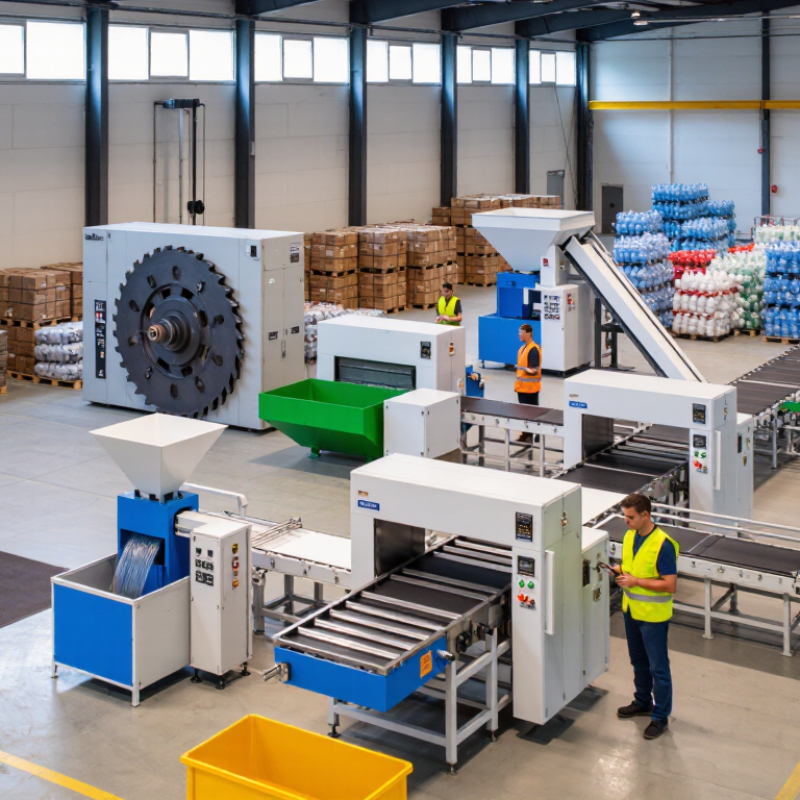
Table of Contents [Hide]
Global Recycling Demand: 2.01 Billion Tonnes of Municipal Waste Annually
7 Best Recycling Machines for Global Buyers?
Global municipal waste is a massive resource stream. The World Bank’s What a Waste 2.0 report estimated 2.01 billion tonnes of municipal solid waste generated each year. At least 33% was not managed safely. By 2050, annual waste could reach 3.40 billion tonnes, according to the same report. These figures explain growing demand for practical recycling equipment, especially in cities with limited land and rising collection costs.
The seven most useful machine categories include trommel screens, magnetic separators, optical sorters, shredders, granulators, balers, and glass crushers. Each solves a different bottleneck. A trommel can remove soil from mixed materials. A magnetic separator extracts steel from a moving conveyor. A baler reduces the volume of sorted paper or plastic, sometimes turning loose material into dense one-tonne blocks. Small details matter. Feed moisture, particle size, electricity stability, and local labor skills can change machine performance.
The International Solid Waste Association has highlighted the need for better sorting, collection, and recovery systems worldwide. However, one machine rarely fixes a weak recycling chain. This is where buyers should remain cautious. The 2.01-billion-tonne estimate is global and includes different waste definitions across countries. Actual local volumes may vary sharply. A careful buyer should review a waste audit, test representative samples, and confirm spare-parts access before purchasing. Cheap equipment can become expensive when conveyors stop, blades wear, or operators lack training.

© Copyright - Pro Tool & Supply - Site by SVM E-Marketing Solutions - Sitemap
- Privacy policy