- Products
- Air Compressors & Air Tools
- Climate Control
- Compaction Equipment
- Concrete Cutting Tools & Equipment
- Concrete and Masonry
- Demolition & Excavation
- Electrical & Mechanical
- Fasteners and Anchoring Adhesives
- Floor Protection
- Generators and Welders
- Hand Tools
- Heaters
- Janitorial and Office Supplies
- Jobsite Protection
- Ladders & Storage
- Lighting & Lighting Accessories
- Man Lifts
- Material Handling Equipment
- Power Tools
- Pressure Washers & Pumps
- Safety Gear
- Safety Products
- Saws
- Surface Preparation
- SEASONAL PRODUCTS
- Rentals
- Air Compressor and Air Tool Rentals
- Climate Control Rental
- Compaction Rentals
- Concrete Equipment Rentals
- Demolition & Excavation Equipment Rentals
- Concrete Floor Grinder Rentals
- General Construction Equipment Rentals
- Generator Rentals and Welder Rentals
- Heater Rentals
- Light Tower Rentals
- Man Lift Rentals in Massachusetts and Rhode Island
- Material Handling Equipment Rentals
- Pressure Washer & Pump Rentals
- Saw Rentals in New England
- SEASONAL PRODUCTS
- Products
- Air Compressors & Air Tools
- Climate Control
- Compaction Equipment
- Concrete Cutting Tools & Equipment
- Demolition & Excavation
- Electrical & Mechanical
- Floor Protection
- Generators and Welders
- Construction Heaters
- Construction Ladders, Staging, & Storage
- Construction Lighting
- Man Lifts
- Material Handling Equipment
- Industrial Janitorial and Office Supplies
- Pressure Washers & Pumps
- Construction Safety Products
- Construction Safety Gear
- Surface Preparation
- Building Protection
- Diesel Accessories
- Zero Emissions
- Rentals
- Air Compressor and Air Tool Rentals
- Climate Control Rental
- Compaction Rentals
- Concrete Equipment Rental
- Demolition & Excavation Equipment Rental
- General Construction Equipment Rental
- Generator Rentals and Welder Rentals
- Construction Heaters Rental
- Light Tower Rentals
- Man Lift Rentals
- Material Handling Equipment Rental
- Pressure Washer & Pump Rentals
- Saw Rentals in New England
- Concrete Floor Grinder Rentals
- Zero Emissions Rentals
- Repairs & Used
- Parts
- Blog
- Services
- Resources
- About Us
- Contact Us
Sales & Rental of Construction | Industrial Equipment & Supplies


7 Best Inverter Voltage Stabilizers to Buy in 2026
Voltage fluctuations can turn ordinary home use into a frustrating guessing game. A refrigerator may hum unevenly, lights may flicker, or a sensitive device may shut down without warning. An Inverter Voltage Stabilizer can help regulate incoming voltage and provide steadier power for compatible equipment. But choosing one is not as simple as picking the highest capacity on a product page.
This guide to the 7 Best Inverter Voltage Stabilizers to Buy in 2026 compares practical features that matter in everyday settings. We look at rated capacity, voltage range, response behavior, overload protection, build quality, and installation needs. We also consider whether the stabilizer suits appliances such as refrigerators, air conditioners, televisions, or inverter systems. Check the appliance’s nameplate before deciding. A mismatch can cost more than the unit itself.
Small details count. A unit mounted near a kitchen appliance may need adequate ventilation and a reachable display. A stabilizer for an air conditioner may require different capacity than one for a television. There is no perfect choice for every home. Product specifications can also differ by region, and marketing claims do not always explain real-world performance clearly. That part deserves a second look. The recommendations aim to help you compare options, not replace professional advice for complex wiring or unusually unstable supply. Read the manufacturer’s requirements, confirm compatibility, and consider local service support before buying. A careful match is usually more useful than an impressive feature list.
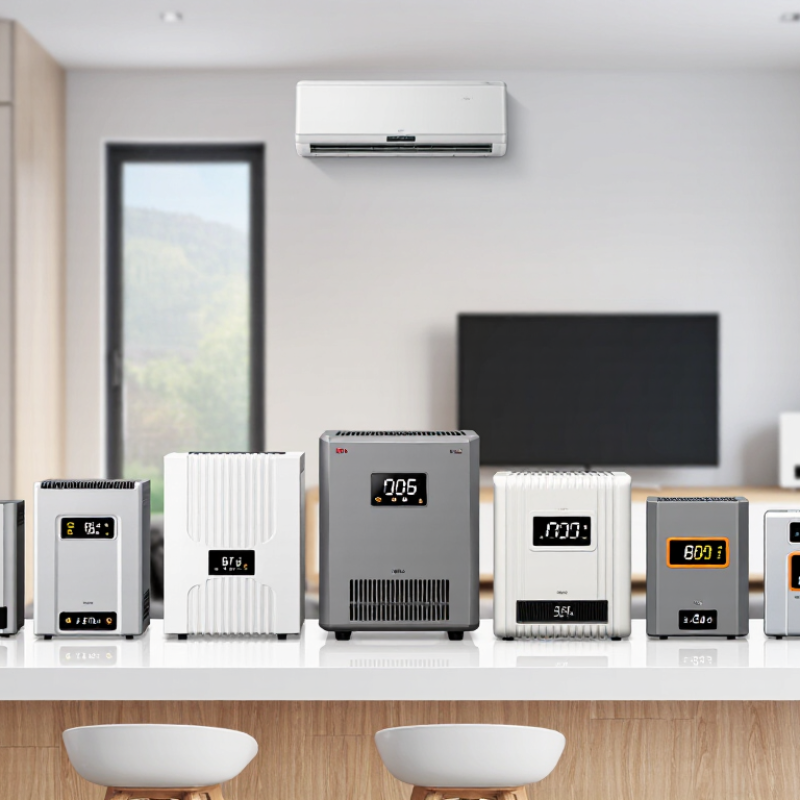
Table of Contents [Hide]
How Inverter Voltage Stabilizers Work and Why They Matter
Inverter voltage stabilizers protect sensitive equipment by rebuilding electricity, not merely trimming it. A sensor measures incoming voltage many times per second. The system then converts alternating current into direct current and recreates a cleaner AC waveform through an inverter. This double-conversion path can reduce sags, surges, and frequency irregularities. Some models also include batteries, but not every stabilizer provides backup power.
IEEE 1159-2019 classifies a voltage sag as a drop to 10–90% of nominal voltage, lasting from half a cycle to one minute. That short event can still reset a server, stop a motor, or corrupt an active file.
The U.S. Department of Energy has estimated that interruptions and power-quality problems cost American businesses roughly 119–164 billion dollars annually. The figures are not perfectly comparable across industries.
Look beyond the display panel. Check response time, output waveform, overload capacity, thermal protection, and bypass behavior. A practical test includes a refrigerator, computer, and laser printer running together. Listen for buzzing. Watch the output under load.
Inverter stabilizers are not magic. Poor wiring, undersized cables, and weak grounding can defeat an excellent unit. Installation should follow local electrical codes and the manufacturer’s measured load limits. Energy losses also matter; the U.S. Department of Energy’s appliance research repeatedly shows that efficiency improves operating costs over time. A slightly oversized unit may run cooler, but excessive oversizing can waste money and reduce efficiency.

© Copyright - Pro Tool & Supply - Site by SVM E-Marketing Solutions - Sitemap
- Privacy policy