- Products
- Air Compressors & Air Tools
- Climate Control
- Compaction Equipment
- Concrete Cutting Tools & Equipment
- Concrete and Masonry
- Demolition & Excavation
- Electrical & Mechanical
- Fasteners and Anchoring Adhesives
- Floor Protection
- Generators and Welders
- Hand Tools
- Heaters
- Janitorial and Office Supplies
- Jobsite Protection
- Ladders & Storage
- Lighting & Lighting Accessories
- Man Lifts
- Material Handling Equipment
- Power Tools
- Pressure Washers & Pumps
- Safety Gear
- Safety Products
- Saws
- Surface Preparation
- SEASONAL PRODUCTS
- Rentals
- Air Compressor and Air Tool Rentals
- Climate Control Rental
- Compaction Rentals
- Concrete Equipment Rentals
- Demolition & Excavation Equipment Rentals
- Concrete Floor Grinder Rentals
- General Construction Equipment Rentals
- Generator Rentals and Welder Rentals
- Heater Rentals
- Light Tower Rentals
- Man Lift Rentals in Massachusetts and Rhode Island
- Material Handling Equipment Rentals
- Pressure Washer & Pump Rentals
- Saw Rentals in New England
- SEASONAL PRODUCTS
- Products
- Air Compressors & Air Tools
- Climate Control
- Compaction Equipment
- Concrete Cutting Tools & Equipment
- Demolition & Excavation
- Electrical & Mechanical
- Floor Protection
- Generators and Welders
- Construction Heaters
- Construction Ladders, Staging, & Storage
- Construction Lighting
- Man Lifts
- Material Handling Equipment
- Industrial Janitorial and Office Supplies
- Pressure Washers & Pumps
- Construction Safety Products
- Construction Safety Gear
- Surface Preparation
- Building Protection
- Diesel Accessories
- Zero Emissions
- Rentals
- Air Compressor and Air Tool Rentals
- Climate Control Rental
- Compaction Rentals
- Concrete Equipment Rental
- Demolition & Excavation Equipment Rental
- General Construction Equipment Rental
- Generator Rentals and Welder Rentals
- Construction Heaters Rental
- Light Tower Rentals
- Man Lift Rentals
- Material Handling Equipment Rental
- Pressure Washer & Pump Rentals
- Saw Rentals in New England
- Concrete Floor Grinder Rentals
- Zero Emissions Rentals
- Repairs & Used
- Parts
- Blog
- Services
- Resources
- About Us
- Contact Us
Sales & Rental of Construction | Industrial Equipment & Supplies


2026 Best CNC Parts Suppliers for Global Buyers
In 2026, global buyers need more than low prices when selecting reliable Cnc Parts suppliers. They need proven production experience, stable quality, transparent communication, and practical support across international projects. A supplier may promise tight tolerances, fast delivery, and competitive pricing. However, real performance appears in inspection reports, sample parts, shipment records, and customer feedback.
This guide evaluates leading Cnc Parts suppliers through the details that influence purchasing decisions. We consider machining capabilities, material options, surface treatments, equipment, quality controls, and production capacity. Important evidence may include ISO certifications, dimensional inspection records, material traceability, and clear documentation. A factory floor also reveals useful clues: calibrated measuring tools, organized workstations, labeled raw materials, and technicians reviewing drawings carefully.
Details matter.
Global buyers must also examine communication speed, engineering support, packaging standards, and delivery consistency. A supplier that responds quickly but overlooks a tolerance can create expensive delays. Another may offer excellent machining but lack reliable export coordination. No supplier is flawless. Even strong manufacturers can face capacity pressure, material shortages, or unclear specifications. That is why this overview focuses on practical verification rather than impressive claims.
The featured companies represent different strengths, including prototypes, small-batch production, complex components, and large-volume manufacturing. Buyers should still request current quotations, production samples, and quality documents before placing major orders. Requirements differ by industry and region. Careful comparison remains essential for building a dependable, long-term supply chain.
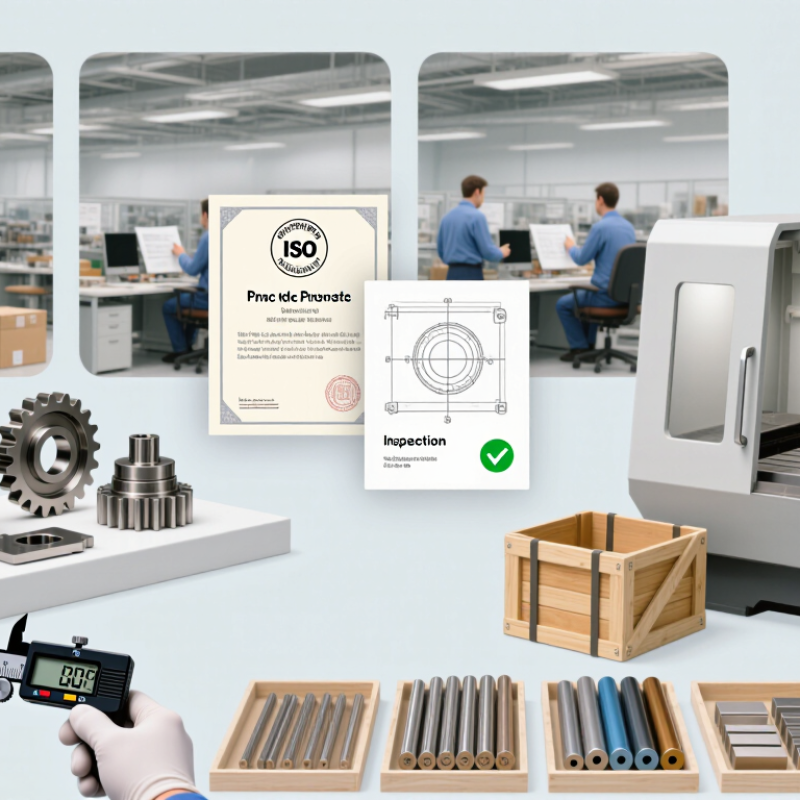
Table of Contents [Hide]
What Defines a Reliable CNC Parts Supplier in 2026
A reliable CNC parts supplier in 2026 proves control before promising speed. Each quotation should show tolerance capability, material grade, lead time, and inspection method. Ask for first-article inspection records, calibrated CMM reports, and heat-lot traceability. A clear photo of a marked component often reveals more than polished sales language. It should.
The 2024 Deloitte Smart Manufacturing and Operations Survey found that 86% of manufacturers expect smart manufacturing to drive competitiveness within five years. This raises the supplier standard. Buyers should expect live production status, revision-controlled drawings, and measurable nonconformance response times. ISO’s 2023 Survey recorded more than one million ISO 9001 certificates worldwide, yet certification alone cannot prove process stability. Request recent capability data, not only a certificate. Cpk values matter, but only when the sampling plan is visible.
Reliability also includes resilience. A serious supplier maps secondary material sources, machine capacity, maintenance windows, and export documentation. The 2024 Business Continuity Institute Supply Chain Resilience Report highlights continuing disruption pressure across global supply networks. A supplier that answers quickly but hides capacity limits is not dependable. In practical sourcing, one missing coating document can delay excellent parts. That detail is easy to overlook. Cybersecurity, worker training, and honest escalation deserve equal attention. No dashboard catches every burr. The strongest relationship still needs periodic audits, sample checks, and uncomfortable questions.

© Copyright - Pro Tool & Supply - Site by SVM E-Marketing Solutions - Sitemap
- Privacy policy