- Products
- Air Compressors & Air Tools
- Climate Control
- Compaction Equipment
- Concrete Cutting Tools & Equipment
- Concrete and Masonry
- Demolition & Excavation
- Electrical & Mechanical
- Fasteners and Anchoring Adhesives
- Floor Protection
- Generators and Welders
- Hand Tools
- Heaters
- Janitorial and Office Supplies
- Jobsite Protection
- Ladders & Storage
- Lighting & Lighting Accessories
- Man Lifts
- Material Handling Equipment
- Power Tools
- Pressure Washers & Pumps
- Safety Gear
- Safety Products
- Saws
- Surface Preparation
- SEASONAL PRODUCTS
- Rentals
- Air Compressor and Air Tool Rentals
- Climate Control Rental
- Compaction Rentals
- Concrete Equipment Rentals
- Demolition & Excavation Equipment Rentals
- Concrete Floor Grinder Rentals
- General Construction Equipment Rentals
- Generator Rentals and Welder Rentals
- Heater Rentals
- Light Tower Rentals
- Man Lift Rentals in Massachusetts and Rhode Island
- Material Handling Equipment Rentals
- Pressure Washer & Pump Rentals
- Saw Rentals in New England
- SEASONAL PRODUCTS
- Products
- Air Compressors & Air Tools
- Climate Control
- Compaction Equipment
- Concrete Cutting Tools & Equipment
- Demolition & Excavation
- Electrical & Mechanical
- Floor Protection
- Generators and Welders
- Construction Heaters
- Construction Ladders, Staging, & Storage
- Construction Lighting
- Man Lifts
- Material Handling Equipment
- Industrial Janitorial and Office Supplies
- Pressure Washers & Pumps
- Construction Safety Products
- Construction Safety Gear
- Surface Preparation
- Building Protection
- Diesel Accessories
- Zero Emissions
- Rentals
- Air Compressor and Air Tool Rentals
- Climate Control Rental
- Compaction Rentals
- Concrete Equipment Rental
- Demolition & Excavation Equipment Rental
- General Construction Equipment Rental
- Generator Rentals and Welder Rentals
- Construction Heaters Rental
- Light Tower Rentals
- Man Lift Rentals
- Material Handling Equipment Rental
- Pressure Washer & Pump Rentals
- Saw Rentals in New England
- Concrete Floor Grinder Rentals
- Zero Emissions Rentals
- Repairs & Used
- Parts
- Blog
- Services
- Resources
- About Us
- Contact Us
Sales & Rental of Construction | Industrial Equipment & Supplies


2026 Best XGS PON SFP for Global Buyers?
Choosing the 2026 best Xgs Pon Sfp is not simply a matter of selecting the lowest price. Global buyers need a module that matches the OLT, fiber architecture, optical budget, and regional deployment conditions. A reliable evaluation should examine XGS-PON compliance, 10 Gbps symmetrical performance, transmission distance, wavelength range, and SFP+ host compatibility. Small details matter. A mismatched firmware profile can leave a promising module unable to register.
Practical testing should include ONU authentication, downstream and upstream throughput, latency, temperature behavior, and Digital Optical Monitoring readings. Buyers should also verify connector type, such as SC/APC or LC, along with transmit power and receiver sensitivity. Products aligned with ITU-T G.9807.1 are easier to assess, but compliance alone does not guarantee smooth interoperability. OLT vendor support still matters.
Field experience shows that installation teams value stable management tools as much as headline speed. Clear datasheets help. Responsive technical support helps more. Some suppliers provide impressive laboratory figures but limited evidence from live networks. That gap deserves attention. No shortlist is flawless.
A careful 2026 purchasing decision should compare documented tests, warranty terms, firmware update policies, and regional logistics. Buyers in humid coastal areas may require wider operating tolerances than those in controlled data rooms. I would still test a sample before placing a large order. It costs time, but it can expose registration failures, thermal drift, or unexpected compatibility issues before deployment. The best choice is therefore the Xgs Pon Sfp that performs consistently in the buyer’s actual network, not merely the one with the strongest marketing claim.
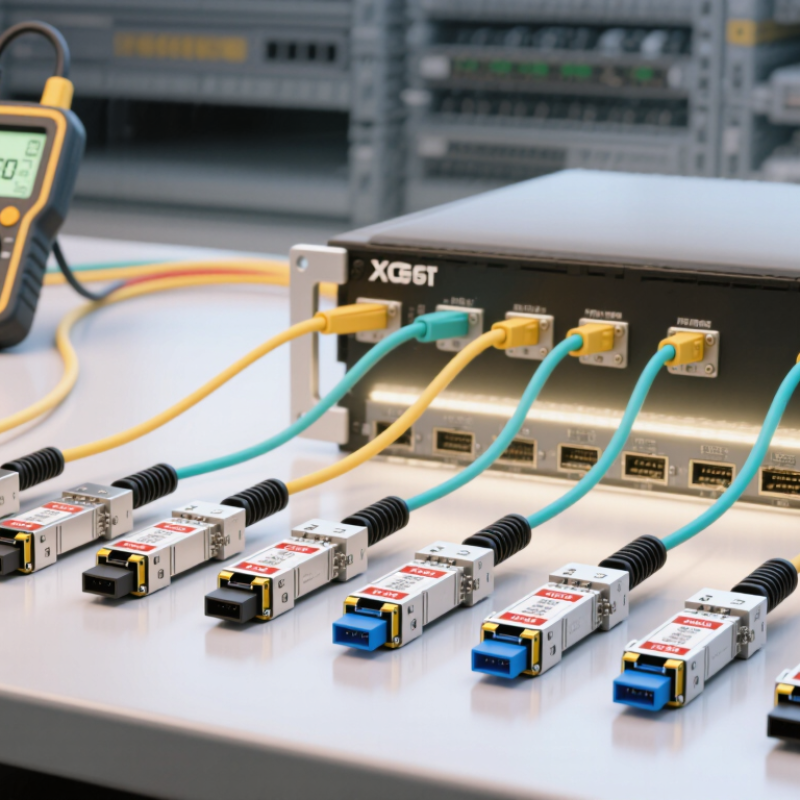
Table of Contents [Hide]
XGS-PON SFP Fundamentals and Key Technical Terms
XGS-PON SFP Fundamentals and Key Technical Terms
An XGS-PON SFP is a pluggable optical module for 10-Gbps passive optical networks. XGS-PON supports symmetric 10 Gbps transmission, unlike older asymmetric systems. The module connects a network device to the optical distribution network, or ODN. The ODN includes fiber cables, passive splitters, connectors, and customer-side terminals.
Several technical terms deserve careful attention. The OLT manages the service provider’s side, while the ONU or ONT serves the subscriber. Downstream commonly uses 1577 nm, and upstream commonly uses 1270 nm. Optical budget describes the total loss the signal can tolerate. It includes splitter loss, fiber attenuation, connector loss, and engineering margin. Reach and split ratio also affect real performance. A high split ratio can serve more users, but it reduces available optical power.
The host device must support the module’s electrical interface, control functions, and software behavior. Check SFP cage compatibility, coding requirements, temperature range, and digital optical monitoring. DOM can report transmit power, receive power, voltage, and temperature. Those readings help technicians locate weak connections or dirty end faces. Burst transmission is another key term because upstream users share the fiber. Dynamic bandwidth allocation assigns transmission windows and reduces collisions. Specifications can look perfect on paper. Field conditions are less predictable. I would leave extra optical margin after testing, because connector aging and installation quality are easy to underestimate.

© Copyright - Pro Tool & Supply - Site by SVM E-Marketing Solutions - Sitemap
- Privacy policy