- Products
- Air Compressors & Air Tools
- Climate Control
- Compaction Equipment
- Concrete Cutting Tools & Equipment
- Concrete and Masonry
- Demolition & Excavation
- Electrical & Mechanical
- Fasteners and Anchoring Adhesives
- Floor Protection
- Generators and Welders
- Hand Tools
- Heaters
- Janitorial and Office Supplies
- Jobsite Protection
- Ladders & Storage
- Lighting & Lighting Accessories
- Man Lifts
- Material Handling Equipment
- Power Tools
- Pressure Washers & Pumps
- Safety Gear
- Safety Products
- Saws
- Surface Preparation
- SEASONAL PRODUCTS
- Rentals
- Air Compressor and Air Tool Rentals
- Climate Control Rental
- Compaction Rentals
- Concrete Equipment Rentals
- Demolition & Excavation Equipment Rentals
- Concrete Floor Grinder Rentals
- General Construction Equipment Rentals
- Generator Rentals and Welder Rentals
- Heater Rentals
- Light Tower Rentals
- Man Lift Rentals in Massachusetts and Rhode Island
- Material Handling Equipment Rentals
- Pressure Washer & Pump Rentals
- Saw Rentals in New England
- SEASONAL PRODUCTS
- Products
- Air Compressors & Air Tools
- Climate Control
- Compaction Equipment
- Concrete Cutting Tools & Equipment
- Demolition & Excavation
- Electrical & Mechanical
- Floor Protection
- Generators and Welders
- Construction Heaters
- Construction Ladders, Staging, & Storage
- Construction Lighting
- Man Lifts
- Material Handling Equipment
- Industrial Janitorial and Office Supplies
- Pressure Washers & Pumps
- Construction Safety Products
- Construction Safety Gear
- Surface Preparation
- Building Protection
- Diesel Accessories
- Zero Emissions
- Rentals
- Air Compressor and Air Tool Rentals
- Climate Control Rental
- Compaction Rentals
- Concrete Equipment Rental
- Demolition & Excavation Equipment Rental
- General Construction Equipment Rental
- Generator Rentals and Welder Rentals
- Construction Heaters Rental
- Light Tower Rentals
- Man Lift Rentals
- Material Handling Equipment Rental
- Pressure Washer & Pump Rentals
- Saw Rentals in New England
- Concrete Floor Grinder Rentals
- Zero Emissions Rentals
- Repairs & Used
- Parts
- Blog
- Services
- Resources
- About Us
- Contact Us
Sales & Rental of Construction | Industrial Equipment & Supplies

2026 Best Pulverizing Bowl for Global Buyers?
Choosing the 2026 best Pulverizing Bowl requires more than comparing price, capacity, or polished catalog images. Global buyers need evidence from actual grinding conditions. The bowl must match sample hardness, batch size, contamination limits, operating frequency, and cleaning expectations. A shiny bowl can still fail under abrasive minerals.
Market research supports this wider view. Grand View Research identifies continuing demand for advanced grinding and material-processing equipment, driven by mining, construction, chemicals, and laboratory testing. Mordor Intelligence also highlights automation, wear resistance, and process efficiency as important equipment trends through the decade. These reports do not rank individual Pulverizing Bowl models. They do show why buyers increasingly examine lifecycle performance instead of purchase cost alone.
Small details matter.
Dr. Alban J. Lynch, a respected mineral-processing specialist, wrote, “Comminution efficiency is the key to economic mineral processing.” His principle applies directly here. A bowl that wastes energy, produces uneven particles, or contaminates samples can damage the entire testing process. Material selection deserves close attention. Hardened steel offers durability, while tungsten carbide may suit highly abrasive samples. Ceramic options can reduce metallic contamination, but they may chip under careless handling.
Buyers should also verify ISO 9001 manufacturing controls, ASTM-related testing requirements, spare-part availability, and documented wear data. Supplier claims need independent checking. This is where many comparisons become weak. Laboratory experience, service records, and application trials often reveal more than brochures. The best Pulverizing Bowl is not universally the strongest model. It is the model that remains consistent, cleanable, serviceable, and financially sensible for a buyer’s specific workflow. That answer may feel less impressive, but it is more reliable.
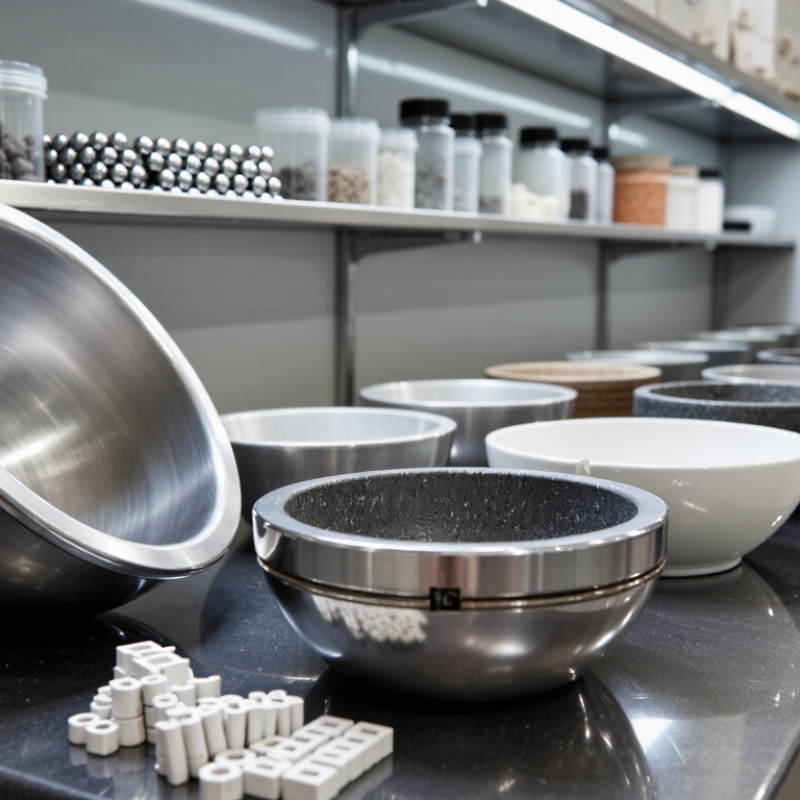
Table of Contents [Hide]
What Is a Pulverizing Bowl and How Is It Used?
A pulverizing bowl is a rigid grinding vessel used to reduce solid samples into a fine, uniform powder. It usually works inside a ring mill, disc mill, or similar laboratory pulverizer. The bowl holds the sample while a puck, ring, or grinding disc applies pressure and impact. Rock, soil, cement clinker, glass, and ceramic pieces are common materials.
The process begins with a clean, dry bowl. An operator adds a measured sample, closes the lid, and selects a suitable grinding cycle. The finished powder may then support chemical analysis, particle testing, or quality control. Do not overfill the bowl. Excess material can produce uneven results and unnecessary heat. Sample residue can also affect the next test.
Bowl material matters. Hardened steel suits many mineral samples, while tungsten carbide or other wear-resistant materials may reduce contamination in demanding work. Check the bowl’s volume, internal dimensions, maximum load, and compatibility with the mill. A small bench-top unit may need a different bowl from an industrial pulverizer.
Wear protective eyewear and suitable respiratory protection when fine dust is possible. Inspect the bowl for cracks, deep scoring, or a loose lid before use. In practice, results are not always neat. Moist samples may smear instead of pulverize, and hard inclusions can damage the vessel. Cleaning between batches is essential, although rushed cleaning remains a common source of unreliable data.

© Copyright - Pro Tool & Supply - Site by SVM E-Marketing Solutions - Sitemap
- Privacy policy