- Products
- Air Compressors & Air Tools
- Climate Control
- Compaction Equipment
- Concrete Cutting Tools & Equipment
- Concrete and Masonry
- Demolition & Excavation
- Electrical & Mechanical
- Fasteners and Anchoring Adhesives
- Floor Protection
- Generators and Welders
- Hand Tools
- Heaters
- Janitorial and Office Supplies
- Jobsite Protection
- Ladders & Storage
- Lighting & Lighting Accessories
- Man Lifts
- Material Handling Equipment
- Power Tools
- Pressure Washers & Pumps
- Safety Gear
- Safety Products
- Saws
- Surface Preparation
- SEASONAL PRODUCTS
- Rentals
- Air Compressor and Air Tool Rentals
- Climate Control Rental
- Compaction Rentals
- Concrete Equipment Rentals
- Demolition & Excavation Equipment Rentals
- Concrete Floor Grinder Rentals
- General Construction Equipment Rentals
- Generator Rentals and Welder Rentals
- Heater Rentals
- Light Tower Rentals
- Man Lift Rentals in Massachusetts and Rhode Island
- Material Handling Equipment Rentals
- Pressure Washer & Pump Rentals
- Saw Rentals in New England
- SEASONAL PRODUCTS
- Products
- Air Compressors & Air Tools
- Climate Control
- Compaction Equipment
- Concrete Cutting Tools & Equipment
- Demolition & Excavation
- Electrical & Mechanical
- Floor Protection
- Generators and Welders
- Construction Heaters
- Construction Ladders, Staging, & Storage
- Construction Lighting
- Man Lifts
- Material Handling Equipment
- Industrial Janitorial and Office Supplies
- Pressure Washers & Pumps
- Construction Safety Products
- Construction Safety Gear
- Surface Preparation
- Building Protection
- Diesel Accessories
- Zero Emissions
- Rentals
- Air Compressor and Air Tool Rentals
- Climate Control Rental
- Compaction Rentals
- Concrete Equipment Rental
- Demolition & Excavation Equipment Rental
- General Construction Equipment Rental
- Generator Rentals and Welder Rentals
- Construction Heaters Rental
- Light Tower Rentals
- Man Lift Rentals
- Material Handling Equipment Rental
- Pressure Washer & Pump Rentals
- Saw Rentals in New England
- Concrete Floor Grinder Rentals
- Zero Emissions Rentals
- Repairs & Used
- Parts
- Blog
- Services
- Resources
- About Us
- Contact Us
Sales & Rental of Construction | Industrial Equipment & Supplies


2026 Best PTO Chipper Shredder for Global Buyers
Choosing the 2026 Best Pto Chipper Shredder requires more than comparing engine horsepower. Global buyers must examine tractor compatibility, feed capacity, rotor balance, blade steel, safety guarding, spare-parts access, and local service support. A machine that looks powerful on paper may struggle with wet branches, uneven timber, or a small tractor’s hydraulic system.
Recent data from the FAO Forestry Production and Trade database shows that global roundwood production remains measured in billions of cubic metres annually. This confirms the continuing need for practical wood-residue processing equipment. The U.S. Occupational Safety and Health Administration also identifies unguarded moving parts, thrown debris, and poor lockout procedures as serious machinery hazards. Safety is not an accessory.
Forest-operations researcher Raffaele Spinelli has emphasized that “productivity depends on matching the machine to the working conditions.” That principle guides this review. It sounds obvious, but buyers still overlook it.
This guide compares PTO chipper shredders for farms, landscaping companies, municipalities, and forestry contractors. It considers real operating details, including branch diameter, tractor PTO speed, discharge distance, maintenance intervals, and transport width. Performance claims should be checked carefully. Manufacturer figures may reflect ideal timber, skilled operators, and clean conditions. Real work is less tidy. Expect trade-offs, and verify every specification before purchase.
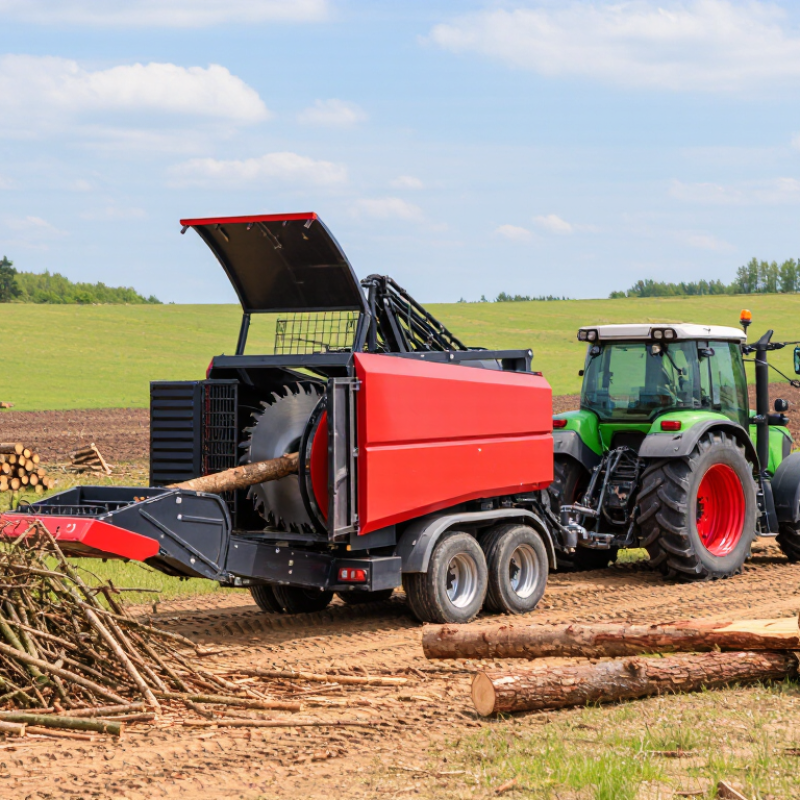
Table of Contents [Hide]
What Is a PTO Chipper Shredder and How Does It Work?
What Is a PTO Chipper Shredder and How Does It Work?
A PTO chipper shredder is a tractor-powered machine that processes branches, brush, and light organic waste. PTO means Power Take-Off, which transfers engine power through a rotating shaft. The tractor drives a gearbox, cutting rotor, or flywheel inside the machine. Sharp blades slice thicker branches into chips. Hammers or flails break smaller leaves and softer material. Processed material then exits through a discharge chute.
In practical use, the operator feeds clean branches into the inlet. Pull-in rollers may guide the material toward the cutting chamber. The rotor’s speed and blade condition affect chip size, fuel use, and machine vibration. Wet, tangled, or oversized material can slow feeding and increase blockages. I have found that capacity claims need careful checking, because real performance depends on tractor power, wood moisture, and operator technique. A larger machine is not always the better choice.
Tips: Match the implement’s required PTO horsepower with the tractor’s rated output. Check shaft guards, emergency stops, fasteners, and blade sharpness before operation. Keep people away from the feed and discharge zones. Never push material by hand. Gloves can help with handling branches, but loose clothing remains dangerous near rotating parts. Review the operating manual and local safety requirements. A short test run often reveals vibration or feeding problems before heavier work begins.
2026 Best PTO Chipper Shredder for Global Buyers - What Is a PTO Chipper Shredder and How Does It Work?
A practical specification and selection guide for buyers comparing PTO-driven wood chippers and chipper-shredders
| Category | Key Metric | Typical Specification or Requirement | What It Means for Buyers |
|---|---|---|---|
| Basic Definition | Power source | Tractor power take-off (PTO) | The machine receives mechanical power directly from a tractor instead of using its own engine or an electric motor. |
| PTO Compatibility | Common PTO speed | 540 rpm is the most common agricultural standard | The tractor PTO speed must match the machine rating. Operating at an incorrect speed can cause unsafe or premature component failure. |
| Tractor Matching | Recommended tractor output | Approximately 20–100 hp, depending on machine size | Small units may suit compact tractors, while large disc or drum machines require substantially more horsepower and hydraulic capacity. |
| Drive Connection | PTO shaft | Tractor PTO shaft with a correctly sized safety guard | The shaft must have suitable length, rotation direction, torque capacity, and shielding for the tractor and chipper combination. |
| Cutting System | Main cutting mechanisms | Disc, drum, or flywheel with knives | Disc systems commonly use radial knives; drum systems use knives mounted on a rotating drum. Design affects capacity, feed behavior, and maintenance. |
| Shredding Function | Secondary processing | Hammers, flails, or shredding blades on combination models | A chipper-shredder can process smaller branches, brush, leaves, and green waste after or alongside the primary chipping stage. |
| Feed Opening | Typical maximum branch diameter | Approximately 75–150 mm for many compact and mid-size units | The actual limit depends on wood species, moisture, branch shape, knife sharpness, and the power available from the tractor. |
| Material Capacity | Typical throughput | Approximately 2–15 m³/h for small and mid-size PTO machines | Published capacity is normally a best-case estimate. Mixed brush, crooked limbs, wet material, and frequent operator pauses reduce practical output. |
| Chip Size | Typical chip length | Approximately 10–50 mm, depending on knife and rotor configuration | Shorter chips generally require more cutting action and may reduce throughput. Adjustable or replaceable knife settings provide greater flexibility. |
| Feed Method | Material entry | Gravity feed, powered feed rollers, or hydraulic feed | Gravity-feed machines are mechanically simpler. Powered rollers improve control and productivity when processing regular branches and larger volumes. |
| Feed Roller Control | Hydraulic requirement | Some models use tractor hydraulics or a dedicated hydraulic circuit | Buyers should verify hydraulic flow, pressure, remote outlets, hose connections, and control-valve compatibility before purchase. |
| Discharge System | Chip outlet | Fixed or adjustable chute; some units include a deflector | A rotating or adjustable discharge chute makes it easier to load trailers, spread chips, or direct material away from workers and buildings. |
| Three-Point Hitch | Mounting category | Often Category I or Category II, depending on machine weight | The tractor must have adequate lift capacity and compatible lower-link spacing. Heavy machines may require front ballast or additional stability measures. |
| Machine Weight | Typical operating weight | Approximately 250–1,200 kg for many three-point PTO units | Weight affects transport, lifting stability, ground pressure, and the tractor size required for safe operation on slopes or uneven terrain. |
| Knife Maintenance | Service requirement | Regular sharpening, replacement, and clearance inspection | Sharp knives reduce power demand and improve chip quality. Damaged or incorrectly installed knives can create severe vibration and safety risks. |
| Safety Equipment | Essential safeguards | PTO shaft guard, emergency stop or feed control, hopper protection, and discharge shielding | The operator should never reach into the hopper or discharge area while the PTO is engaged. Lockout and shutdown procedures are essential during maintenance. |
| Suitable Materials | Recommended feedstock | Branches, pruning waste, small logs, brush, and selected green waste | Material limits vary by design. Soil, stones, metal, wire, treated timber, and oversized hardwood can damage knives, rotors, and feed components. |
| Fuel and Operation | Operating cost profile | No separate chipper engine; tractor fuel is consumed during PTO operation | A PTO machine can simplify servicing and reduce the number of engines maintained, but the tractor must remain available and correctly sized. |
| Best Use Case | Typical applications | Farm pruning, orchard cleanup, forestry maintenance, landscaping, and municipal green-waste work | The best choice depends on annual workload, material diameter, required chip size, terrain, transport needs, and local service support. |
| Global Buyer Checklist | Verification before purchase | PTO speed, tractor horsepower, hitch category, hydraulic specifications, feed opening, safety compliance, and spare parts availability | Always compare the machine’s technical manual with the tractor manual and applicable local workplace-safety requirements before operation. |
Note: The numerical figures are typical market ranges for general comparison rather than specifications for one particular machine. Actual capacity, branch diameter, chip size, weight, and power requirements vary by design, material, operating conditions, and manufacturer documentation.

© Copyright - Pro Tool & Supply - Site by SVM E-Marketing Solutions - Sitemap
- Privacy policy