- Products
- Air Compressors & Air Tools
- Climate Control
- Compaction Equipment
- Concrete Cutting Tools & Equipment
- Concrete and Masonry
- Demolition & Excavation
- Electrical & Mechanical
- Fasteners and Anchoring Adhesives
- Floor Protection
- Generators and Welders
- Hand Tools
- Heaters
- Janitorial and Office Supplies
- Jobsite Protection
- Ladders & Storage
- Lighting & Lighting Accessories
- Man Lifts
- Material Handling Equipment
- Power Tools
- Pressure Washers & Pumps
- Safety Gear
- Safety Products
- Saws
- Surface Preparation
- SEASONAL PRODUCTS
- Rentals
- Air Compressor and Air Tool Rentals
- Climate Control Rental
- Compaction Rentals
- Concrete Equipment Rentals
- Demolition & Excavation Equipment Rentals
- Concrete Floor Grinder Rentals
- General Construction Equipment Rentals
- Generator Rentals and Welder Rentals
- Heater Rentals
- Light Tower Rentals
- Man Lift Rentals in Massachusetts and Rhode Island
- Material Handling Equipment Rentals
- Pressure Washer & Pump Rentals
- Saw Rentals in New England
- SEASONAL PRODUCTS
- Products
- Air Compressors & Air Tools
- Climate Control
- Compaction Equipment
- Concrete Cutting Tools & Equipment
- Demolition & Excavation
- Electrical & Mechanical
- Floor Protection
- Generators and Welders
- Construction Heaters
- Construction Ladders, Staging, & Storage
- Construction Lighting
- Man Lifts
- Material Handling Equipment
- Industrial Janitorial and Office Supplies
- Pressure Washers & Pumps
- Construction Safety Products
- Construction Safety Gear
- Surface Preparation
- Building Protection
- Diesel Accessories
- Zero Emissions
- Rentals
- Air Compressor and Air Tool Rentals
- Climate Control Rental
- Compaction Rentals
- Concrete Equipment Rental
- Demolition & Excavation Equipment Rental
- General Construction Equipment Rental
- Generator Rentals and Welder Rentals
- Construction Heaters Rental
- Light Tower Rentals
- Man Lift Rentals
- Material Handling Equipment Rental
- Pressure Washer & Pump Rentals
- Saw Rentals in New England
- Concrete Floor Grinder Rentals
- Zero Emissions Rentals
- Repairs & Used
- Parts
- Blog
- Services
- Resources
- About Us
- Contact Us
Sales & Rental of Construction | Industrial Equipment & Supplies


2026 Best Advertising Flag Hardware for Global Buyers
Global buyers comparing Advertising Flag Hardware in 2026 need more than a low unit price. They need parts that fit together, withstand repeated setup, and arrive with clear specifications. A loose connector can twist a feather flag in a light breeze. A poorly matched pole pocket can slow an entire installation. Small details matter.
This guide examines the practical choices behind a dependable flag system: bases for pavement, grass, or indoor floors; pole materials; connectors; carry bags; and replacement-part availability. It also considers what buyers can verify before ordering, including dimensions, finish quality, packaging, and supplier communication. Ask for sample hardware when fit is uncertain. Check the details. Product photographs alone can hide a weak joint or an awkward locking mechanism.
No verifiable expert quotation was supplied, so this introduction avoids assigning invented words to a named specialist. A direct quotation should be added only after its speaker and wording are confirmed. That restraint matters. Buyers deserve guidance they can check, not a polished claim with no source behind it. Even a careful comparison has limits: specifications do not fully reveal how hardware feels after a long setup day. That is worth remembering.
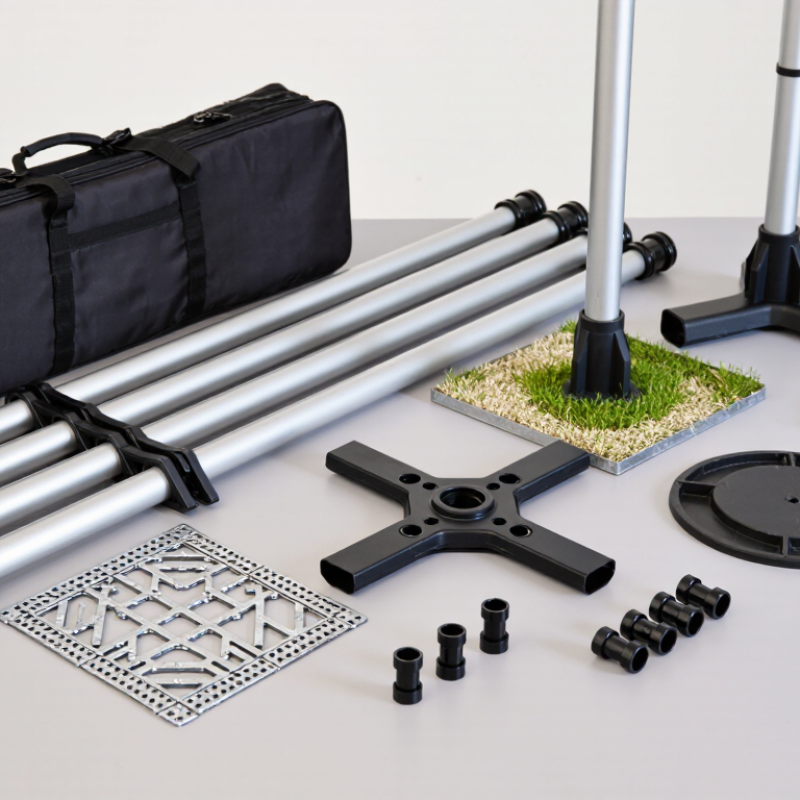
Table of Contents [Hide]
What Advertising Flag Hardware Includes and How It Works
Advertising flag hardware includes the parts that support a printed flag and keep it visible. A typical setup has a flexible pole, connecting sections, a fabric sleeve or pocket, and a base. The pole sections fit together, then slide into the fabric channel. As air moves across the flag, the pole flexes slightly and lets the fabric follow. That movement matters.
Base styles serve different surfaces. A ground spike presses into soft soil, while a cross base sits on firm, level ground and may accept a water or sand weight. A wall or vehicle mount suits other placements. Small parts matter. Check that pole joints seat fully and that the sleeve fits without bunching. A flag that twists repeatedly may have an assembly issue, or the selected shape may not suit its location.
When comparing hardware, match the pole height and shape to the flag dimensions, then consider transport and setup time. Lightweight parts are easier to carry, but may feel less steady in exposed areas. Even experienced buyers can misjudge a base from product dimensions alone. Test the complete setup on the intended surface, and inspect it after assembly. It is not always a perfect fit; replaceable sections can make maintenance simpler.
2026 Best Advertising Flag Hardware for Global Buyers — What Advertising Flag Hardware Includes and How It Works
| Hardware Component | What It Includes | How It Works | Common Materials | Typical Applications | Buyer Considerations |
|---|---|---|---|---|---|
| Flag pole sections | Interlocking or telescopic pole segments, often supplied with a top section shaped to support the flag. | The sections join to create the pole height; the assembled pole supports the flag fabric while allowing it to move in the wind. | Aluminum, fiberglass, or a combination of materials. | Feather, teardrop, and rectangular advertising flags used at events, storefronts, and outdoor promotions. | Check assembled height, packed length, section connection type, and compatibility with the intended flag shape. |
| Flag sleeve or attachment fittings | A fabric sleeve, pole pocket, clips, or other fittings that connect the printed flag to its pole. | The sleeve slides over the pole, or fittings secure the flag at designated points so the graphic remains supported. | Flag fabric, reinforced stitching, plastic, or metal fittings. | Flags designed for specific pole shapes and mounting systems. | Confirm sleeve direction, opening size, attachment positions, and whether the fittings match the flag construction. |
| Ground stake | A pointed stake, commonly paired with a rotating connector or bearing assembly. | The stake is inserted into suitable soil. A rotating connection lets the flag turn with changing wind direction and can reduce fabric twisting. | Steel or other corrosion-resistant metals; rotating parts may include metal or polymer components. | Grass, soil, and other penetrable outdoor surfaces. | Not suitable for every surface. Verify insertion depth, ground conditions, and whether the connector allows rotation. |
| Cross base | A foldable or fixed cross-shaped base, usually with a central pole socket. | The pole fits into the socket; the arms spread across a flat surface to support the flag. Some models accept a water or sand weight. | Steel or aluminum, sometimes with plastic components. | Indoor floors, paved areas, trade shows, and other hard surfaces. | Compare the base footprint, packed size, surface compatibility, and whether a separate weight is required outdoors. |
| Water or sand weight | A fillable ballast, often shaped to sit over or around a compatible cross base. | Adding water or sand increases the base's mass to help resist movement; the weight is used with a compatible base rather than as a pole connection. | Molded plastic or similar durable polymer. | Outdoor paved locations and exposed indoor areas where additional stability is needed. | Check filled weight, fill opening, drainage, transport requirements, and compatibility with the base design. |
| Wall or ground plate | A flat mounting plate with a pole socket or attachment point. | The plate is fixed to a suitable structure or surface, and the flag pole is placed into its socket or secured to its fitting. | Steel or aluminum. | Building facades, permanent displays, and locations where a freestanding base is unsuitable. | Confirm mounting orientation, fixing method, surface strength, and whether installation hardware is included. |
| Vehicle wheel base | A flat plate designed to sit beneath a vehicle tire, with a socket for the flag pole. | The vehicle wheel holds the plate in place while the socket supports the pole. | Steel or aluminum. | Car parks, vehicle displays, outdoor sales events, and temporary roadside promotions. | Check plate dimensions, vehicle clearance, pole socket size, and suitability for the intended vehicle and ground surface. |
| Storage and transport bag | A carrying bag sized for pole sections and, in some kits, smaller fittings or a lightweight base. | The disassembled hardware is packed inside for transport and storage; the bag does not provide structural support during display. | Woven synthetic fabric, commonly polyester or similar materials. | Mobile promotions, trade shows, and equipment storage between uses. | Measure the packed pole length and check which hardware pieces fit; heavy bases may need separate transport. |
Specifications, materials, and compatibility vary by hardware design. Confirm the flag shape, pole connection, mounting surface, and expected wind conditions before selecting a complete setup.

© Copyright - Pro Tool & Supply - Site by SVM E-Marketing Solutions - Sitemap
- Privacy policy