- Products
- Air Compressors & Air Tools
- Climate Control
- Compaction Equipment
- Concrete Cutting Tools & Equipment
- Concrete and Masonry
- Demolition & Excavation
- Electrical & Mechanical
- Fasteners and Anchoring Adhesives
- Floor Protection
- Generators and Welders
- Hand Tools
- Heaters
- Janitorial and Office Supplies
- Jobsite Protection
- Ladders & Storage
- Lighting & Lighting Accessories
- Man Lifts
- Material Handling Equipment
- Power Tools
- Pressure Washers & Pumps
- Safety Gear
- Safety Products
- Saws
- Surface Preparation
- SEASONAL PRODUCTS
- Rentals
- Air Compressor and Air Tool Rentals
- Climate Control Rental
- Compaction Rentals
- Concrete Equipment Rentals
- Demolition & Excavation Equipment Rentals
- Concrete Floor Grinder Rentals
- General Construction Equipment Rentals
- Generator Rentals and Welder Rentals
- Heater Rentals
- Light Tower Rentals
- Man Lift Rentals in Massachusetts and Rhode Island
- Material Handling Equipment Rentals
- Pressure Washer & Pump Rentals
- Saw Rentals in New England
- SEASONAL PRODUCTS
- Products
- Air Compressors & Air Tools
- Climate Control
- Compaction Equipment
- Concrete Cutting Tools & Equipment
- Demolition & Excavation
- Electrical & Mechanical
- Floor Protection
- Generators and Welders
- Construction Heaters
- Construction Ladders, Staging, & Storage
- Construction Lighting
- Man Lifts
- Material Handling Equipment
- Industrial Janitorial and Office Supplies
- Pressure Washers & Pumps
- Construction Safety Products
- Construction Safety Gear
- Surface Preparation
- Building Protection
- Diesel Accessories
- Zero Emissions
- Rentals
- Air Compressor and Air Tool Rentals
- Climate Control Rental
- Compaction Rentals
- Concrete Equipment Rental
- Demolition & Excavation Equipment Rental
- General Construction Equipment Rental
- Generator Rentals and Welder Rentals
- Construction Heaters Rental
- Light Tower Rentals
- Man Lift Rentals
- Material Handling Equipment Rental
- Pressure Washer & Pump Rentals
- Saw Rentals in New England
- Concrete Floor Grinder Rentals
- Zero Emissions Rentals
- Repairs & Used
- Parts
- Blog
- Services
- Resources
- About Us
- Contact Us
Sales & Rental of Construction | Industrial Equipment & Supplies


2026 Best Assembly Machine Types for Global Buyers?
In 2026, global buyers need more than impressive speed when choosing an Assembly Machine. They need dependable performance, clear documentation, and practical service support. A fast machine can still become expensive if changeovers are slow. Or spare parts take months to arrive.
This guide compares rotary, linear, robotic, modular, and flexible assembly systems. Each type suits different products, volumes, tolerances, and labor conditions. Rotary systems often deliver stable output for repetitive products. Linear systems provide easier access during inspection and maintenance. Robotic cells offer flexibility, but integration quality matters greatly. Modular machines can grow with changing product designs. They may also require stronger process planning.
Shigeo Shingo, a respected industrial engineer and manufacturing authority, said, “The most dangerous kind of waste is the waste we do not recognize.” His warning remains useful for equipment decisions. Hidden waste may appear as idle stations, excessive fixtures, difficult programming, or rejected parts. Buyers should examine cycle time, uptime, safety systems, validation records, and operator training. Supplier references are valuable. Factory visits are better.
No machine wins every factory. That is the uncomfortable part. A highly automated line may be unsuitable for uncertain demand. A simpler system may deliver better value and easier maintenance. This article therefore avoids one universal recommendation. Instead, it highlights practical trade-offs for international purchasing teams. Currency, installation standards, technical language, and local support can change the final decision. The best Assembly Machine is not merely the most advanced option. It is the one that performs reliably within the buyer’s real production environment.
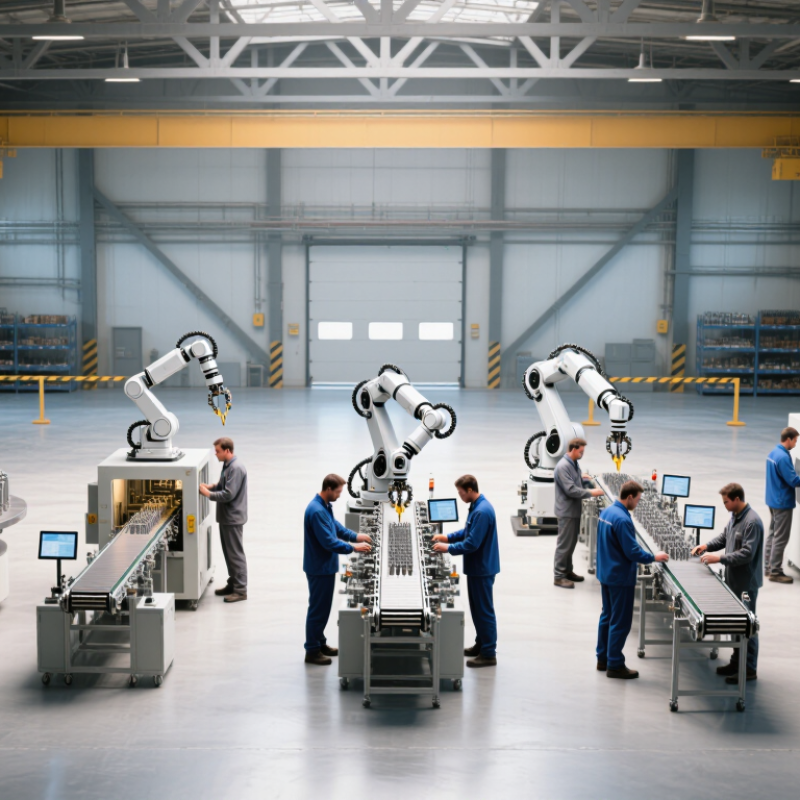
Table of Contents [Hide]
What Assembly Machines Are and How They Support Modern Manufacturing
2026 Best Assembly Machine Types for Global Buyers?
Assembly machines are production systems that join separate parts into finished products. They may use fastening, pressing, insertion, dispensing, welding, or controlled fitting. A machine can feed components, position them accurately, apply force, and verify the result. It replaces repeated manual actions with measurable processes. Fit matters.
Common types include rotary indexing machines, linear assembly lines, robotic cells, press-fit systems, and modular workstations. Rotary machines suit stable, high-volume products with repeated operations. Robotic cells handle variable parts and complex movement. Modular stations offer easier changes when product designs evolve. Vision inspection can check orientation, surface defects, and missing components before packaging.
The right choice depends on part tolerances, production volume, cycle time, floor space, utilities, and operator access. Engineers should also review changeover time, spare parts, software support, and safety documentation. In factory evaluations, a fast machine can disappoint if feeding systems jam or maintenance access is poor. Automation is not magic. Poor part design still creates poor assembly. Buyers should test representative materials and full production sequences before approval. A short trial often reveals noise, vibration, awkward loading, or unstable positioning. These details seem minor. They rarely remain minor during daily operation.
| Assembly Machine Type | What It Is | Typical Automation Level | Typical Throughput* | Best-Fit Products and Processes | Key Advantages | Important Limitations | Global Buyer Considerations |
|---|---|---|---|---|---|---|---|
| Manual Assembly Workstation | A workstation where operators use fixtures, hand tools, testing devices, and visual instructions to assemble products or subassemblies. | ManualOperator-led | Approximately 5–30 units per hour, depending on product complexity and operator skill. | Low-volume products, prototypes, customized equipment, repair work, and products with frequent design changes. | Lowest entry cost; highly flexible; fast product changeovers; suitable for complex or delicate tasks. | Labor availability affects output, quality consistency, and operating cost. Ergonomic risks require proper workstation design. | Evaluate labor regulations, operator training, lighting, ergonomics, spare hand tools, and multilingual work instructions. |
| Semi-Automatic Assembly Machine | A machine that performs one or more repeatable operations while an operator loads parts, transfers assemblies, or confirms process conditions. | Semi-automaticOperator-assisted | Approximately 20–150 units per hour, depending on cycle time, part presentation, and manual loading requirements. | Fasteners, pressing, riveting, dispensing, labeling, cable preparation, and small electromechanical assemblies. | Good balance between flexibility, productivity, and investment; easier to adapt than a fully dedicated line. | Still depends on operator consistency. Manual loading can limit output and may create variation between shifts. | Check safety guarding, electrical standards, pneumatic requirements, tooling availability, and operator training support. |
| Rotary Indexing Assembly Machine | A machine that moves workpieces through several stations on a rotating indexing table, with each station performing a defined assembly or inspection task. | AutomaticMulti-station | Approximately 60–600 units per hour, depending on the number of stations and the slowest process step. | Caps, closures, valves, small appliances, medical disposables, connectors, and compact consumer products. | Compact layout; repeatable positioning; efficient use of multiple simultaneous stations; suitable for medium-to-high volumes. | Less suitable for frequent product changes. A bottleneck at one station can reduce the performance of the entire system. | Confirm tooling changeover time, indexing accuracy, spare-part lead times, and compatibility with local maintenance skills. |
| Linear Transfer Assembly Line | An integrated line that transfers workpieces through sequential stations using conveyors, pallets, indexing systems, or transfer mechanisms. | AutomaticIntegrated line | Approximately 120–1,200 units per hour, depending on takt time, line balance, and product configuration. | Automotive components, household appliances, electrical products, power tools, and other products with defined assembly sequences. | High repeatability; traceable process flow; scalable inspection and testing; efficient for stable, high-volume production. | Large footprint and higher integration cost. Line changes may require engineering work, new fixtures, and software adjustments. | Assess factory floor space, utility capacity, line balancing, logistics routes, safety zoning, and local service capability. |
| Pick-and-Place Robotic Cell | A guarded work cell using an industrial robot or collaborative robot to pick components and place them into fixtures or assemblies. | RoboticFlexible automation | Approximately 20–180 picks or assembly cycles per minute, depending on payload, travel distance, part orientation, and gripper design. | Component loading, packaging, kitting, electronic parts, molded components, and repetitive placement operations. | Consistent motion; reduced repetitive manual work; suitable for multiple product variants with suitable tooling and programming. | Performance depends heavily on feeding, part presentation, gripping, and vision reliability. Integration skill is essential. | Review robot safety requirements, guarding, collaborative operating conditions, programming access, and replacement gripper availability. |
| SCARA-Based Assembly Machine | A high-speed four-axis robotic system designed for precise horizontal-plane movement, often combined with feeders, screwdrivers, dispensers, or testing tools. | AutomaticHigh-speed robotics | Typically 30–120 assembly cycles per minute for suitable lightweight applications. | Electronic devices, connectors, small mechanisms, fastener insertion, dispensing, and precision component placement. | Fast horizontal movement; good repeatability; relatively compact footprint; effective for small and medium-sized parts. | Limited suitability for heavy payloads or complex three-dimensional motion. Requires stable part presentation and accurate fixtures. | Verify payload, reach, repeatability, controller compatibility, safety requirements, and availability of qualified programmers. |
| Cartesian or Gantry Assembly Machine | A machine using linear axes to move tools or components along defined X, Y, and Z coordinates for assembly, dispensing, fastening, or handling. | AutomaticProgrammable | Approximately 10–100 cycles per minute, depending on travel distance, payload, and process requirements. | Large components, dispensing, screwdriving, pallet loading, panel assembly, precision positioning, and heavy-part handling. | Predictable motion; scalable working envelope; good load-handling capability; straightforward programming for fixed coordinates. | May require more floor or overhead space. Motion can be slower than specialized high-speed robotic systems. | Consider ceiling height, axis protection, environmental conditions, cable management, and maintenance access. |
| Screwdriving and Fastening Machine | A dedicated system that feeds, positions, drives, monitors, and records screws, bolts, nuts, rivets, or other mechanical fasteners. | Semi-automaticAutomatic | Approximately 10–80 fasteners per minute, depending on fastening method, torque requirements, and part access. | Consumer electronics, appliances, automotive components, electrical enclosures, furniture hardware, and industrial equipment. | Improves torque consistency; reduces cross-threading and missed-fastener defects; supports process data collection. | Fastener variation, poor thread quality, part distortion, and difficult access can reduce reliability and cycle performance. | Confirm torque range, calibration requirements, fastener standards, feeder compatibility, data-export format, and tool servicing. |
| Press-Fit and Riveting Machine | A machine that joins components by controlled force, displacement, pneumatic or servo pressing, riveting, crimping, or insertion. | Semi-automaticAutomatic | Approximately 10–100 joining cycles per minute, depending on force, stroke, material, and inspection requirements. | Bearings, bushings, connectors, terminals, shafts, brackets, sheet-metal parts, and electrical assemblies. | Stable joining quality; measurable force-displacement data; reduced dependence on manual impact or hand tools. | Requires accurate part tolerances and robust fixturing. Incorrect force or alignment can damage components. | Specify maximum force, stroke, tooling life, calibration intervals, guarding, and acceptance criteria for force-displacement curves. |
| Dispensing and Adhesive Assembly Machine | A system that applies adhesives, sealants, lubricants, thermal compounds, or conformal materials in controlled patterns and quantities. | Semi-automaticAutomatic | Approximately 5–120 parts per minute, depending on material viscosity, path length, curing time, and dispensing accuracy. | Electronics, lighting products, batteries, automotive modules, medical devices, seals, and bonded plastic or metal assemblies. | Improves bead consistency and material control; can reduce waste; supports repeatable sealing and bonding performance. | Material shelf life, temperature, humidity, curing, nozzle clogging, and surface preparation strongly affect results. | Check material storage conditions, safety data requirements, curing method, cleaning procedures, and local availability of pumps and nozzles. |
| Vision-Guided Inspection and Assembly Cell | A machine that uses cameras and image-processing software to locate parts, verify orientation, inspect features, or guide robotic assembly. | AutomaticData-enabled | Approximately 20–300 inspections or handling cycles per minute, depending on image complexity and lighting conditions. | Presence and absence checks, orientation verification, dimensional inspection, label verification, and component alignment. | Reduces manual inspection variation; supports traceability; enables automated rejection and process feedback. | Performance is sensitive to lighting, surface finish, part variation, camera resolution, and software configuration. | Define inspection tolerances, image-storage policy, data interfaces, lighting replacement, and validation procedures before purchase. |
| End-of-Line Testing and Packaging Machine | An integrated system that performs functional tests, marking, sorting, packing, sealing, labeling, or palletizing after assembly is complete. | AutomaticIntegrated testing | Approximately 10–300 finished units per minute, depending on test duration, packaging format, and product size. | Electrical products, consumer goods, medical products, industrial components, spare parts, and export-ready packaged products. | Combines quality verification and packaging; improves traceability; reduces handling between final assembly and shipment. | Packaging materials and product variants can increase changeover complexity. Testing may require specialized fixtures or instruments. | Confirm export packaging standards, barcode or serialization needs, test-data retention, utility requirements, and format-change time. |
| *Throughput figures are indicative planning ranges rather than guaranteed performance. Actual output depends on product design, number of assembly operations, component tolerances, feeding method, takt time, inspection requirements, staffing, changeover frequency, and factory conditions. A suitable machine should be selected through a documented process trial using production-representative parts. | |||||||

© Copyright - Pro Tool & Supply - Site by SVM E-Marketing Solutions - Sitemap
- Privacy policy