- Products
- Air Compressors & Air Tools
- Climate Control
- Compaction Equipment
- Concrete Cutting Tools & Equipment
- Concrete and Masonry
- Demolition & Excavation
- Electrical & Mechanical
- Fasteners and Anchoring Adhesives
- Floor Protection
- Generators and Welders
- Hand Tools
- Heaters
- Janitorial and Office Supplies
- Jobsite Protection
- Ladders & Storage
- Lighting & Lighting Accessories
- Man Lifts
- Material Handling Equipment
- Power Tools
- Pressure Washers & Pumps
- Safety Gear
- Safety Products
- Saws
- Surface Preparation
- SEASONAL PRODUCTS
- Rentals
- Air Compressor and Air Tool Rentals
- Climate Control Rental
- Compaction Rentals
- Concrete Equipment Rentals
- Demolition & Excavation Equipment Rentals
- Concrete Floor Grinder Rentals
- General Construction Equipment Rentals
- Generator Rentals and Welder Rentals
- Heater Rentals
- Light Tower Rentals
- Man Lift Rentals in Massachusetts and Rhode Island
- Material Handling Equipment Rentals
- Pressure Washer & Pump Rentals
- Saw Rentals in New England
- SEASONAL PRODUCTS
- Products
- Air Compressors & Air Tools
- Climate Control
- Compaction Equipment
- Concrete Cutting Tools & Equipment
- Demolition & Excavation
- Electrical & Mechanical
- Floor Protection
- Generators and Welders
- Construction Heaters
- Construction Ladders, Staging, & Storage
- Construction Lighting
- Man Lifts
- Material Handling Equipment
- Industrial Janitorial and Office Supplies
- Pressure Washers & Pumps
- Construction Safety Products
- Construction Safety Gear
- Surface Preparation
- Building Protection
- Diesel Accessories
- Zero Emissions
- Rentals
- Air Compressor and Air Tool Rentals
- Climate Control Rental
- Compaction Rentals
- Concrete Equipment Rental
- Demolition & Excavation Equipment Rental
- General Construction Equipment Rental
- Generator Rentals and Welder Rentals
- Construction Heaters Rental
- Light Tower Rentals
- Man Lift Rentals
- Material Handling Equipment Rental
- Pressure Washer & Pump Rentals
- Saw Rentals in New England
- Concrete Floor Grinder Rentals
- Zero Emissions Rentals
- Repairs & Used
- Parts
- Blog
- Services
- Resources
- About Us
- Contact Us
Sales & Rental of Construction | Industrial Equipment & Supplies


2026 Best Air Heat Exchangers for Global Buyers
Global buyers are entering 2026 with tighter energy targets, unstable operating costs, and more demanding indoor-air requirements. The right Air Heat Exchanger must perform reliably, not merely look efficient on a catalogue page. In real facilities, a dusty warehouse, salty coastal air, or freezing winter morning can change the result.
The International Energy Agency’s The Future of Cooling report estimates that space-cooling electricity demand could more than triple by 2050 under current policies. Its Energy Efficiency 2023 analysis also identifies cooling as a major contributor to global electricity consumption. These findings strengthen the case for efficient ventilation and heat-recovery equipment. The practical question is less dramatic: how much energy can a unit recover after filters become dirty?
This 2026 guide compares leading air heat exchanger options for international purchasers. It considers sensible and latent recovery, pressure drop, leakage control, frost protection, corrosion resistance, service access, and total operating cost. AHRI Standard 1060 and EN 308 provide useful reference points for testing and performance comparison. However, test conditions do not represent every building. That matters.
A unit achieving high laboratory effectiveness may disappoint in a humid factory or a dusty retail site. Climate data, airflow balance, fan power, maintenance skills, and local spare-parts support deserve equal attention. Manufacturer claims should be checked against certified performance documents and project references. This is where product selection becomes engineering work.
Some market forecasts differ because they define “heat exchanger” differently. Buyers should treat headline market numbers carefully. The strongest choice is not always the most expensive model. It is the system that delivers measurable recovery, stable airflow, safe materials, and predictable service over many operating seasons.
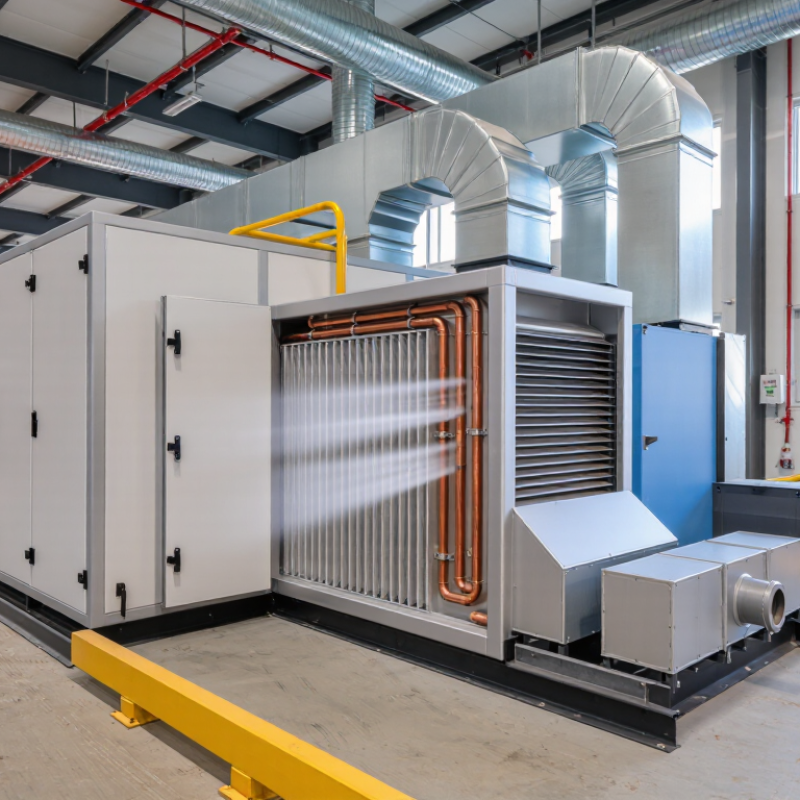
Table of Contents [Hide]
Air Heat Exchanger Fundamentals and Operating Principles
Air heat exchangers transfer thermal energy between air streams without mixing them. A warm exhaust stream can preheat incoming outdoor air, reducing the load on heating equipment. In cooling mode, the same principle can lower ventilation air temperature.
The core parts include heat-transfer surfaces, air passages, seals, fans, and controls. Heat moves from the warmer air toward the cooler air through metal plates, coils, heat pipes, or rotating media.
Counterflow arrangements usually improve temperature effectiveness because the air streams maintain a useful temperature difference longer. However, higher effectiveness can increase pressure drop, fan energy, and maintenance demands.
Moisture may also condense when surface temperature falls below the dew point. Drainage and corrosion resistance matter.
Tips: Check airflow, temperature, humidity, pressure drop, and leakage during commissioning. Clean filters before judging exchanger performance. Dust changes the results quickly. Specify entering conditions, altitude, operating hours, and required recovery efficiency. A neat selection sheet can still mislead if seasonal conditions are ignored. Real performance may differ from laboratory ratings, especially when frost, bypass air, or uneven airflow appears. Allow inspection access and verify sensor calibration regularly. Reliability often depends less on peak efficiency than on stable operation and practical maintenance.

© Copyright - Pro Tool & Supply - Site by SVM E-Marketing Solutions - Sitemap
- Privacy policy